The Heat-and-Honey Moment Mango Chile-Lime Cheesecake Recipe

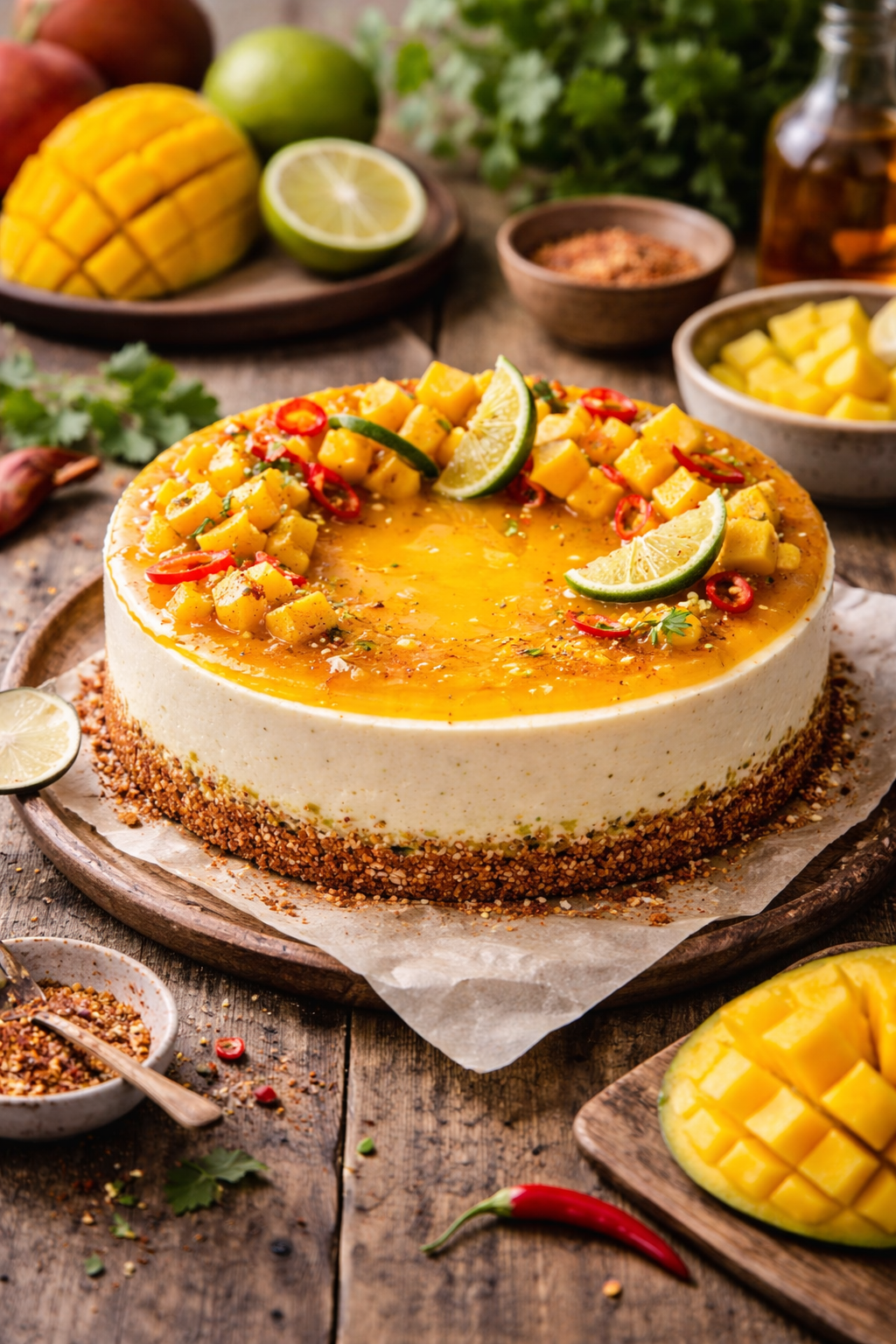
Warm wood grain, soft afternoon light, and that glossy sun-colored crown—this is the kind of dessert that makes a table go quiet for a second. A thick, pale cheesecake sits low and confident on parchment, its edges kissed with a sandy crust that looks like it was meant to cling to every slice. Across the top, mango glows like lacquer, pooled into a smooth, golden mirror that catches the light the way a candle flame does—steady, inviting, impossible to ignore.
Then come the details that turn it from pretty to unforgettable: tidy cubes of mango piled like little gems, scattered rings of red chile that promise a quick spark, and lime wedges tucked in as if they were placed by someone who knows exactly how a finishing note should feel. The colors read like a postcard—tropical gold, pepper red, citrus green—against the rustic calm of a board and a weathered tabletop. Everything around it supports the story without shouting: extra diced mango waiting in a bowl, a little dish of spice, leafy herbs in the background, a bottle of amber liquid catching highlights. It’s the kind of scene that smells like bright fruit, toasted sugar, and the faint sting of chile in the air—fresh, sweet, daring.
This Mango Chile-Lime Cheesecake lives at that delicious intersection of dessert and mood. It’s creamy but not heavy, tangy without turning sharp, sweet without being cloying, and just bold enough to feel like an event. The mango topping tastes like late-summer sunlight; the lime cuts through with a clean snap; the chile doesn’t dominate—it flickers, warms, and fades, leaving the fruit even more vivid in its wake. Every bite lands in waves: cool cream first, then mango silk, then that citrus lift, then a final soft glow.
The tools matter here, mostly because they keep the texture flawless. A springform pan that releases cleanly for picture-perfect sides gives the cheesecake that crisp, bakery-style silhouette. For the crust, a food processor that makes quick, even crumbs turns cookies and nuts into the kind of sandy base that slices without crumbling into chaos. And for the filling, a stand mixer for silky cheesecake batter without overworking helps you get that smooth, dense creaminess that feels luxurious on the tongue.
The flavor balance is where the magic lives. The mango wants to be lush; the lime insists on brightness; the chile brings edge. The easiest way to keep it elegant is to choose a good flaky finishing salt that makes fruit taste louder and a microplane zester for fragrant lime zest that perfumes the whole top. If you’re the type who loves precision, a digital kitchen thermometer for nailing a gentle bake makes the difference between “pretty good” and “how is this so creamy.”
Serve it chilled, slice it slow, and let the topping catch the light when it hits the plate. This is the cheesecake that looks like a vacation and tastes like a dare—sweet sunshine, sharp citrus, and a tiny flame right at the end.
Mango Chile-Lime Cheesecake
A creamy baked cheesecake with a crisp crumb crust, topped with a glossy mango layer, fresh mango cubes, lime, and a gentle chile kick.
Ingredients
Crust
- 1 3/4 cups graham cracker crumbs (or digestive biscuit crumbs)
- 2 tbsp granulated sugar
- 1/2 tsp fine salt
- 6 tbsp unsalted butter, melted
Filling
- 24 oz cream cheese, softened
- 1 cup granulated sugar
- 1/4 cup sour cream
- 2 tbsp fresh lime juice
- 1 tbsp lime zest
- 1 tsp vanilla extract
- 3 large eggs, room temperature
- 1 tbsp all-purpose flour (optional, for extra stability)
Mango Topping + Garnish
- 1 1/2 cups mango purée (fresh or thawed frozen)
- 1/3 cup sugar (adjust to sweetness of mango)
- 2 tbsp fresh lime juice
- 2 tsp powdered gelatin (or 1 gelatin packet) + 2 tbsp water
- 1–2 tbsp Tajín or chile-lime seasoning (plus more for finishing)
- 1–2 fresh red chiles, thinly sliced (optional)
- 1–2 ripe mangos, diced
- Lime wedges
- Pinch flaky salt (optional)
Method / Instructions
Prep and bake the crust
Heat oven to 325°F. Mix crumbs, sugar, salt, and melted butter. Press firmly into a 9-inch springform pan. Bake 10 minutes; cool.Make the filling
Beat cream cheese and sugar until smooth. Mix in sour cream, lime juice, zest, and vanilla. Add eggs one at a time on low, mixing just until combined. (Stir in flour if using.)Bake
Pour filling over crust. Bake 50–65 minutes until edges are set and center still has a slight wobble. Turn off oven, crack the door, and rest 45 minutes. Cool to room temp, then chill at least 6 hours (overnight best).Make mango topping
Bloom gelatin in water 5 minutes. Warm mango purée with sugar and lime juice until hot (not boiling). Remove from heat, whisk in gelatin until dissolved. Cool 10–15 minutes.Assemble
Pour cooled mango topping over chilled cheesecake. Chill 2–3 hours until set.Finish
Top with diced mango, chile slices, lime wedges, a dusting of chile-lime seasoning, and a tiny pinch of flaky salt if desired. Slice and serve cold.
The In-Depth Step-by-Step Guide to a Flawless Mango Chile-Lime Cheesecake
Step 1: Build a crust that slices clean Start with crumbs that are fine and even—this is what keeps the base crisp without shattering. If you’re crushing by hand, aim for “wet sand,” not pebbles. A food processor that turns crackers into uniform crumbs fast helps you avoid those random chunks that make slices crumble. Mix crumbs with sugar and salt first, then drizzle in melted butter until every grain looks lightly coated. Press firmly into the bottom of a springform pan designed for neat release—use the flat bottom of a measuring cup to compact it like you mean it. Bake the crust briefly; that quick set locks in structure and keeps it from going soggy under the filling.
Troubleshooting:
- Crust crumbling? You likely needed a touch more butter or firmer pressing.
- Crust too hard? You overbaked; keep it to about 10 minutes.
Step 2: Nail the cheesecake texture by controlling air Cheesecake is essentially a custard. The enemy is excess air, which rises and cracks. Let cream cheese fully soften so you don’t have to beat aggressively. Beat the cream cheese and sugar until smooth and glossy, then slow down. Sour cream adds tenderness; lime juice adds brightness; zest adds aroma. A stand mixer that stays steady at low speed makes it easier to keep the batter smooth without whipping it. When you add eggs, do it one at a time on low—stop mixing as soon as each disappears. If you want extra insurance for clean slices, a tablespoon of flour helps stabilize without turning it cakey.
Troubleshooting:
- Lumpy batter? Cream cheese was too cold. Let it sit longer, then mix gently.
- Foamy batter? You beat too long or too fast—slow down and scrape the bowl.
Step 3: Bake gently for that “set edge, soft center” wobble Low and slow is the whole game. Bake until the outer ring is set and the center still trembles like a calm jelly—if it looks liquid, it’s under; if it’s rigid, it’s over. If you like precision, a digital thermometer that helps confirm doneness can be a quiet lifesaver: the center is typically in a safe, creamy zone when it’s around the mid-150s°F (avoid pushing much higher or the texture tightens). When the bake is done, turn off the oven and crack the door. That gradual cooldown prevents the dramatic temperature swing that causes cracks.
Troubleshooting:
- Cracks anyway? Usually overbaked or cooled too fast.
- Wet-looking center after chilling? Underbaked; next time bake a few minutes longer and use the wobble test.
Step 4: Chill like you’re building luxury, not rushing dessert Cooling is part of the cooking. Let the cheesecake come down to room temp before chilling. Then give it real time—six hours minimum, overnight is best. The texture transforms: it goes from soft-set to dense and silky, and slices become clean and confident. When you’re ready to unmold, run a thin knife around the edge. A warm knife (dip in hot water, wipe dry) makes each slice look like a bakery cut.
Step 5: Make a mango topping that sets glossy, not rubbery That golden top is what makes this dessert feel like a jewel. Use mango purée that tastes vibrant—fresh or thawed frozen both work. Warm the purée with sugar and lime juice until it’s hot (but don’t boil it hard). Gelatin is the secret to a smooth, sliceable sheen. Bloom it first in a little water so it dissolves cleanly, then whisk it into the warm purée off heat. Strain if you want a flawless mirror finish. Let it cool slightly before pouring so it doesn’t melt the cheesecake surface.
Tools that help: a fine-mesh strainer for ultra-smooth fruit topping and a microplane zester for fragrant lime zest that makes the whole topping smell brighter before you even taste it.
Troubleshooting:
- Topping didn’t set? Too little gelatin or it was boiled aggressively (which can weaken it).
- Topping is too firm? Slightly too much gelatin—reduce next time.
Step 6: Bring the chile-lime “spark” without turning it into a stunt This is where taste and restraint meet. Chile-lime seasoning gives you heat, tang, and a savory edge in one move; dust lightly and taste. The goal is a flicker, not a fire alarm. If using fresh chiles, slice thin and scatter sparingly. Lime wedges and diced mango add freshness and texture. A tiny pinch of flaky sea salt that amplifies fruit sweetness makes the mango taste bigger and brighter.
Variations that keep the vibe:
- Coconut angle: swap part of the sour cream for coconut cream and finish with toasted coconut.
- Ginger lift: add a little ground ginger to the crust and a whisper to the filling.
- No gelatin topping: reduce mango purée into a thick syrup and pour as a sauce right before serving (less glossy, more drippy).
Step 7: Slice and serve like it belongs in a magazine spread Chill the cheesecake thoroughly before slicing. Use a long knife, warmed and wiped between cuts. Plate with a lime wedge and a few mango cubes, then add a final dusting of chile-lime seasoning right before it hits the table for maximum aroma. The first bite should feel cool and creamy, then sunny and fruity, then bright and electric at the edges.
Common problems, solved fast:
- Grainy filling: ingredients were too cold or overmixed; soften fully and mix gently.
- Soggy crust: crust wasn’t pre-baked or was under-pressed; bake the crust and compact it firmly.
- Weeping topping: topping was poured too warm or fruit was very watery; cool topping slightly and pat diced mango dry.
If you treat temperature like a tool, keep air out of the batter, and let chill time do its quiet work, this Mango Chile-Lime Cheesecake doesn’t just taste special—it looks composed, slices clean, and delivers that rare “sweet with a spark” finish that people talk about after the plates are gone.