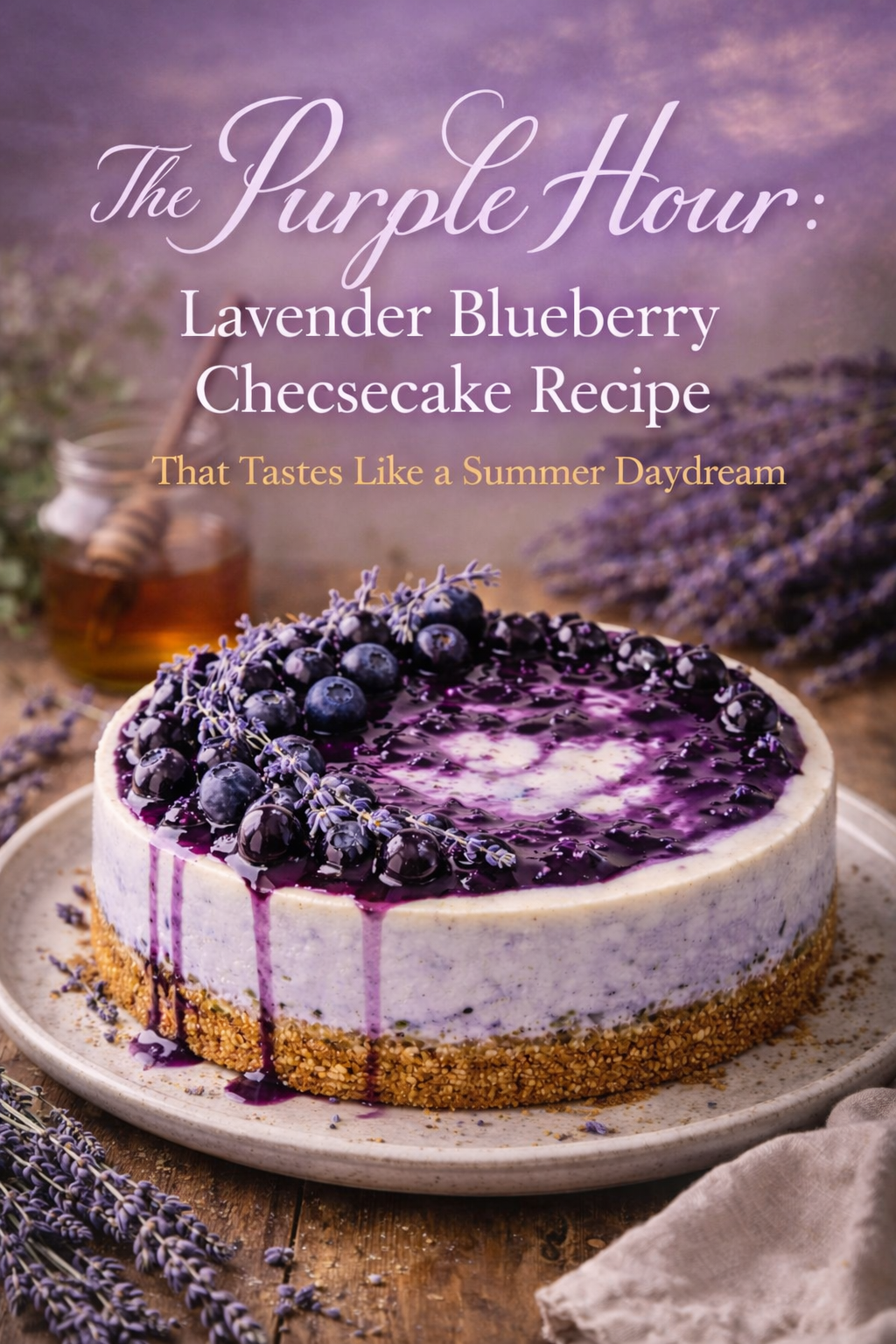
The Purple Hour: Lavender Blueberry Cheesecake Recipe That Tastes Like a Summer Daydream
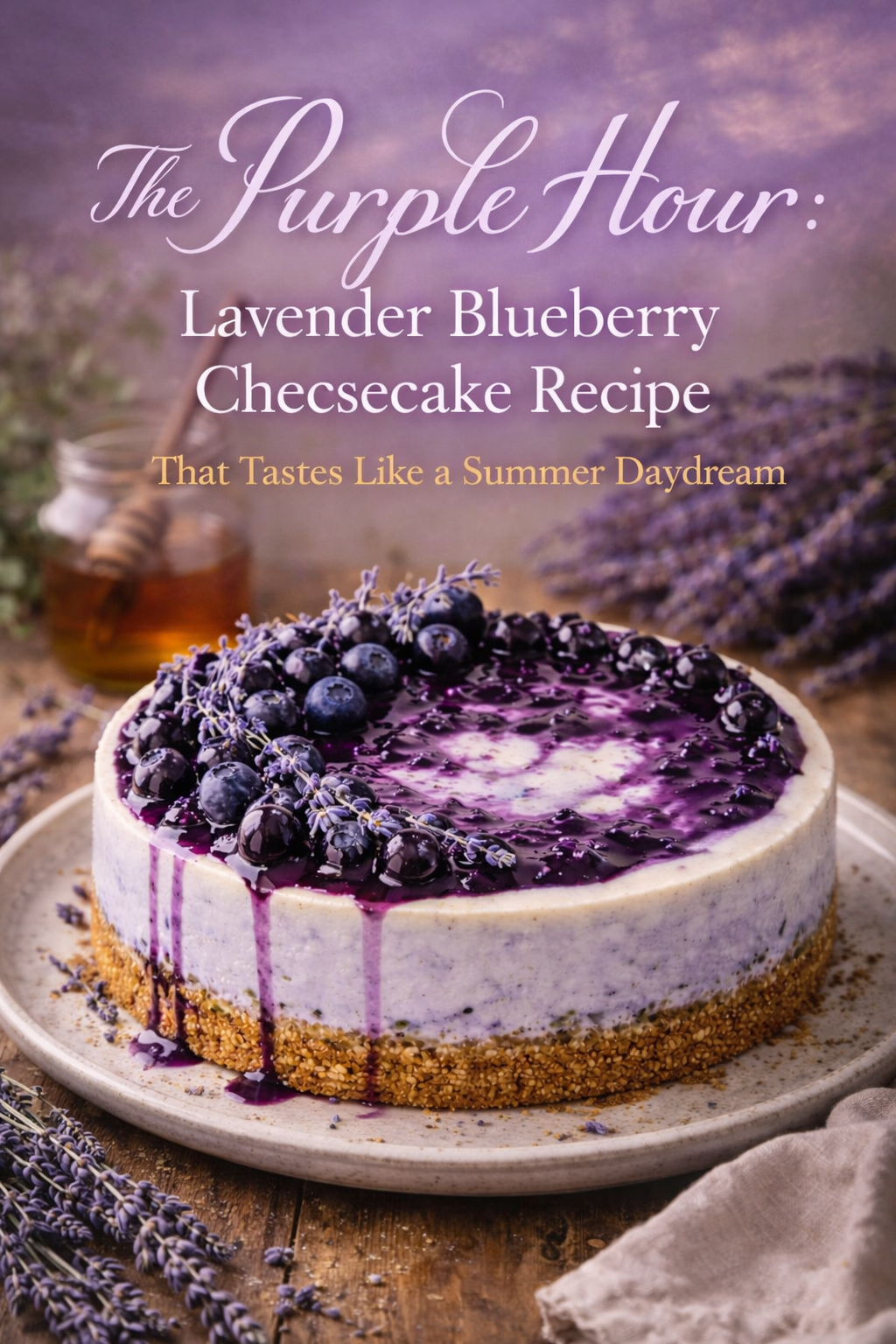
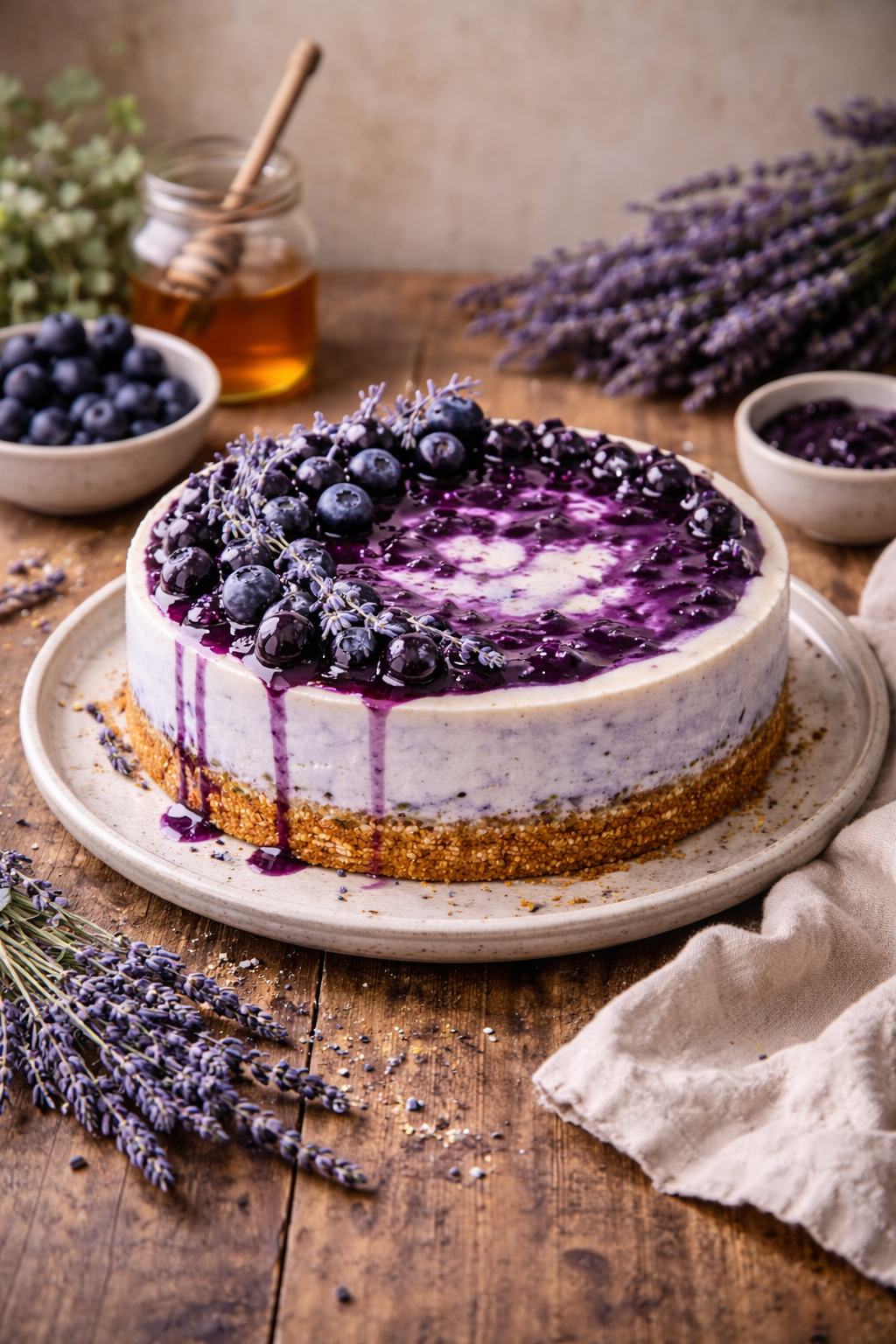
A soft hush hangs over the table—wood grain warmed by afternoon light, linen rumpled like it was pulled from a picnic basket, and the faint suggestion of fields beyond the window. Everything in the frame feels slow on purpose. A pale, cloudlike cheesecake sits centered on a stone plate, its sides flecked with tiny lavender-blue freckles, like the dessert absorbed the color of dusk. The top is glossy and dramatic: a deep violet blueberry glaze swirled with lighter ribbons, pooling into a marbled sky that looks almost too beautiful to cut. Then the glaze breaks free at the edge, slipping down in thick drips—bold, unapologetic, and a little messy in the most satisfying way.
Blueberries gather at the rim like polished beads, some matte with bloom, some lacquered from the glaze, each one catching a different angle of light. Between them, lavender sprigs scatter their tiny purple buds, the kind of detail that makes the whole scene feel curated without looking staged. Off to the side, a small jar of amber honey waits with a wooden dipper—quietly insisting that sweetness can be warm and floral, not just sugary. And the lavender itself—bundled in the background, loose sprigs in the foreground—turns the dessert into something more than a cheesecake. It becomes a mood: orchard meets herb garden, dessert meets fragrance, comfort meets elegance.
This kind of cake doesn’t announce itself with noise. It draws you in the way a good perfume does—first the berry brightness, then the creamy calm, and finally that gentle lavender note that lingers at the edges of taste like a memory. It’s the dessert you bring out when you want the room to pause. When you want the first slice to feel like a small event. When you want people to look at their plates for a second longer than usual, as if the color alone is telling a story.
The beauty here is in the contrast: a crisp, golden crust that promises crunch; a filling that looks cool and satin-smooth; a topping that’s dark, jammy, and jewel-toned. It’s a dessert built for the senses—fork cutting clean through the center, the soft resistance of chilled cream cheese giving way, the glaze stretching just slightly before it breaks. It’s the kind of texture that makes silence happen at the table.
To get that velvety body, the right tools help—especially a springform pan that releases cleanly for picture-perfect sides and a fine mesh strainer for a glossy, seedless blueberry finish. Lavender can be as subtle or as present as you want, but it behaves best when measured with intention, and a small set of measuring spoons that handles tiny amounts precisely makes that control effortless. If the vibe you want is “farmstand meets bakery case,” a simple stoneware cake stand or platter brings the same calm elegance you see here—nothing flashy, just quietly beautiful.
The ingredients carry their own atmosphere. Blueberries taste like late summer; honey tastes like golden light; lavender tastes like air moving through purple blooms. Even the garnish feels meaningful—fresh berries that pop, tiny blossoms that perfume the moment before the bite. And when everything is chilled and set, when the glaze finally settles into that lacquered sheen, the whole dessert feels like it belongs on a table where time is unhurried and the only plan is to savor what’s in front of you.
Some desserts are meant to be devoured quickly. This one is meant to be admired first—then sliced with care, served cold, and eaten slowly enough to notice the way lavender changes the blueberry, how the honey rounds the edges, how the crust anchors every bite. It’s not just sweet; it’s composed. It tastes like a place you want to stay a little longer.
Ingredients
Crust
- 2 cups graham cracker crumbs
- 6 tbsp unsalted butter, melted
- 2 tbsp granulated sugar
- Pinch of salt
Filling
- 24 oz cream cheese, room temperature
- 3/4 cup granulated sugar
- 3 large eggs, room temperature
- 1 cup sour cream
- 1 tsp vanilla extract
- 1–2 tsp culinary lavender, finely crushed (start small)
- 1 tbsp honey (optional, for warmth)
Blueberry Topping
- 2 1/2 cups blueberries (fresh or frozen)
- 1/3 cup sugar
- 1 tbsp lemon juice
- 1 tbsp cornstarch + 2 tbsp water (slurry)
- Pinch of salt
Finish
- Fresh blueberries
- Lavender sprigs (optional)
Method / Instructions
- Prep. Heat oven to 325°F. Line the bottom of a 9-inch springform pan with parchment; lightly grease sides.
- Crust. Mix crumbs, melted butter, sugar, and salt. Press firmly into the pan. Bake 10 minutes; cool.
- Filling. Beat cream cheese and sugar until smooth (no whipping). Beat in eggs one at a time. Fold in sour cream, vanilla, crushed lavender, and honey.
- Bake. Pour over crust. Bake 50–65 minutes until edges are set and center has a gentle wobble.
- Cool + chill. Cool 1 hour, then refrigerate at least 6 hours (overnight best).
- Topping. Simmer blueberries, sugar, lemon, salt until berries burst. Stir in cornstarch slurry; cook 1–2 minutes until glossy. Cool completely.
- Finish. Spoon cooled topping over chilled cheesecake. Garnish with fresh berries and lavender. Slice and serve cold.
Start by deciding what the lavender is doing: whispering in the background or stepping into the spotlight. Lavender is powerful—too much can read like soap, too little disappears behind the berries—so the best approach is to build the flavor in layers and keep it controlled. Using culinary-grade buds matters, and crushing them lightly helps release aroma without leaving big woody bits. A small mortar and pestle for gently crushing dried lavender makes that easy, but even the back of a spoon works if you’re careful.
Step 1: Set up the pan for clean sides and a confident release
A springform is non-negotiable for this style of cheesecake. Line the bottom with parchment so the crust doesn’t weld itself to the base, and grease the sides so the filling can rise and settle without tearing. If you want extra insurance against leaks from a juicy topping later, wrap the outside in foil before baking. The goal is a cake that unmolds with sides as smooth as the one in the image—calm, pale, and polished.
Step 2: Build a crust that crunches, not crumbles
The crust should feel like a thin, golden foundation—firm enough to lift a slice cleanly, but not so hard it fights the fork. Mix the crumbs until they look like damp sand, then press firmly and evenly. A flat-bottomed glass helps compress the crumbs into a tight layer. Pre-baking the crust sets it so it stays crisp under the cool, creamy filling.
Step 3: Mix gently to protect that velvety texture
Cheesecake texture is mostly air management. Beat cream cheese and sugar just until smooth—overmixing whips in air, which can lead to puffing and cracking. Add eggs one at a time and stop as soon as each disappears. The sour cream adds softness and a faint tang that makes blueberry taste brighter. This is also where lavender goes in: start with 1 teaspoon crushed buds, taste the batter (it should be lightly floral), then decide if you want the second teaspoon. If you add honey, it rounds the edges and gives the filling a warmer, sunlit sweetness.
Helpful precision tools make a difference here: a hand mixer with multiple speeds lets you keep mixing gentle, and a rubber spatula for scraping the bowl thoroughly prevents overbeating while you chase down lumps.
Step 4: Bake for a wobble, not a set center
Cheesecake is done when the edges are set and the center still has a soft, controlled jiggle—think “gelatin wobble,” not “liquid slosh.” The cake will continue setting as it cools. If you bake until the center is firm, it’s usually overbaked and can turn grainy. An instant-read check is helpful if you like numbers: the center will be in the low 150s°F when it’s ready. A reliable instant-read thermometer makes that foolproof.
Cracks happen when the temperature change is too dramatic or the cake is overbaked. The solution is patience: let the cheesecake cool in a calm environment. If you want extra crack prevention, you can bake with a water bath or a pan of hot water on the rack below. Even if a small crack appears, this recipe forgives you—because the blueberry topping covers like velvet.
Step 5: Chill like you mean it
Chilling isn’t optional; it’s the finish line. The texture turns from soft to sliceable, the flavor deepens, and lavender becomes smoother and more integrated. Overnight is ideal. If you rush it, slices smear instead of standing tall. A long chill is what gives that clean, bakery-style cross-section.
Step 6: Make the blueberry topping glossy and dramatic
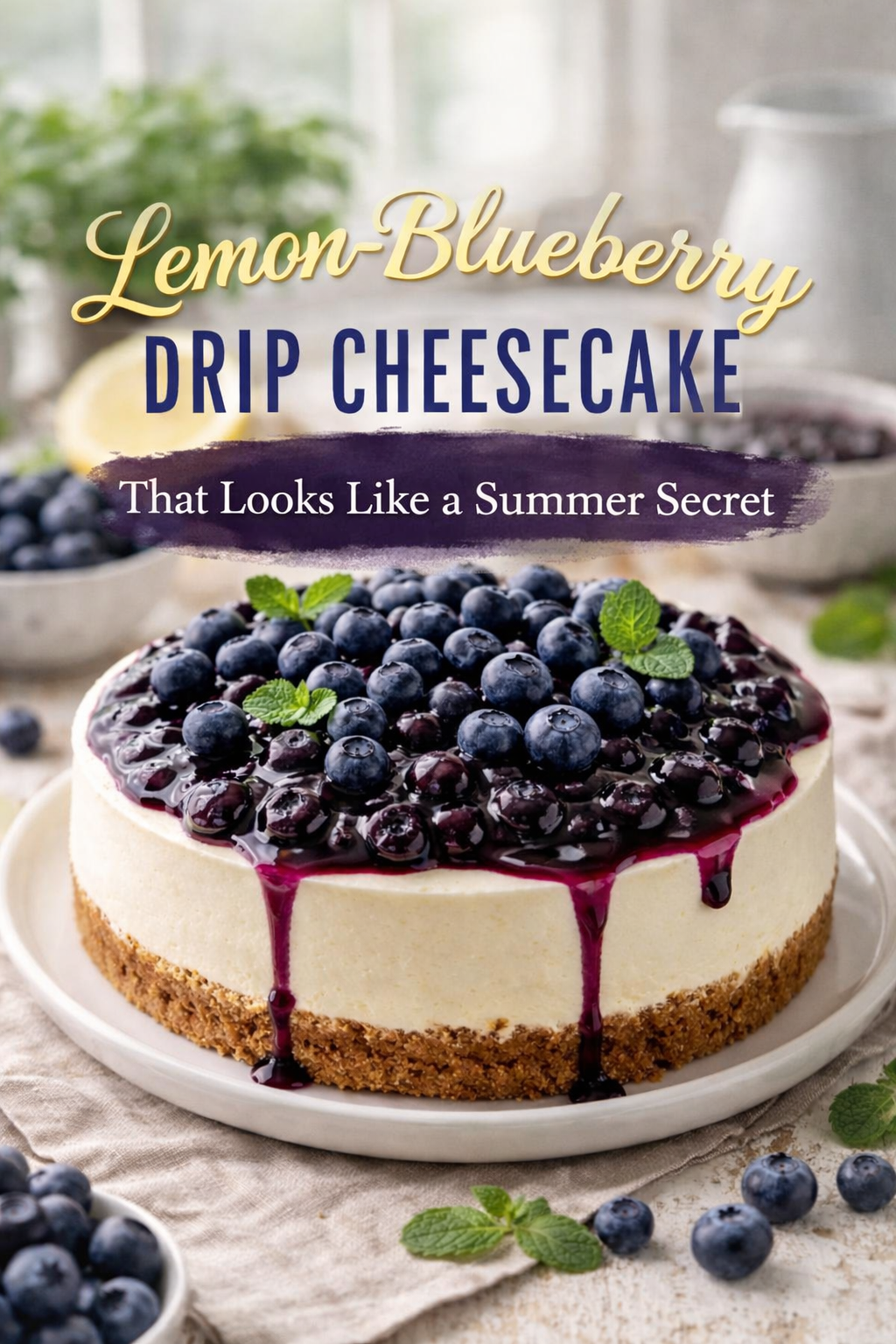
The topping in the image is thick, shiny, and marbled—like blueberry jam met a glaze. Cook the blueberries with sugar and lemon until the fruit bursts and the liquid turns purple-black. Lemon juice isn’t just brightness; it keeps the flavor from tasting flat. The cornstarch slurry is what gives you those slow drips down the side instead of a watery puddle.
For a smooth, jewel-like finish, strain some of the cooked berries and liquid through a fine mesh strainer, then stir it back into the pot—this keeps the topping lush without too many skins. A fine mesh strainer that catches seeds and skins is the easiest way to get that “glossy swirl” look. Let the topping cool completely before it touches the cheesecake; warm topping can soften the surface and cause sliding.
Step 7: Assemble for that cinematic, lavender-field look
Once the cheesecake is fully chilled, unmold it and place it on a serving plate. Spoon the topping in the center first, then guide it toward the edges. If you want drips, encourage them—push a little topping right to the rim and let gravity do the styling. Add fresh blueberries around one side like a wreath, then tuck in tiny lavender sprigs. Keep the garnish asymmetric so it feels editorial, not formal.
Variations that keep the vibe but change the mood
- Lemon-lavender blueberry: Add 1–2 teaspoons lemon zest to the filling for a brighter finish.
- Vanilla-bean lavender: Swap vanilla extract for a vanilla bean paste to deepen the creamy notes.
- No-bake approach: Use gelatin or stabilized whipped filling if you want a refrigerator-set version, but keep the topping thick and cool.
Troubleshooting, fast and friendly
- Grainy filling: Usually from overbaking or too-high mixing speed. Next time, mix gentler and pull the cake earlier.
- Cracks: Temperature shock or overbake. Cool slowly, and remember the topping is your elegant cover story.
- Topping too runny: It needs a longer simmer or a touch more slurry. Let it cool—thickening increases as it cools.
- Lavender too strong: Use less next time and balance with extra lemon juice in the topping. Serve with fresh berries to brighten.
Serve this cold, with a clean slice and a little pause before the first bite. The blueberry hits first—deep and jammy—then the filling melts into soft cream, and finally the lavender rises gently at the end like a breeze from a purple field. That’s the magic: not loud, not complicated—just beautifully composed.