
Sunlit Heat & Garden Chive Deviled Eggs Recipe

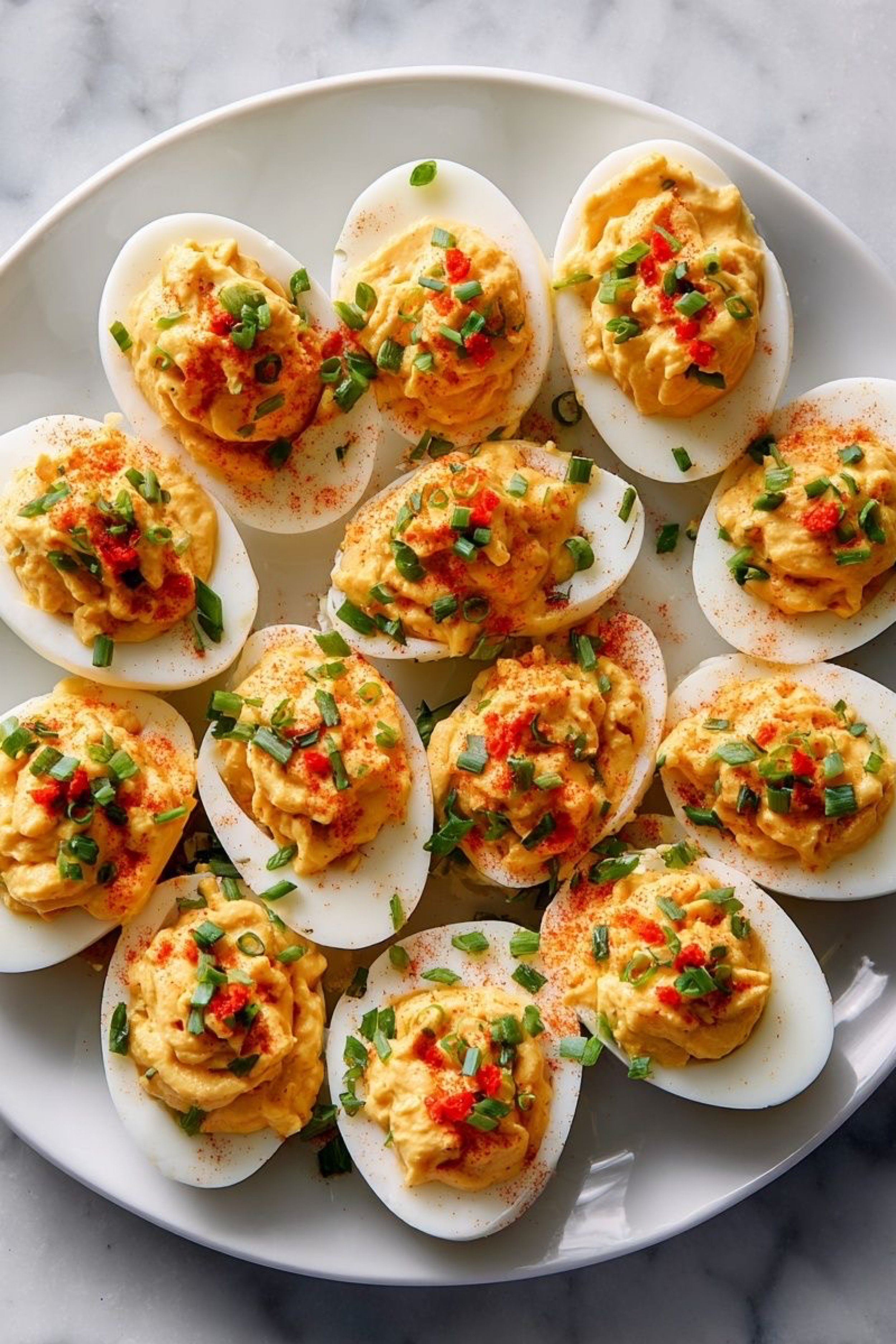
The plate arrives like a small ceremony—clean white porcelain against cool marble, the kind of surface that makes everything feel intentional. Deviled eggs are arranged in a loose constellation, each half cradling a soft swirl of golden filling. The whites look porcelain-smooth and bright, the yolk mixture whipped into a plush, satin mound that catches the light the way good butter does when it’s just warm enough to surrender.
Then come the accents: a snowfall of chopped green chives, sharp and fresh, scattered with the casual confidence of someone who knows exactly how much color a dish needs. A blush of paprika lands in little drifts and streaks—warm red dusting the peaks, pooling in the tiniest creases, hinting at smoke and sweetness before you even taste. It’s a familiar flavor dressed up in a cleaner, brighter mood: brunch-light instead of potluck-heavy, crisp instead of cloying, the kind of bite that makes you reach for “just one more” and then realize you’ve eaten three without thinking.
Deviled eggs have always been the food version of a well-cut blazer: dependable, flattering, instantly appropriate, and somehow still capable of turning heads when the details are right. Here, the details matter—how the filling is beaten until it becomes airy rather than dense, how the mustard lifts the richness into something snappy, how the acid (a clean hit of vinegar or lemon) keeps the bite from feeling sleepy. Even the way they’re piped changes the experience; a soft rosette feels generous and luxurious, especially when you use a piping set with assorted tips for clean, elegant swirls instead of a spoon that leaves the surface flat.
There’s a quiet sophistication to the scene: not fussy, not overworked—just tidy, bright, and confident. The eggs look like they were made in a kitchen that values good light, sharp knives, and ingredients that earn their place. The chives read as garden-fresh, and if you’ve ever snipped herbs straight into a bowl, you know the difference it makes. A small prep bowl of chopped chives feels like a tiny luxury, especially when you reach for a set of glass prep bowls that keeps mise en place neat and everything stays calm instead of chaotic.
This is the kind of recipe that rewards a little care. Not complication—care. The eggs need to be cooked so the yolks are tender, not chalky; the filling needs seasoning in layers; the texture wants to be smooth enough to feel creamy but structured enough to hold a peak. When it’s right, the first bite is cool and rich, then the mustard wakes it up, the paprika warms it, and the chives cut through with a clean green snap. It tastes like the best version of something you thought you already knew.
There’s also something satisfying about the rhythm of it: the gentle tap of shells cracking, the quiet plunge into cold water, the patient peel that reveals perfect whites. If you’ve ever chased a clean peel with stubborn eggs, you already understand why a small upgrade can change everything—like a wide pot that holds a single layer of eggs without crowding and a slotted spoon that lifts them out without bruising. It’s not about gear for the sake of gear; it’s about making the process feel as polished as the final plate looks.
And that final plate really does feel like a finish—paprika dust like a soft filter, green chives like jewelry, the creamy centers piped high and proud. It’s party food that photographs like a lifestyle spread. It’s also deeply practical: you can make it ahead, chill it, and bring it out when you want something that looks impressive without requiring last-minute heroics. Keep them cold on a busy day with a deviled egg carrier that protects the piped tops in transit, or serve them on something simple and elegant like a white oval serving platter that makes colors pop.
Deviled eggs never need to shout. When they’re made like this—creamy, bright, lightly smoky, finished with a clean green bite—they simply disappear from the plate, one perfect half at a time.
Deviled eggs are at their best when the filling is whipped smooth, seasoned with intent, and finished with a fresh, bright garnish. This version leans classic—mayo, mustard, and a touch of acid—then gets a clean lift from chives and a warm paprika finish.
Ingredients
- 6 large eggs
- 1/4 cup mayonnaise
- 1 1/2 teaspoons Dijon mustard (or yellow mustard for a more traditional bite)
- 1 1/2 teaspoons white vinegar or fresh lemon juice
- 1/4 teaspoon kosher salt, plus more to taste
- 1/8 teaspoon black pepper
- Paprika (sweet or smoked), for finishing
- 2 tablespoons chopped fresh chives, for finishing
Optional (for extra depth):
- 1/4 teaspoon smoked paprika in the filling
- 1/2 teaspoon pickle juice (swap for some of the vinegar)
Method
- Cook the eggs: Place eggs in a single layer in a pot. Cover with cold water by about 1 inch. Bring just to a boil, then cover and remove from heat. Rest 10–12 minutes.
- Chill: Transfer eggs to an ice bath for 10 minutes to stop cooking and help peeling.
- Peel & halve: Peel eggs, slice lengthwise, and gently pop yolks into a bowl.
- Make the filling: Mash yolks until fine, then stir in mayo, mustard, vinegar (or lemon), salt, and pepper. Whip until smooth (a fork works; for ultra-silky use a hand mixer for a quick, cloud-smooth filling).
- Fill: Spoon or pipe the filling into whites (clean swirls are easiest with disposable piping bags for quick, neat filling).
- Finish: Dust with paprika and scatter chives over the top. Chill 20–30 minutes for best flavor and texture.
Deviled eggs look effortless when they’re done well, but the “done well” part is a chain of small, smart decisions—timing, temperature, texture, and seasoning. Nail those, and you get a filling that tastes bright instead of heavy, sits tall instead of slumping, and delivers that clean, creamy bite every single time.
Start with the cook. The goal is yolks that are fully set but not dry, because dryness forces you to add extra mayo to rescue texture, and extra mayo can mute flavor. The covered-rest method (bring to a boil, then turn off the heat and let them sit) is a gentle way to avoid rubbery whites and chalky yolks. Keep the eggs in a single layer if possible; crowding increases uneven cooking. A steady simmering setup is easier with a roomy saucepan that holds eggs without stacking, and lifting them out cleanly matters more than you’d think—jostled hot eggs crack, and cracked eggs leak, and leaked whites get ragged. Use a slotted spoon that gives you control and move calmly.
Then comes the ice bath, which is not optional if you care about peel quality. Rapid chilling stops carryover cooking (so yolks stay tender), and it helps the membrane separate from the white. Give them the full ten minutes. When you peel, crack the shell all over with gentle taps, then roll the egg under your palm to loosen it. Peel under a thin stream of water or in a bowl of water if you like—water slips between membrane and white and can save eggs that want to tear.
Once the yolks are out, texture is everything. Mash first until the yolks are sandy and uniform before you add any wet ingredients. If you add mayo too soon, you trap lumps. A fork works, but if you want that “piped like a bakery” silkiness, push the yolks through a fine mesh strainer for a perfectly smooth base or use a quick pass with a hand mixer to whip air into the filling. Air matters: a whipped filling feels lighter on the tongue and holds a prettier shape.
Season in layers. Think of the filling as a balance of richness (mayo), sharpness (mustard), and brightness (acid). Mustard gives structure and a clean bite; Dijon brings a smoother heat, while yellow mustard reads more classic and nostalgic. Acid—white vinegar, apple cider vinegar, or lemon juice—keeps the yolk and mayo from tasting flat. Add salt early, then taste, then adjust again at the end. The salt doesn’t just make it “salty”; it makes it taste more like egg, more like mustard, more like everything.
Now the paprika. The image shows a warm red dusting that looks like it’s been sprinkled with a light hand, then allowed to settle into the filling’s curves. Sweet paprika gives color and a gentle peppery warmth. Smoked paprika adds a subtle campfire note that turns deviled eggs from familiar to slightly addictive. You can do both: a pinch of smoked paprika inside the filling and a sweet paprika finish for color. For extra dimension, add a few grains of cayenne or a micro-dash of hot sauce—just enough to wake up the palate, not enough to announce itself.
Chives are the clean green finish that makes everything feel modern and fresh. Cut them small so they scatter evenly and don’t poke out awkwardly. Their mild onion flavor lifts the richness without pulling focus. If you don’t have chives, thinly sliced scallion greens work well; minced dill is also lovely if you lean into a more picnic-bright vibe.
Filling method changes the entire look. Spoon-filled deviled eggs taste great, but piped deviled eggs look intentional—peaks, rosettes, soft folds. Use disposable piping bags for easy cleanup, and if you want that sculpted swirl, grab a piping tip set with a large star tip. No piping bag? Snip the corner off a sturdy zip-top bag. Keep the motion simple: press, lift, stop. Don’t overwork it.
Chill is the quiet final step that separates good from great. Twenty to thirty minutes in the fridge lets flavors meld and firms the filling so it tastes cleaner and holds its shape. If you’re serving later, cover gently—pressing plastic wrap directly onto the filling can ruin the peaks, so either tent it or use a container with enough clearance. Transporting? Save yourself heartbreak with a deviled egg carrier that keeps each half secure. It’s the difference between arriving polished and arriving with paprika smears and collapsed swirls.
Troubleshooting is straightforward:
- If the filling tastes dull, it needs acid and salt, not more mayo.
- If it feels too stiff, add a teaspoon of mayo or a few drops of vinegar.
- If it feels too loose, chill it briefly, or add a small amount of extra yolk (even one additional yolk can tighten texture).
- If you want it extra smooth, strain the yolks or whip with a mixer—lumps are almost always a mashing problem, not an ingredient problem.
Variations that stay elegant:
- Smoky-chive: Smoked paprika in the filling + sweet paprika on top.
- Pickle-bright: Replace half the vinegar with pickle juice; add finely chopped pickles if you like texture.
- Herb garden: Chives + dill + a touch of lemon zest for a fresher, springy finish.
- Brunch luxe: A tiny spoon of relish and a stronger Dijon bite, served cold on a crisp platter like a minimal white serving plate that reads clean on camera.
The real secret is restraint: keep the seasoning clear, keep the texture smooth, keep the finish fresh. When the filling is light and the garnish is crisp, deviled eggs stop feeling like “just a party snack” and start looking—and tasting—like something you meant to serve.