The Quiet Architecture of Green: Living With a Spider Plant
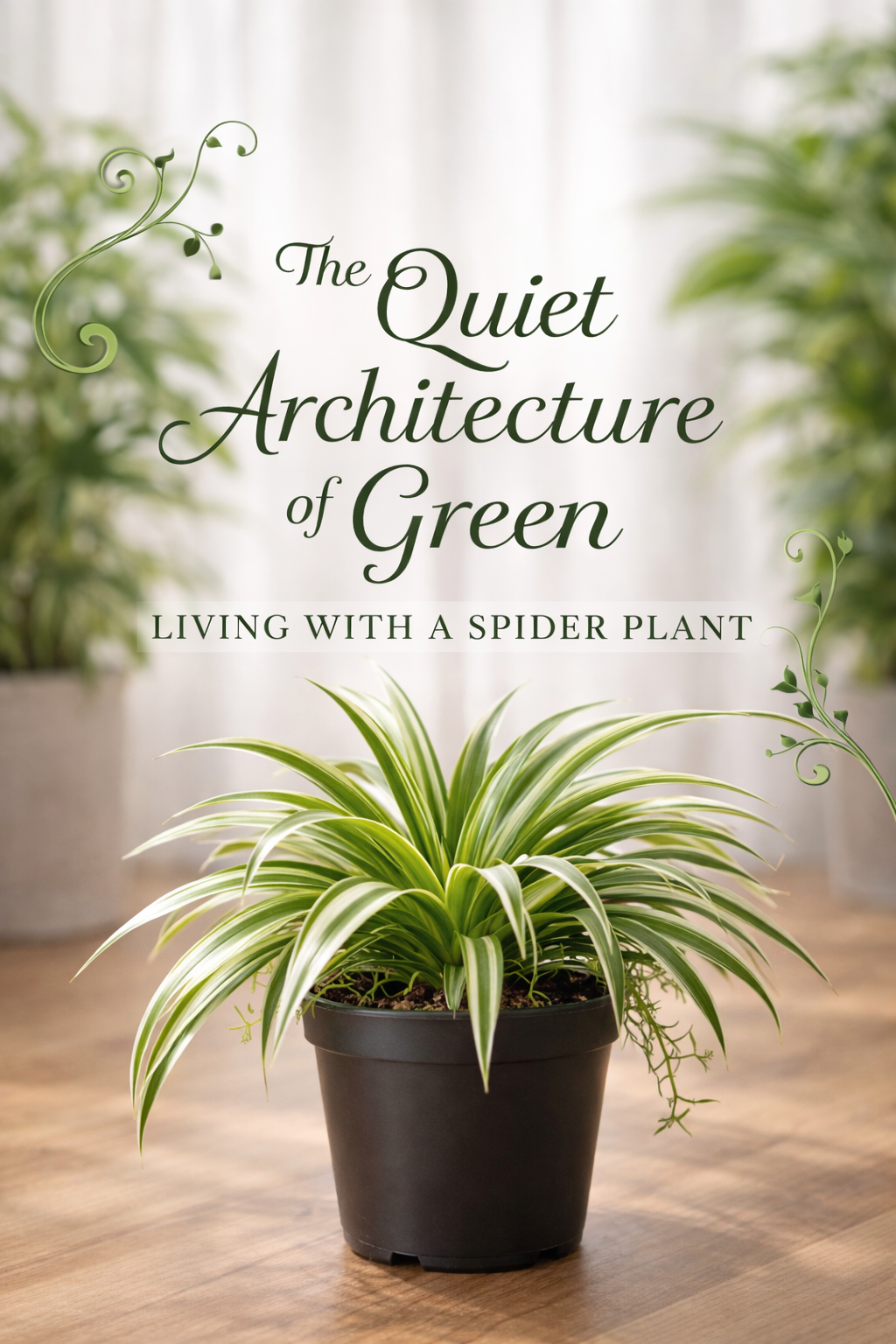
There is a particular grace to a spider plant, the kind that reveals itself slowly. It does not shout for attention or announce its presence with oversized leaves or theatrical blooms. Instead, it settles into a room the way good light does, casting soft lines of green and ivory outward from a central calm. On a wooden floor or a windowsill washed in morning sun, the spider plant becomes less of an object and more of a rhythm, its arching blades bending and lifting as the day moves on. This is a plant that understands domestic life intimately, thriving in the margins between effort and ease.
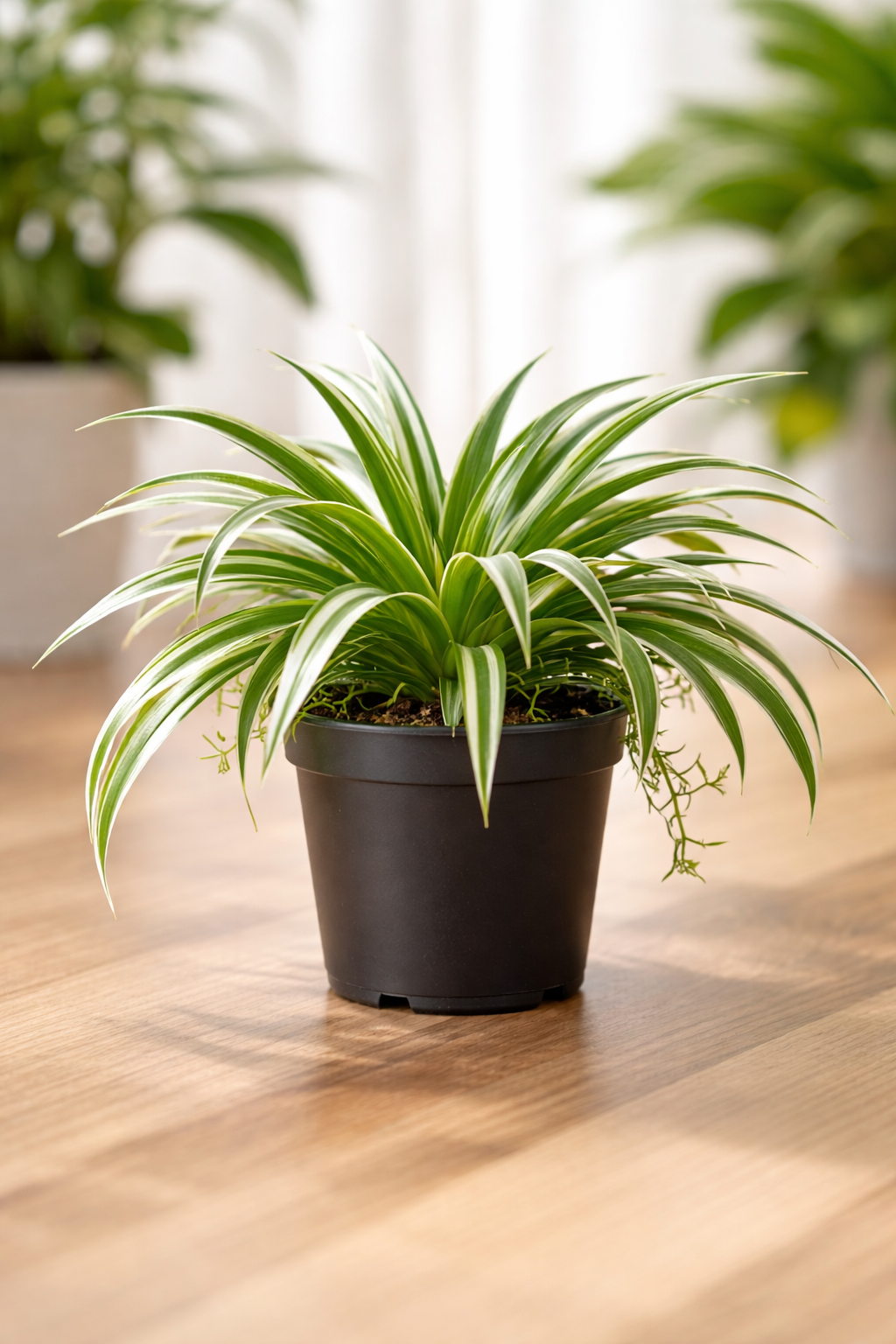
Known botanically as Chlorophytum comosum, the spider plant has earned its place as one of the most beloved houseplants in the world not through trend cycles, but through trust. Its long, narrow leaves spill outward in a fountain shape, often striped with pale cream or silver, creating contrast without aggression. In the right container, something understated and matte like a modern nursery pot or a sculptural ceramic vessel, it reads as intentional décor rather than greenery for greenery’s sake. A simple black planter like those found in a collection of minimalist indoor plant pots with drainage lets the foliage do the talking.
What makes the spider plant especially compelling is how adaptable it is to real homes. It tolerates inconsistency, understands that life gets busy, and responds generously when conditions improve again. Bright, indirect light brings out the crispest striping in its leaves, but it remains composed even in softer corners of a room. Set near a sheer-curtained window, it catches filtered sun and rewards you with steady, even growth. In spaces where natural light feels limited, a subtle assist from a slim full-spectrum grow light designed for houseplants can maintain its color and form without breaking the mood of the room.
Watering a spider plant is less about precision and more about observation. Its roots are thick and slightly tuberous, designed to store moisture, which means it prefers to dry out just a bit between waterings. When the soil surface feels dry and the pot feels lighter in your hand, that is the moment it appreciates a deep drink. Overwatering dulls its shine and can lead to browning tips, while a thoughtful cadence keeps the leaves supple and lively. Using a vessel like a long-spout indoor watering can with controlled flow turns this small ritual into something almost meditative.
Soil choice quietly shapes the plant’s long-term health. A loose, well-draining mix allows air to reach the roots and prevents moisture from lingering too long. Many plant lovers swear by blends that include perlite or orchid bark, similar to a premium indoor potting soil formulated for houseplants. The result is growth that feels steady rather than rushed, leaves that arch instead of collapse, and a plant that seems comfortable in its own skin.
As the spider plant matures, it begins to express itself more openly. Slender stems emerge, carrying small white flowers and eventually baby plants that dangle like living ornaments. These plantlets, often called “pups,” give the spider plant its common name and its sense of generosity. Left attached, they add visual drama, a cascade of green reaching outward. Snipped and rooted in water or soil, they become new plants, quiet gifts for friends or subtle expansions of your own indoor garden. A clean pair of precision pruning shears for indoor plants makes this process feel deliberate rather than improvised.
Feeding a spider plant is an act of restraint. It does not crave heavy fertilization, only occasional encouragement during its active growing months. A diluted dose of a balanced liquid fertilizer supports leaf production without overwhelming the roots. Something gentle, like a balanced liquid houseplant fertilizer, used sparingly, keeps growth vibrant while preserving the plant’s natural elegance.
Placement within the home matters as much aesthetically as horticulturally. On a low plant stand, the spider plant’s leaves spill outward like a living sculpture. Elevated slightly, perhaps on a modern wooden plant stand for indoor use, it becomes part of the architecture of the room, softening edges and drawing the eye upward. In kitchens and bathrooms, where humidity tends to linger, it often looks especially at ease, its leaves glossy and relaxed.
Beyond its visual appeal, the spider plant carries a quieter reputation as a purifier of indoor air, associated with filtering common household compounds. Whether or not one leans fully into that science, there is something undeniably refreshing about its presence. Rooms feel lighter, calmer, and more intentional with a spider plant anchoring a corner or framing a window.
What ultimately defines life with a spider plant is its companionship. It asks little, offers much, and adapts as your space evolves. As furniture shifts and seasons change, it remains, arching and unfurling, a reminder that good design and good living often come down to choosing elements that grow with you. In a world of constant updates and replacements, the spider plant stands as a quiet constant, rooted, graceful, and enduring.