White Flame, Green Shadow: Why the Peace Lily Still Owns the Room
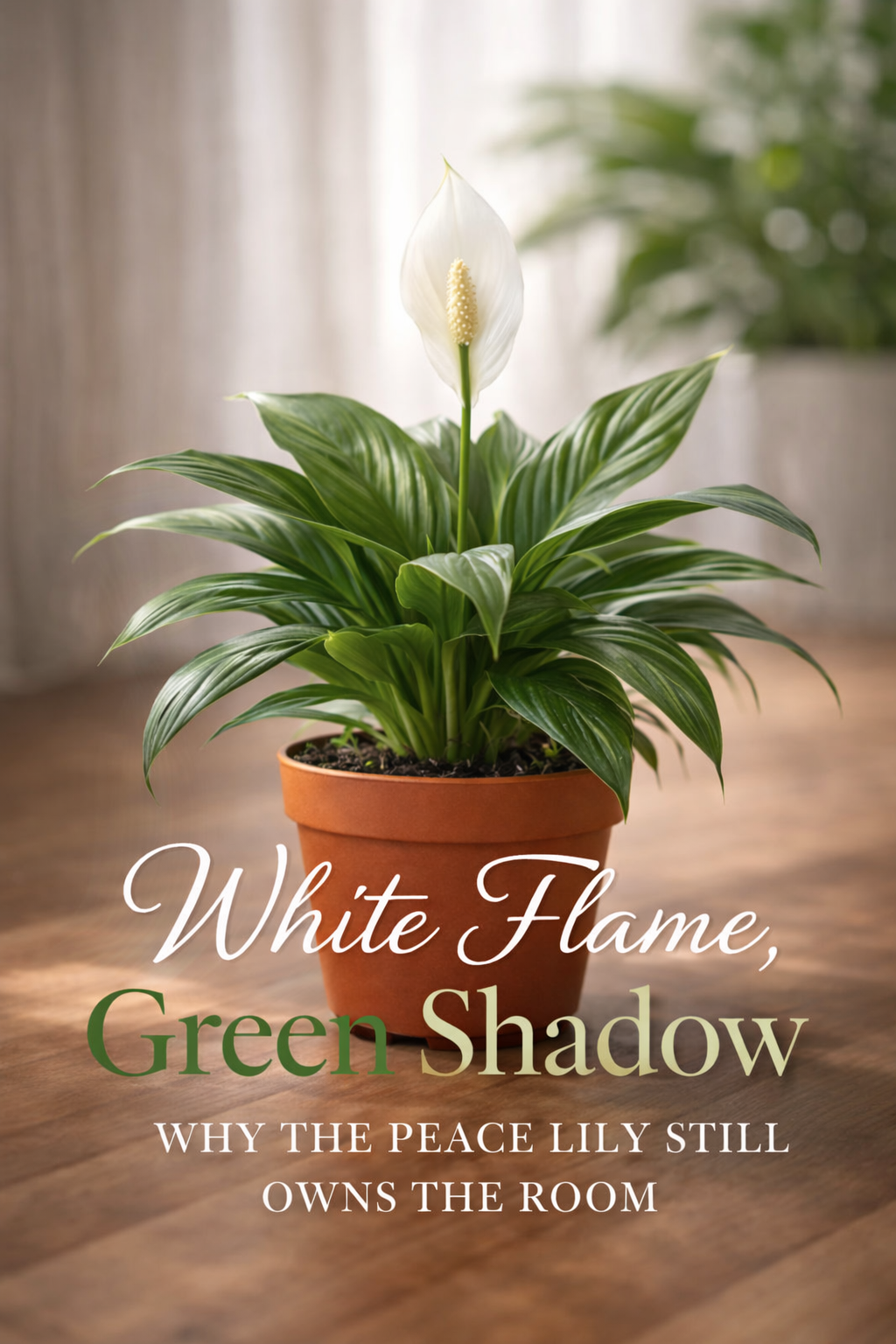
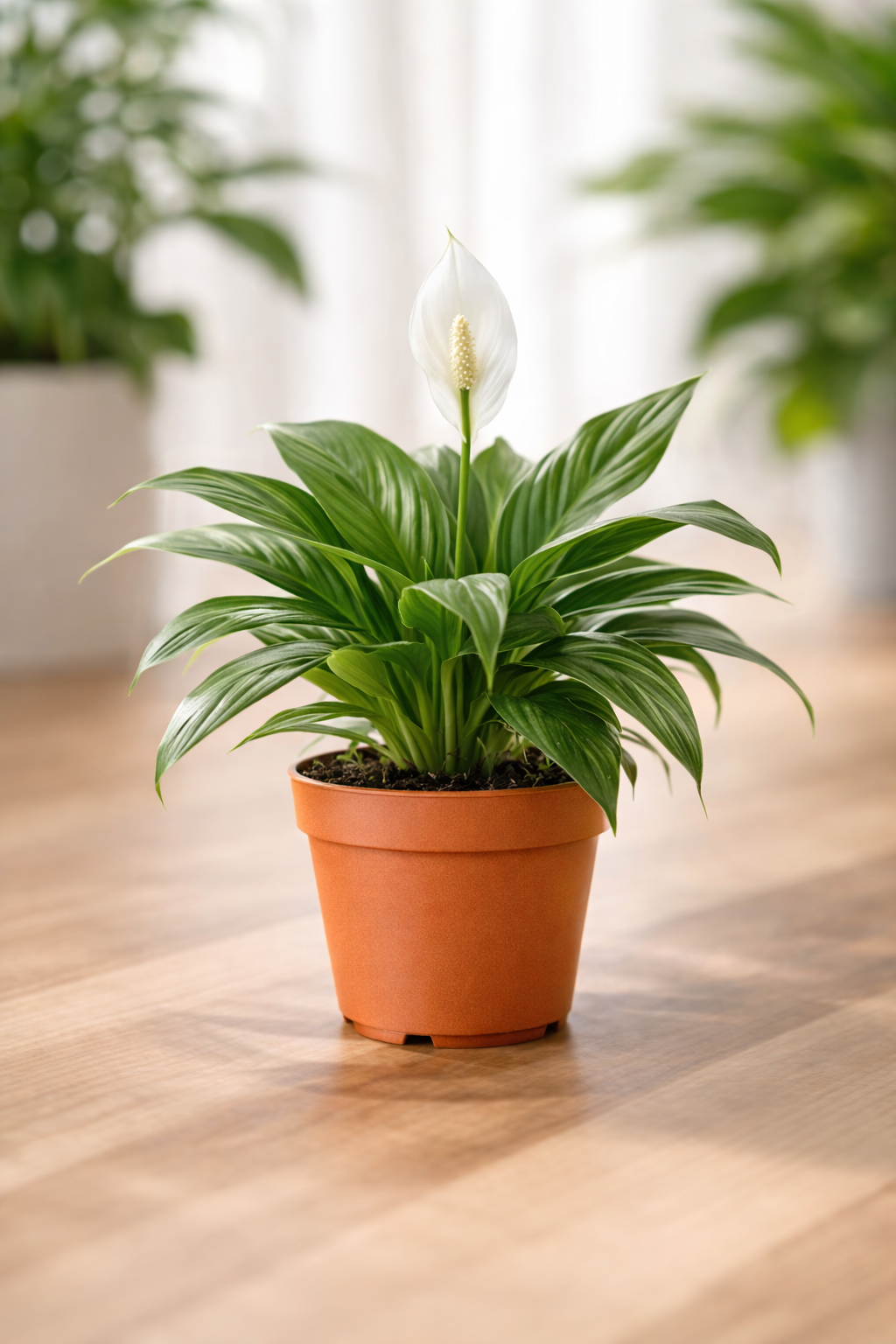
Some plants decorate a space. Others define it. The peace lily belongs firmly in the second category. With its dark, lance-shaped leaves fanning outward and that unmistakable white bloom rising like a quiet signal fire, it doesn’t merely sit in a room—it anchors it. There is a reason designers, collectors, and everyday plant lovers return to this species again and again. It has presence without noise, structure without stiffness, and a visual calm that feels intentional rather than accidental.
The beauty of a peace lily lies in contrast. The foliage is lush and shadowed, almost architectural in its depth of green, while the bloom reads as a clean interruption—bright, sculptural, and almost unreal against its backdrop. That interplay is what allows the plant to work in so many interiors. In minimalist rooms, it becomes the focal point. In layered, eclectic spaces, it brings balance. Planted in a grounded natural terracotta pot with drainage, it feels earthy and timeless. Set into a sleek modern ceramic planter, it suddenly leans gallery-worthy.
Despite its refined appearance, the peace lily is refreshingly communicative. Few plants are as honest about their needs. When it wants water, it doesn’t fail quietly. The leaves soften and droop, a clear visual cue rather than a slow decline. One deep watering, delivered deliberately with a long-spout indoor watering can, brings it back to form within hours. It’s a rhythm that feels intuitive, almost collaborative, which is part of why people keep peace lilies alive for decades.
Light preference is another reason this plant earns its reputation. It thrives in bright, indirect light but tolerates lower-light environments better than most flowering houseplants. This makes it ideal for spaces where direct sun is scarce but ambiance matters—hallways, offices, bedrooms, and shaded living rooms. Too much sun dulls its leaves and scorches their edges, while too little light reduces blooming. When placed correctly, the plant settles into a steady cycle of growth and rest, rewarding patience with periodic flowers that feel earned rather than forced.
Under the surface, soil structure quietly determines how good your peace lily will look long term. It prefers moisture, but never stagnation. A breathable, well-draining indoor plant potting mix enriched with perlite or orchid bark creates the conditions its roots crave. Containers with drainage holes are essential, and placing the pot on a subtle indoor plant stand improves airflow while elevating the plant visually, turning it into a design element rather than background filler.
Humidity is the quiet luxury factor for peace lilies. While they tolerate average household air, they truly flourish in slightly humid environments. This is why they often look exceptional in bathrooms or kitchens with filtered light. In drier rooms, an occasional misting or a nearby small ultrasonic humidifier keeps leaf tips crisp and prevents browning. The difference isn’t dramatic overnight, but over months it shows in broader leaves, richer color, and cleaner blooms.
Feeding is best approached with restraint. Peace lilies respond well to a diluted balanced liquid houseplant fertilizer during spring and summer, when growth is active. Overfeeding quickly announces itself through burned leaf tips and tired foliage. This is a plant that rewards subtlety. Less intervention, thoughtfully applied, produces a stronger, more elegant specimen.
Styling a peace lily is where practicality meets aesthetic instinct. On the floor beside a low sofa, it feels grounding. On a console table or dresser, it becomes sculptural. Nesting the pot inside a woven plant basket softens its outline and adds texture, while pairing it with natural wood accent furniture reinforces its organic presence. Unlike trend-driven plants, it doesn’t compete with décor—it harmonizes with it.
Part of the peace lily’s enduring appeal is that it never feels dated. It has survived decades of interior trends because it doesn’t rely on novelty. Its form is inherently balanced, its care routine forgiving, and its visual language universal. This is the plant that moves with you, adapting from apartment to house, from rental to forever home, always looking as though it belongs.
More than anything, a peace lily offers continuity. It grows slowly, predictably, responding to light, water, and care with visible gratitude. It doesn’t demand constant attention, but it does reward consistency. In that way, it becomes less of a decorative object and more of a living constant—a quiet presence that makes a room feel complete, settled, and alive.