The Quiet Elegance of the Parlor Palm: A Living Relic for Modern Rooms
There is something deeply reassuring about a parlor palm settling into a room. Its fronds arc outward with a softness that feels intentional rather than wild, as if the plant understands interior spaces the way antique furniture does—never demanding attention, yet quietly transforming the atmosphere. Long before houseplants became social-media stars, this palm earned its place in Victorian drawing rooms, where it thrived under gaslight and long winters, bringing a note of green refinement to spaces built for conversation and calm. Today, that same sensibility translates seamlessly into apartments, offices, sunlit kitchens, and bedrooms that crave life without chaos.
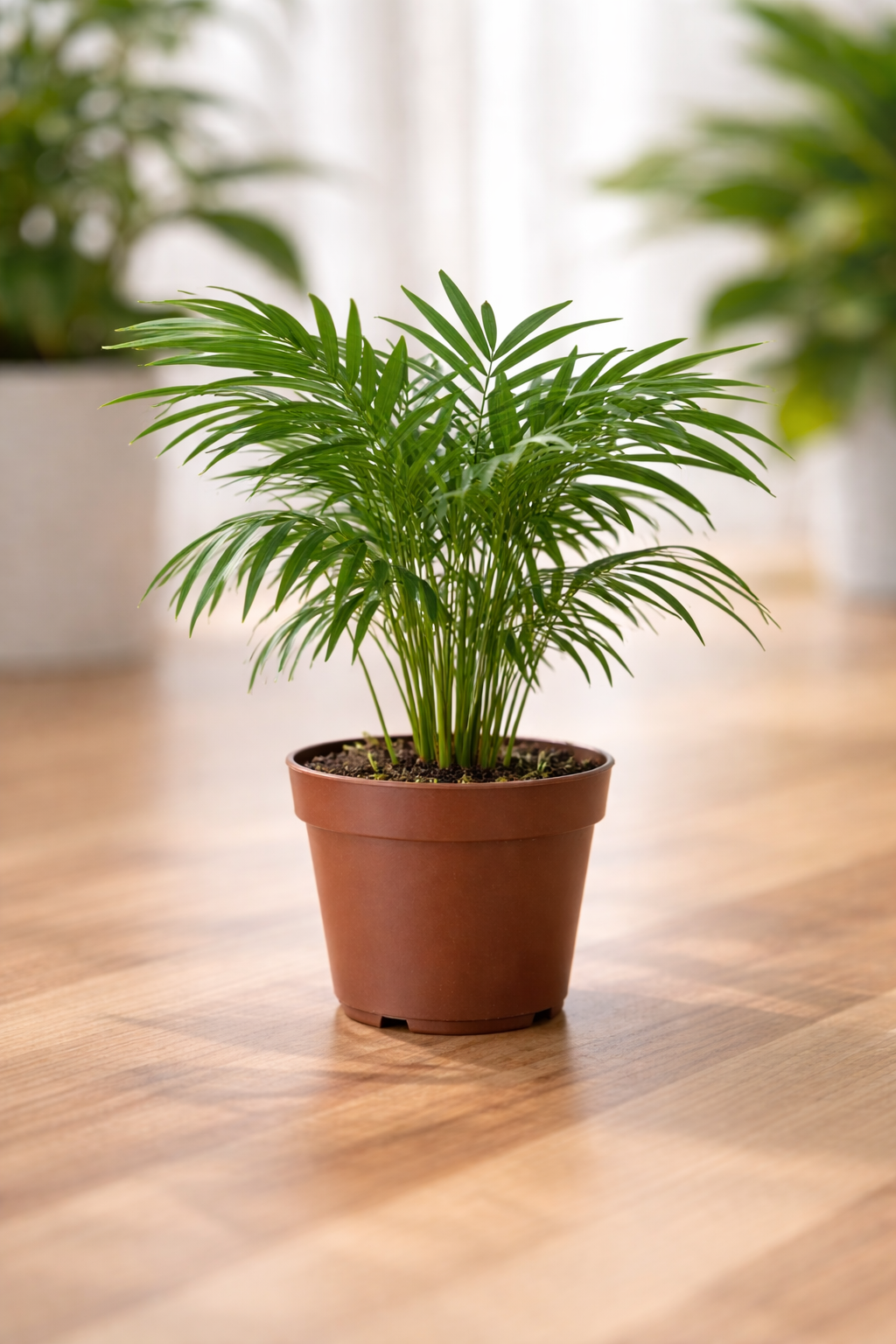
The parlor palm is often chosen for its elegance, but it is loved for its restraint. It grows slowly, never lunging for the ceiling or shedding leaves in dramatic protest. Instead, it develops with patience, adding height and fullness over years rather than weeks. This makes it ideal for those who appreciate continuity in their spaces, the way a favorite chair molds itself to a room over time. Planted in a simple vessel like a classic unglazed terracotta pot, the palm feels timeless, its feathery leaves contrasting beautifully against warm clay and wood floors.
Light is where this plant shows its intelligence. Unlike many tropical species that insist on blazing sun, the parlor palm prefers moderation. Bright, indirect light allows it to hold its rich green color, but it will tolerate lower-light rooms with grace, making it a natural companion for hallways, offices, and living rooms where sunlight arrives filtered and gentle. When placed near a north- or east-facing window, it seems to exhale, fronds lifting slightly as if relieved. In darker corners, a discreet slim-profile LED grow light can quietly extend the day without disrupting the mood of the space, especially during winter months.
Watering a parlor palm is less about schedules and more about attentiveness. The soil prefers to dry slightly between waterings, a rhythm that mirrors the plant’s calm personality. Overwatering dulls its vitality, while neglect causes tips to crisp and curl. Many seasoned plant owners keep a simple moisture meter tucked into a drawer, not as a crutch but as a reassurance, a way to confirm what instinct already suggests. When watered properly, the palm responds with steady growth and leaves that maintain their silky texture.
Humidity is where the parlor palm reveals its tropical origins. Dry air, especially during heated winters, can rob it of that lush appearance. A quiet cool-mist humidifier designed for indoor plants nearby can transform not only the palm but the entire room, softening the air and making the space feel more breathable. Some prefer the understated ritual of a pebble tray, where evaporation works slowly and naturally, reinforcing the plant’s preference for subtlety over excess.
Feeding the parlor palm is an exercise in restraint. Too much fertilizer overwhelms its roots, while a light, consistent approach supports healthy fronds. A balanced liquid palm fertilizer, diluted and applied sparingly during the growing season, keeps the plant nourished without forcing unnatural speed. Growth remains compact and elegant, which is precisely the point. This is not a plant meant to impress overnight; it is meant to endure.
As the palm matures, occasional grooming becomes part of the relationship. Older fronds yellow naturally, signaling that the plant is reallocating its energy. Removing them with a clean pair of precision pruning shears keeps the silhouette tidy and prevents decay at the base. This small act feels less like maintenance and more like stewardship, a quiet moment of care that reinforces the connection between plant and space.
Beyond its visual appeal, the parlor palm carries an understated functional legacy. It has long been associated with improved indoor air quality, not as a miracle cure but as a gentle contributor to healthier interiors. Its leaves trap dust, its presence encourages mindful living, and its calm growth rate invites slower rhythms. In a bedroom, it reads as restorative. In an office, it softens edges and absorbs stress. In a living room, it becomes a visual anchor, especially when paired with natural textures like linen, wool, and wood.
Styling the parlor palm is an intuitive process. It does not compete with bold décor but complements it, offering balance to patterned rugs, dark walls, or sculptural furniture. Elevated slightly on a low stand or placed directly on the floor, it adapts without complaint. For those who enjoy refreshing their spaces seasonally, the palm remains constant, a green throughline that ties evolving aesthetics together. Even repotting, when eventually required, is more ceremonial than disruptive, an opportunity to refresh soil and perhaps upgrade to a heavier vessel that grounds the plant visually and physically.
Ultimately, the parlor palm is not about trends or statements. It is about presence. It occupies a room the way good lighting does—enhancing everything without announcing itself. In a world increasingly drawn to extremes, this plant offers something quieter and more enduring. It reminds us that beauty can be patient, that growth does not need to be dramatic, and that the most lasting elements in our homes are often the ones that simply show up, day after day, doing their work without fuss.