The Upright Pact: Living With a Snake Plant That Refuses to Be Fragile

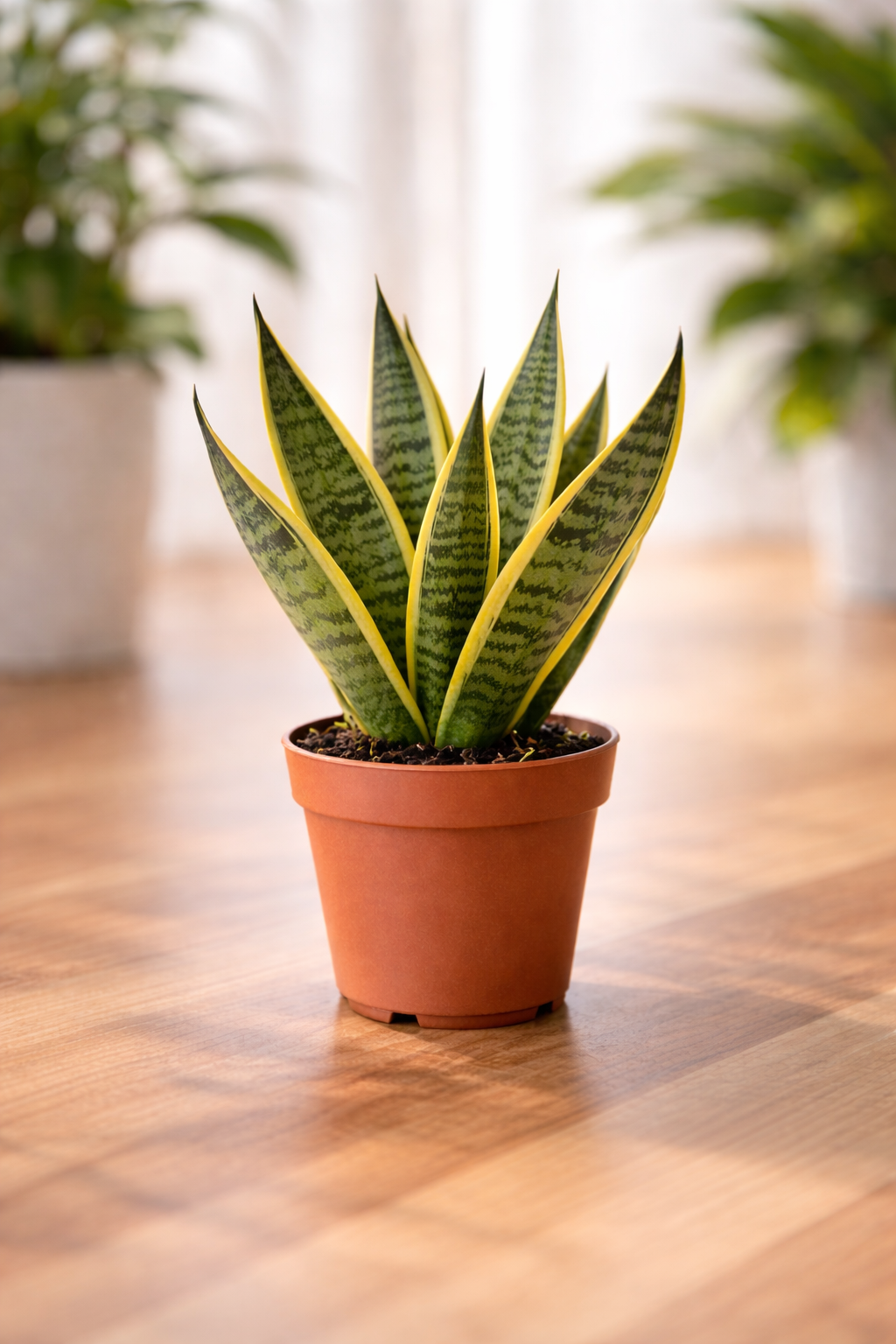
The snake plant does not perform. It does not spill, trail, or soften the edges of a room. It stands. That alone makes it radical. In a domestic world crowded with gestures toward coziness and abundance, the snake plant offers something rarer: restraint with intent. Its leaves rise like green blades edged in pale gold, firm and unapologetic, creating a sense of order that feels architectural rather than decorative. You don’t place a snake plant to fill space. You place it to define it.
This is a plant that understands interiors better than most people do. It respects walls. It respects corners. It knows how to hold its ground without spreading into chaos. Each leaf grows with a sense of purpose, thick and water-storing, patterned with subtle horizontal banding that looks almost hand-drawn. There is nothing lush or romantic about it, and that is precisely its power. The snake plant brings clarity to a room, the way a well-cut jacket brings clarity to an outfit.
What makes this plant quietly extraordinary is how little it asks in return for that presence. Light is a suggestion, not a demand. It tolerates dim apartments and north-facing rooms with stoic patience, yet rewards brighter, indirect light with sharper color and cleaner contrast. Near a window filtered by sheer curtains, the yellow margins glow softly, catching morning light without ever appearing flashy. It adapts rather than insists, which is why it has followed generations of homes through changing styles without ever falling out of favor.
Water, too, is an agreement rather than a routine. The snake plant evolved to store moisture in its leaves, turning neglect into an advantage. Soil that dries fully between waterings keeps it composed and healthy, while constant moisture is the one thing it quietly resents. A breathable terracotta planter allows excess water to evaporate naturally and grounds the plant visually, while a gritty, fast-draining mix—like a quality cactus and succulent soil—creates conditions where the roots can breathe. For those who prefer certainty without fuss, a slim soil moisture meter slipped discreetly into the pot offers reassurance without encouraging overcare.
Temperature is almost irrelevant to this plant, which is why it thrives in modern homes with fluctuating conditions. Warm rooms suit it best, but it tolerates cooler spaces so long as frost never enters the conversation. Dry indoor air doesn’t bother it. Radiators, wood stoves, central heat—it accepts them all with the same upright composure. There is no need for misting rituals or humidity trays. The snake plant does not require ceremony to survive.
Its growth pattern reinforces its role as a long-term fixture rather than a seasonal indulgence. New leaves appear slowly, emerging like tightly rolled scrolls before hardening into vertical blades. Over time, the plant becomes taller, denser, more confident in its footprint. Occasionally, offsets emerge at the base, quiet promises of future plants that can be divided when the time feels right. A clean pair of pruning shears is all the equipment you’ll ever need, though most owners rarely use them.
The visual impact of a snake plant is about proportion and placement. Because it grows vertically, it changes how a room feels rather than how it looks. Ceilings seem higher. Corners feel intentional instead of empty. In minimalist interiors, it acts as a living line drawing against neutral walls. In layered, textural homes, it provides contrast—a moment of discipline among softness. A substantial ceramic planter in a muted finish gives it weight, while a low-profile rolling plant stand makes it easy to reposition as light shifts through the seasons.
There is also a legacy of usefulness attached to this plant that goes beyond aesthetics. Long associated with improved indoor air quality, the snake plant has earned a reputation as a quiet contributor to healthier living spaces. Whether one focuses on the science or the symbolism, its presence feels corrective, as if it absorbs not just toxins but visual noise as well. It calms without trying to comfort, which is a subtler and often more effective form of peace.
Styling a snake plant is an exercise in restraint. It pairs naturally with raw wood floors, concrete surfaces, linen upholstery, and neutral palettes that value texture over ornament. In contemporary spaces, it echoes the clean lines of modern furniture. In traditional homes, it introduces tension in the best way, sharpening the overall composition. In darker rooms, a discreet LED grow light placed overhead can maintain leaf color while preserving the illusion of natural light, allowing the plant to remain where it belongs rather than where it merely survives.
What ultimately sets the snake plant apart is its philosophy. It thrives on trust. Give it the right conditions—a well-draining pot, occasional water, reasonable light—and then step back. It does not reward micromanagement. It rewards patience. In that way, it mirrors the most enduring design choices: pieces that grow more compelling over time because they were never trying to impress in the first place.
A snake plant is not an accent. It is a decision. One that ages well, asks little, and gives structure in return. In a home filled with movement, it remains steady, reminding you that presence does not require performance, and that sometimes the most powerful statement a living thing can make is simply standing its ground.