The Soft Architecture of Green: Living with a Boston Fern Indoors
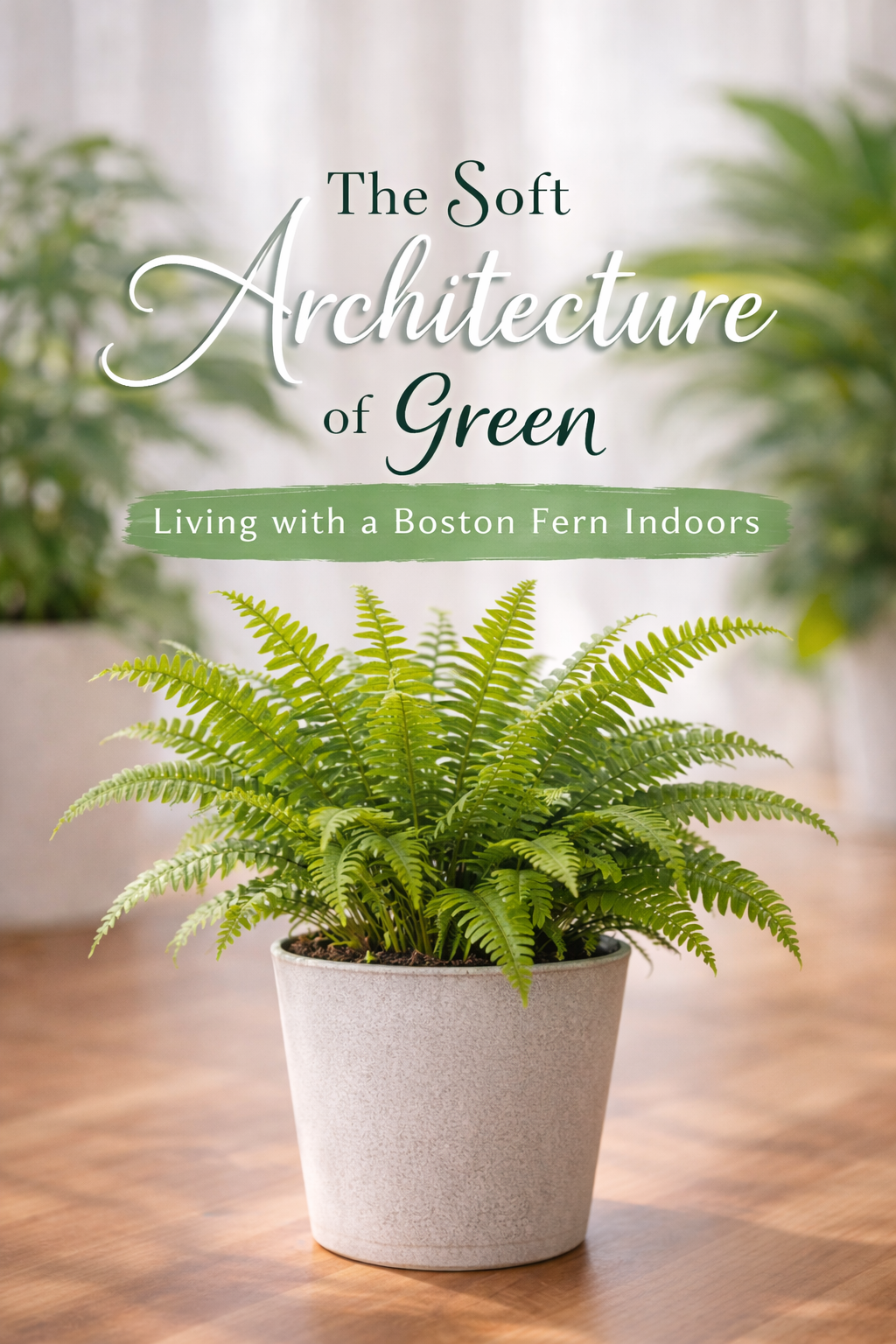
There is a particular grace to a Boston fern that no other houseplant quite manages. It doesn’t sit stiffly in a corner or perform for attention with dramatic blooms. Instead, it spills. It breathes. Its fronds arch outward like green handwriting, looping gently into the space around it, softening light, corners, and even mood. A Boston fern is not an accent; it is atmosphere. The moment one enters a room, it quietly changes the way the space feels—cooler, calmer, more alive.
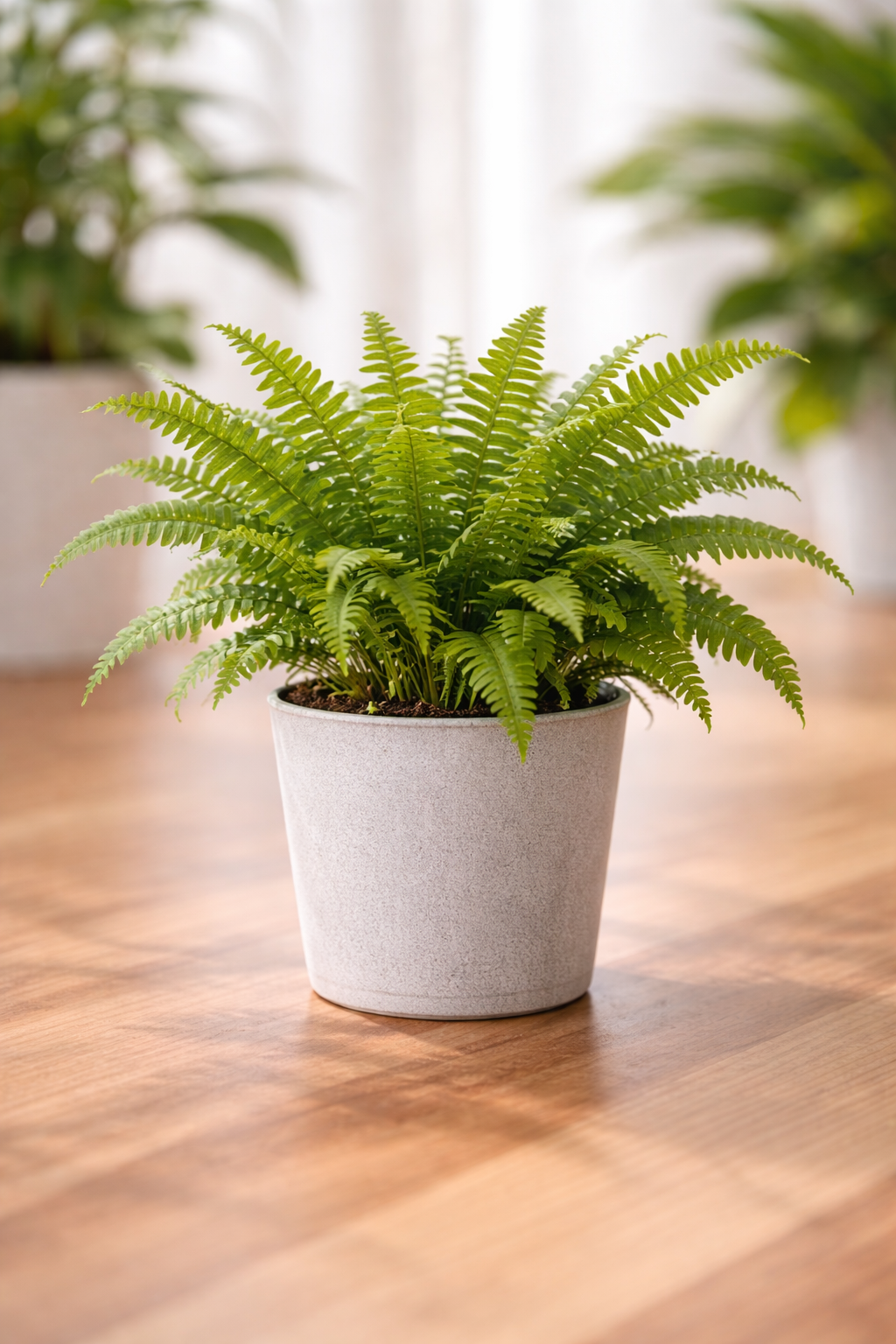
What you’re looking at here is a classic Boston fern (Nephrolepis exaltata), a plant that has cycled through design eras without ever becoming dated. It once hung in Victorian parlors, later graced mid-century sunrooms, and today feels perfectly at home in minimalist interiors, boho bedrooms, or modern farmhouse kitchens. Its appeal lies in movement and texture: feathered fronds layered densely enough to feel lush, yet airy enough to let light pass through.
Part of the fern’s magic is how well it pairs with understated materials. A matte ceramic planter—especially something with a subtle stone or concrete finish like a minimalist ceramic indoor planter—keeps the focus on the foliage itself. Set against warm wood floors or pale linen curtains, the fern reads as intentional rather than ornamental, like a living design choice instead of décor.
Despite its refined appearance, the Boston fern is refreshingly practical. It thrives in bright, indirect light, the kind that filters through sheer curtains or bounces off pale walls. Direct sun can scorch its delicate fronds, while deep shade causes the plant to thin and lose its signature fullness. Think of the light conditions you’d find near a north- or east-facing window, where illumination feels generous but never harsh.
Water, for a fern, is less about routine and more about consistency. Boston ferns prefer evenly moist soil—never soggy, never bone dry. The goal is a rhythm that mirrors a forest floor: damp, breathable, alive. A self-watering indoor planter can be a quiet ally here, maintaining moisture without drowning the roots, especially useful if your schedule doesn’t always allow for perfect timing.
Humidity is where this plant truly shines. Boston ferns evolved in environments where the air itself carries moisture, and they respond beautifully when that condition is recreated indoors. In drier homes, especially during winter, a compact room humidifier nearby can mean the difference between crisp, browning tips and lush, emerald fronds that unfurl continuously. Bathrooms with good light or kitchens with ambient steam often become natural sanctuaries for ferns.
Soil choice matters more than many people realize. A loose, well-draining mix designed for houseplants or ferns allows roots to breathe while holding enough moisture to keep growth steady. Something like a premium indoor potting mix provides the balance these plants crave—rich without being heavy, structured without compacting.
As the fern grows, it communicates clearly. New fronds emerge tightly coiled, then slowly unfurl in a gesture that feels almost ceremonial. Older fronds naturally age out, and trimming them back keeps the plant looking intentional rather than wild. A clean pair of precision pruning shears turns this maintenance into a small ritual, one that deepens your relationship with the plant rather than feeling like a chore.
Feeding is subtle and seasonal. During active growth—spring through early fall—a diluted liquid fertilizer supports steady expansion without forcing unnatural speed. Overfeeding leads to weak, floppy fronds, so restraint is part of the elegance here. A gentle liquid houseplant fertilizer used sparingly is more than enough.
Design-wise, Boston ferns are remarkably versatile. On the floor, they ground a room with softness. Elevated on a stand or shelf, they cascade and create visual movement. Hung in a corner, they transform negative space into something alive. A simple wood plant stand lifts the fronds into the light while keeping the look architectural rather than cluttered.
Beyond aesthetics, there is a quieter benefit to living with a fern. Studies and lived experience alike suggest that leafy plants improve perceived air quality and reduce stress. Whether or not one measures these effects scientifically, there is no denying the psychological shift that happens when a room contains something growing, something responsive. A Boston fern seems to reward attention, responding to care with visible vitality, making the home feel reciprocal rather than static.
This is not a plant for impatience or neglect, but neither is it fragile. It asks for awareness more than expertise. Notice the soil. Notice the air. Notice how light moves through your space across the day. In return, the fern becomes part of the architecture of your life—softening edges, catching light, and reminding you that beauty does not always announce itself loudly.
In a world of sharp lines and glowing screens, the Boston fern offers a different kind of luxury. Not trend-driven, not performative, but enduring. A living curve in a square room. A breath of green that never goes out of style.