Companion Planting Made Simple: Best Friends + Red Flags for a Thriving Garden
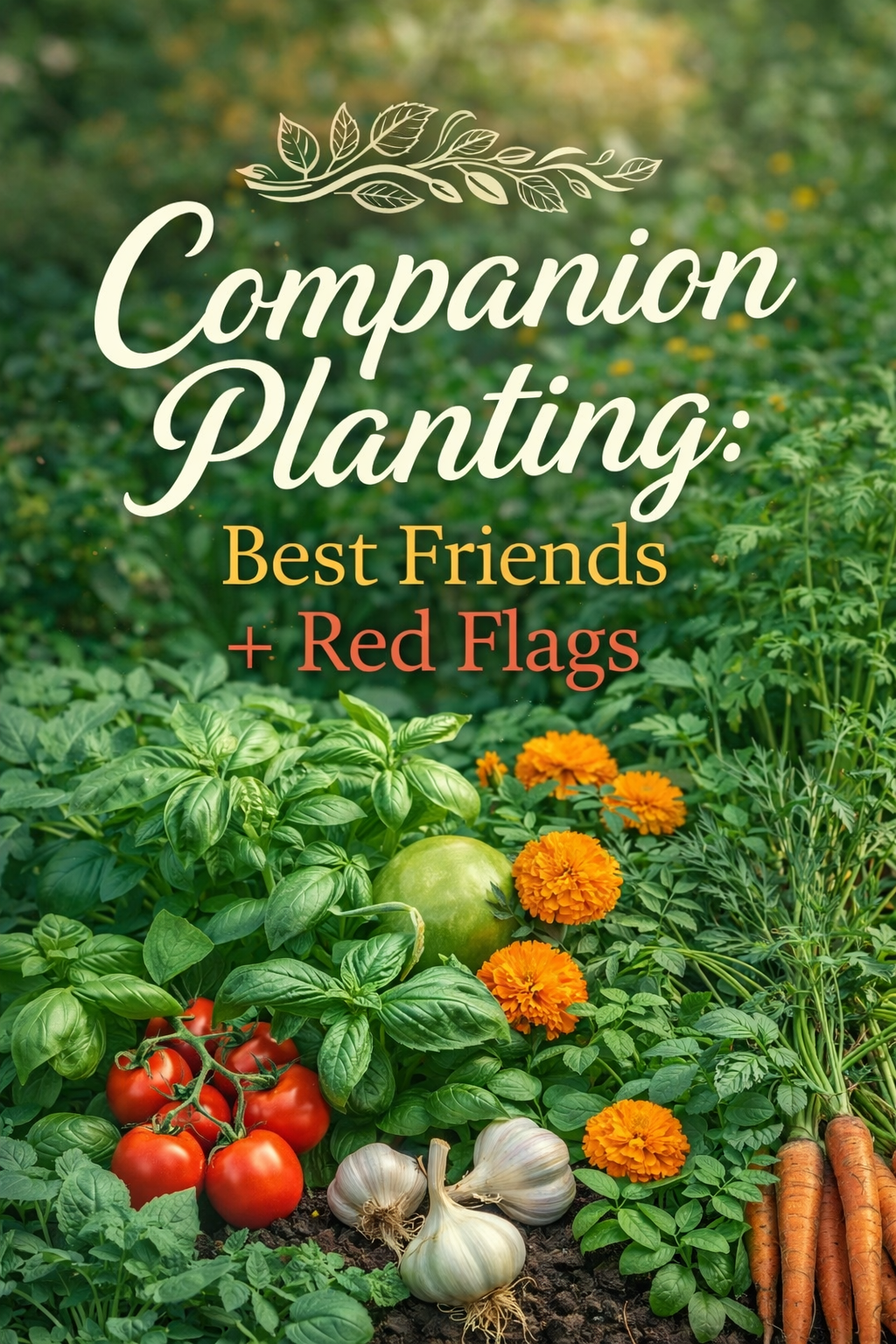
Hook + Why It Matters
You can do everything “right” in the garden—sun, water, decent soil—and still wonder why one bed flourishes while another limps along. Companion planting is the quiet upgrade that stacks the odds in your favor: pairing plants in ways that support better growth, fewer pest problems, and stronger overall vigor.
The idea is simple: some plants play nicely together and make the whole garden work smarter. Done well, companion planting can increase yields by up to 30%, and companion plants can improve overall plant health by 2.5x. Those are big wins for something that mostly comes down to thoughtful placement and a few repeatable habits.
At-a-Glance Summary (Bullet List)
- Companion planting is about pairing plants so they support each other’s growth.
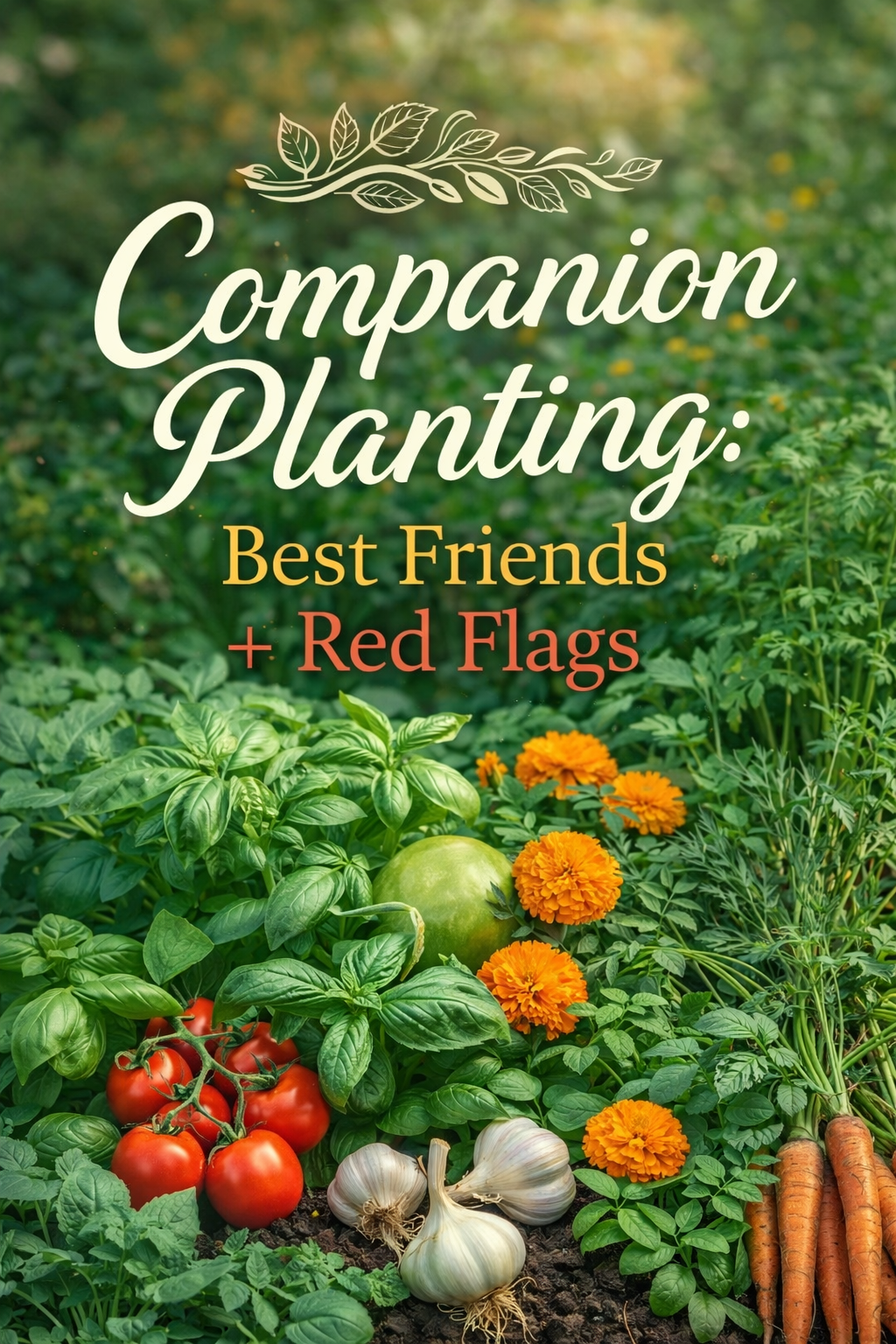
- The “best friends” highlighted here: basil, marigold, and garlic.
- Basil is a go-to companion for a flavor boost and smart garden clustering.
- Marigold is widely used for pest-control support in mixed plantings.
- Garlic is commonly planted to help repel insects in the surrounding area.
- Expect benefits like stronger plant health and better resilience when pairings are intentional.
- “Red flags” are usually about competition: crowding, mismatched water needs, and aggressive neighbors.
- A thriving garden comes from repeating a few simple spacing and planning habits.
Companion Planting 101: What It Is (and What It Isn’t)
Companion planting is the practice of placing certain plants near each other so one (or both) benefits—whether that’s through pest deterrence, better use of space, or healthier growth habits. Think of it as designing your beds like a community instead of a row-by-row factory.
What it is:
- A planning tool to maximize your garden’s potential through smart plant neighbors
- A way to reduce pressure from common pests and stressors
- A “layout advantage” for small spaces: you get more value out of every square foot
What it isn’t:
- A magic spell that replaces sunlight, soil, and watering consistency
- A reason to cram plants too tightly (crowding is one of the biggest red flags)
What to do next
- Choose one bed (or even one container cluster) and commit to intentional pairings this season.
- Keep it simple: start with a few known companions, then expand once you see what works in your yard.
Common mistakes to avoid
- Planting companions so close they compete for light and airflow
- Mixing plants with totally different watering needs in the same tight space
- Assuming “more plants = more yield” (it’s often the opposite)
A helpful way to map your bed before you plant is with a simple garden planner—something like a garden planner notebook makes it easier to repeat your wins next season.
Best Friend #1: Basil (For a Flavor Boost)
Basil earns its “best friend” reputation because it pulls double duty: it’s useful in the kitchen and it’s a friendly neighbor in mixed plantings. In companion planting, basil is often used as a close-by supporting herb—easy to tuck into gaps, edges, or near the plants you harvest most.
What to do next
- Plant basil where you’ll actually harvest it (near paths or bed edges), so it stays pruned and productive.
- Use basil as a “bridge plant” between bigger crops—something that fills space without taking over.
Common mistakes to avoid
- Letting basil get woody and tall without pinching (it reduces leaf production)
- Planting basil in a shaded pocket and expecting lush growth
- Overwatering in tight clusters (especially in containers)
If you want basil to stay bushy and harvest-ready, a sharp pair of herb scissors makes quick pinching and cutting effortless.
Best Friend #2: Marigold (For Pest Control Support)
Marigold is one of the most common companion flowers gardeners use when they want a bed that “defends itself” a little better. In the infographic, marigold is highlighted specifically for pest control, which is why it shows up so often tucked among vegetables and around bed borders.
What to do next
- Use marigolds as a border plant, or dot them through a bed so the whole space gets the benefit.
- Treat them like a functional flower: you’re not just planting pretty—you’re planting purpose.
Common mistakes to avoid
- Only planting one marigold and expecting it to “cover” a large bed
- Hiding marigolds behind tall plants where they struggle for light
- Forgetting that flowers still need spacing and airflow to stay healthy
To keep marigolds in steady rotation, it helps to have extra seed on hand—consider a classic marigold seed mix so you can patch gaps quickly through the season.
Best Friend #3: Garlic (To Help Repel Insects)
Garlic is the quiet powerhouse in companion planting. The infographic highlights it for its ability to repel insects, and that’s the key role it plays in many gardens: it’s a protective neighbor you can plant along edges, in corners, or in a ring around a bed.
What to do next
- Use garlic as a perimeter helper—think “bed bodyguard,” not “main character.”
- Plant it where it won’t block sun from shorter crops, and where you can easily find it at harvest time.
Common mistakes to avoid
- Losing track of where garlic is planted (label it—seriously)
- Planting it so densely it competes with nearby crops
- Letting weeds take over around garlic (it dislikes heavy competition)
If you’re planting garlic in multiple spots, simple bed markers save headaches—these garden plant labels make it easy to remember what’s where when everything greens up.
Red Flags: How to Spot Bad Pairings Before They Cost You
The infographic calls out “red flags,” and the biggest ones are usually about stress and competition—not one plant being “evil,” but two plants pushing each other into struggle.
Here are the most reliable red flags to watch for (without needing a complex rulebook):
- Crowding: Plants are too close, airflow drops, and growth slows.
- Mismatched needs: One plant wants consistently moist soil while its neighbor prefers drying out a bit.
- Aggressive growth habits: Some plants spread fast or dominate light, leaving neighbors stunted.
- Nutrient competition: Heavy feeders packed together can lead to weaker performance across the bed.
What to do next
- Before planting, group by needs: similar sun exposure, similar watering rhythm, similar mature size.
- Give yourself “edit space”—leave room to thin, prune, or reposition in the first month.
Common mistakes to avoid
- Overplanting because seedlings look small
- Ignoring mature plant size (your “cute little start” becomes a monster)
- Skipping mulch and then fighting weeds that steal water and nutrients
To keep spacing and rows clean (especially when you’re mixing herbs, flowers, and veg), a simple garden spacing tool or seeding guide can prevent accidental overcrowding.
Quick Start Checklist
- Pick one garden bed (or one container grouping) to test companion planting this season.
- Add basil near the crops you harvest often.
- Thread marigolds through the bed or along the border for pest-control support.
- Place garlic as an edge/perimeter helper where it won’t shade smaller plants.
- Double-check spacing with “mature size” in mind—leave airflow.
- Keep a simple planting note so you can repeat what worked.
- Observe weekly: if something looks crowded, thin or prune early (small changes now prevent big problems later).
FAQ
Does companion planting really make a difference?
It can—especially when it helps you avoid common problems like crowding and pest pressure. The infographic notes benefits as high as a 30% yield increase and 2.5x improved health when companion planting is used effectively.
Do I need to redesign my whole garden to use companion planting?
No. Start small: add basil, marigold, and garlic intentionally in one area and learn what your space responds to.
Is basil only useful for flavor, or does it help in the garden too?
The infographic highlights basil for a flavor boost, but its real superpower is being an easy, harvestable “gap filler” in mixed plantings—simple to place, easy to manage.
How should I place marigolds for the best effect?
Treat them like functional flowers: border planting and “sprinkled throughout” layouts both work well. Just don’t crowd them or hide them from light.
Will garlic repel every pest in my garden?
No single plant is a total shield. Garlic is most useful as part of a layered approach: smart spacing, healthy soil practices, and a few protective companions.
What’s the #1 red flag that ruins companion planting?
Crowding. Tight planting reduces airflow, increases stress, and invites problems that “good companions” can’t fix.
Can I use companion planting in containers or raised beds?
Absolutely. In fact, it’s often easier there because you control spacing and soil conditions more precisely—just be extra mindful of mature size.
Conclusion + Next Step
Companion planting doesn’t have to be complicated to be powerful. Start with the “best friends” from the infographic—basil, marigold, and garlic—and pair them with one simple habit: leave enough space for plants to breathe. That’s where the real payoff lives.
Your next step: pick one bed, plant with intention, and track what changes. The garden will tell you what works—fast.