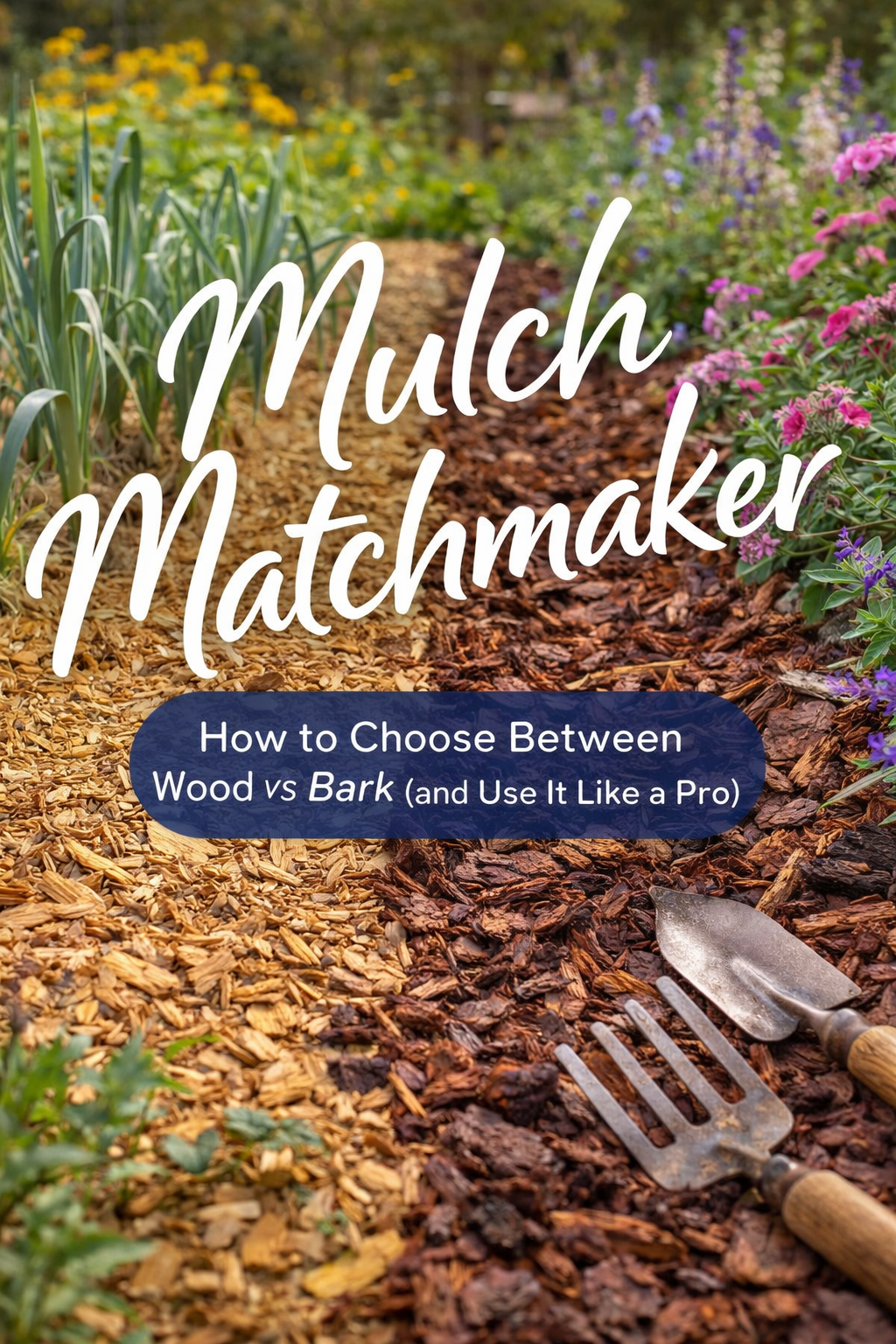
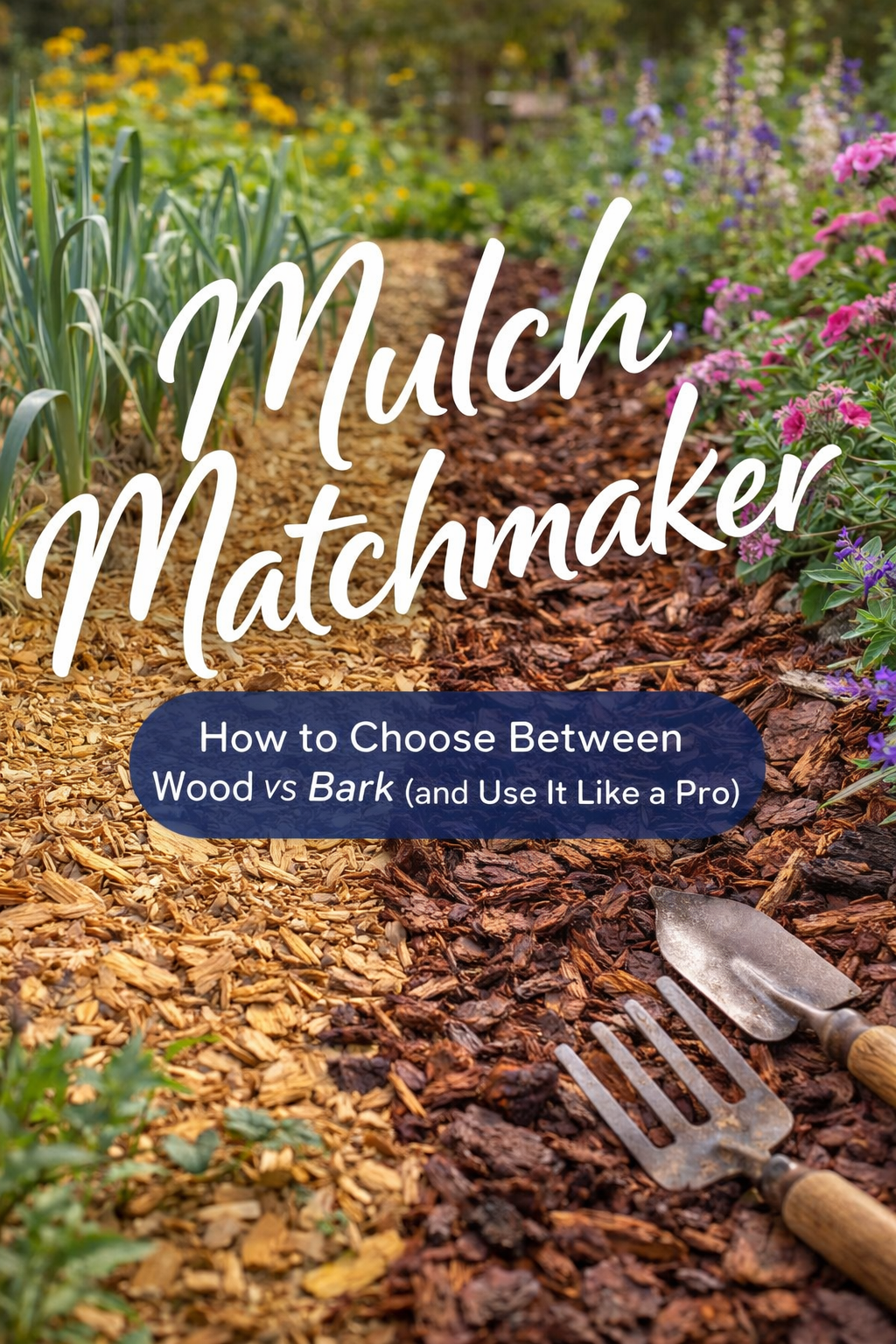
Mulch Matchmaker: How to Choose Between Wood vs Bark (and Use It Like a Pro)
Hook + Why It Matters
Mulch is one of those garden decisions that feels small—until you realize it controls everything you care about: weeds that won’t quit, soil that dries out overnight, splashed-up disease after a rain, and beds that never look “finished.” The right mulch makes your garden calmer, cleaner, and easier to manage. The wrong one can turn into a constant refresh cycle (or a pest magnet).
This quick “Mulch Matchmaker” breakdown compares wood and bark mulch the way real gardeners think about it: best use, how long it lasts, the upsides, and what to watch out for—so you can pick confidently and apply it in a way that actually works.
At-a-Glance Summary (Bullet List)
- Wood mulch shines in garden beds and pathways and can last 2–3 years before replacement.
- Wood’s big win: a natural look and it can enrich soil as it decomposes.
- Wood’s main watch-out: it can attract pests if it isn’t maintained properly.
- Bark mulch is great for decorative landscaping and weed control.
- Bark typically lasts 1–2 years, depending on conditions.
- Bark’s big win: an attractive look and strong weed suppression.
- Bark’s main watch-out: it may need more frequent refreshing, especially in high rain.
- The “best” mulch is the one that matches your bed type, rainfall, and maintenance style.
Wood Mulch: Best for Beds + Pathways, Built to Last
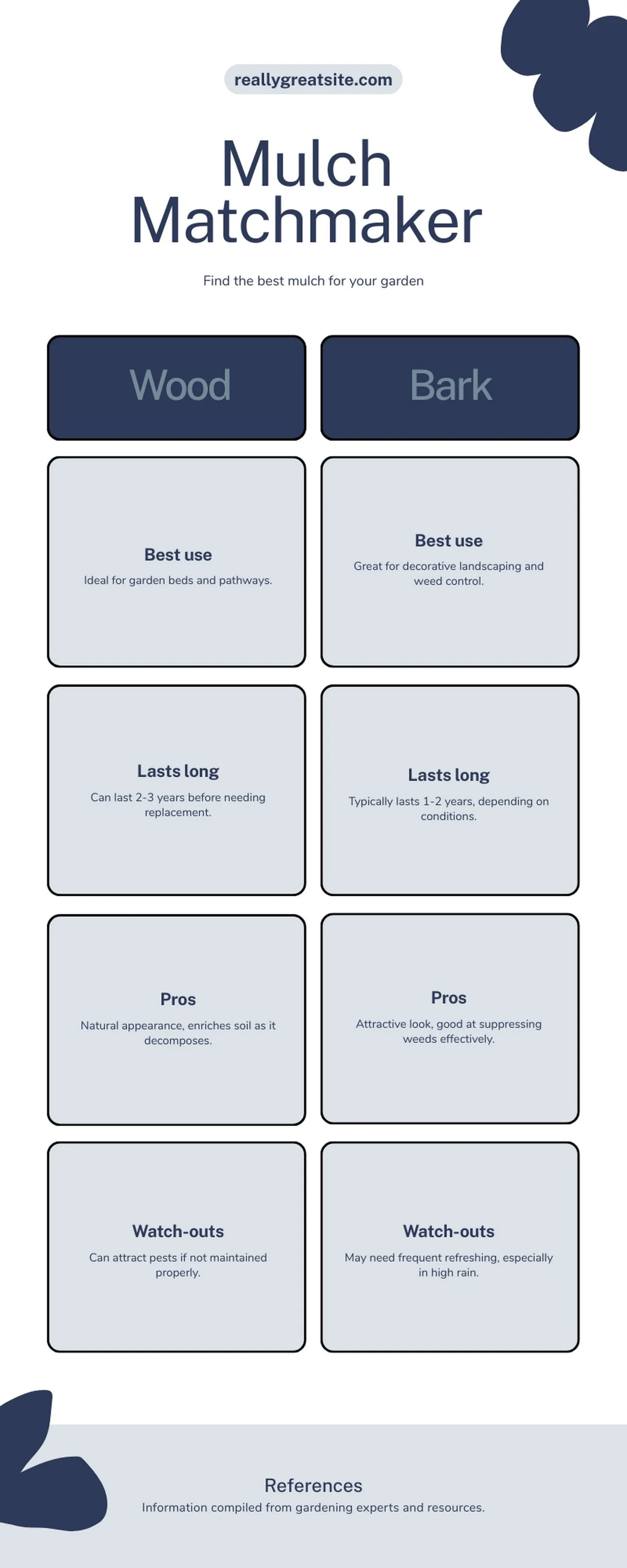
The infographic’s wood section is straightforward: wood mulch is ideal for garden beds and pathways, it lasts 2–3 years, looks natural, and as it breaks down it can enrich the soil. That makes wood a strong “workhorse” option—especially if your priority is long-lasting coverage with a bonus of gradual soil improvement over time.
What to do next
- Use wood mulch where you want durability: veggie beds (around plants, not touching stems), perennial borders, and walking paths.
- Aim for even coverage: spread it consistently so you don’t get thin spots where weeds sneak through.
- Treat it like a living layer: wood decomposes—so plan on a light top-up when it starts looking thin, rather than waiting until it’s bare.
A simple way to shop by the exact type you want is to start with a targeted search like natural wood mulch for garden beds, then filter by bag size and customer photos to match the texture you like.
Common mistakes to avoid
- Piling it against stems or trunks (invites rot and stress right at the plant’s “breathing zone”).
- Spreading too thin (you’ll still water constantly and weeds will pop right through).
- Letting old mulch mat down without fluffing or topping up (water can run off instead of soaking in).
Bark Mulch: Decorative, Weed-Suppressing, and Easy on the Eyes
On the bark side, the infographic highlights bark as great for decorative landscaping and weed control, with a lifespan of 1–2 years depending on conditions. The pros are clear: an attractive look and it’s good at suppressing weeds effectively. The main drawback: it may need frequent refreshing, especially if your area gets heavy rain.
Bark is often the choice when you want beds to look intentional and polished—like the “frame” around your plants. If you’ve ever stood back after mulching and thought, okay, now it looks done, that’s the bark effect.
What to do next
- Use bark where appearance matters most: front beds, foundation plantings, ornamental shrubs, and “show” borders.
- Expect more maintenance in wet climates: heavy rain can break it down faster or shift it around.
- Refresh strategically: instead of replacing everything, top up the thinnest areas first.
If you’re comparing textures (nuggets vs fines), browse a few options like pine bark nuggets for landscaping and look closely at the customer images—size and consistency make a big difference in how “finished” it looks.
Common mistakes to avoid
- Choosing bark for a high-flow water area (it can drift or break down faster than you want).
- Skipping edging where runoff is common (mulch migration is real).
- Refreshing too late—once weeds establish, mulch has to work harder.
How to Choose: The Quick “Matchmaker” Rules
The infographic gives you the core decision points: wood is longer-lasting and soil-friendly, while bark leans decorative and weed-focused but may need refreshing sooner. Here’s a practical way to decide in 60 seconds:
Pick wood if…
- You want longer life (2–3 years) with fewer re-dos.
- You’re mulching beds and pathways for function first.
- You like the idea of mulch that enriches soil as it decomposes.
Pick bark if…
- You want maximum visual polish in ornamental areas.
- Weed suppression is the top priority.
- You don’t mind a 1–2 year refresh cycle—especially in rainy conditions.
If you’re the type who likes to measure once and buy exactly what you need, a basic mulch calculator and measuring tape set search helps you grab a sturdy tape and keep your coverage consistent (especially if you’re doing multiple beds).
Common mistakes to avoid
- Picking purely by color instead of matching the mulch to the location and rainfall.
- Using one mulch everywhere when your yard has different needs (front beds vs paths vs veggie rows).
- Ignoring the “refresh reality”—bark may look amazing, but it often needs more frequent topping up.
How to Apply Mulch So It Actually Works (Not Just Looks Good)
Even the best mulch fails if it’s applied in a way that invites weeds, rot, or constant rework. While the infographic focuses on wood vs bark characteristics, these general best practices help you get the benefits it’s pointing to—longevity, weed control, and healthier beds.
What to do next
- Prep first: pull existing weeds and rake the soil smooth.
- Apply in a consistent layer: a common guideline is 2–4 inches for garden beds, adjusted for plant type and airflow.
- Keep a gap around stems and trunks: think “donut, not volcano.” Leave a little breathing room so moisture doesn’t sit against the plant base.
- Top up, don’t panic-replace: when it thins, refresh lightly instead of stripping everything out.
If you want the process to feel fast (and your back to survive it), a tool search like mulch fork and garden rake is worth it—mulch is much easier to spread evenly with the right rake and a wide-tine fork.
Common mistakes to avoid
- Mulching over live weeds and hoping the mulch “handles it.”
- Smothering crowns of plants that need airflow near the base.
- Letting mulch form a hard crust—break it up so water can penetrate.
Maintenance: Keep Wood From Becoming Pest-Friendly, and Bark From Washing Away
The infographic’s watch-outs matter because they point to maintenance: wood can attract pests if not maintained properly, and bark may need frequent refreshing, especially in high rain. Both are manageable—if you treat mulch like a system, not a one-time chore.
What to do next
- For wood mulch: inspect occasionally, keep it from staying soggy, and avoid thick piles where pests can hide.
- For bark mulch in rainy areas: use edging, keep an eye on bare spots, and top up the zones where water hits hardest.
- Do a seasonal check: spring and fall are perfect times to fluff, level, and refresh thin areas.
A simple upgrade that helps both mulch types behave is clean edging—browse ideas like landscape edging for mulch beds to reduce washout, keep lines crisp, and make your yard look instantly more intentional.
Common mistakes to avoid
- Ignoring drainage issues (no mulch can outsmart a gutter dump zone).
- Refreshing unevenly (thin spots become weed nurseries).
- Assuming pests are “mulch’s fault” when the real issue is overwatering, cluttered debris, or mulch piled too thick.
Quick Start Checklist
- Decide your goal: durability + soil enrichment (wood) or decorative + weed suppression (bark).
- Match to location: beds/pathways → wood; ornamental borders → bark.
- Clear weeds and level soil before spreading.
- Apply a consistent layer and keep mulch off stems/trunks.
- Edge where water runoff is common.
- Recheck after heavy rain and top up thin spots.
- Refresh on your schedule: wood tends to stretch longer; bark may need quicker touch-ups.
FAQ
1) Can I mix wood and bark mulch in the same yard?
Yes—and it’s often the smartest approach. Use wood in working beds and paths, and bark where you want a decorative finish and strong weed suppression.
2) Which lasts longer: wood or bark?
Based on the infographic: wood can last 2–3 years, while bark typically lasts 1–2 years, depending on conditions.
3) Why would wood mulch attract pests?
The infographic warns wood can attract pests if not maintained properly. In practice, pests tend to show up when mulch is too thick, stays wet, or becomes a cozy hiding layer—maintenance and proper spacing help a lot.
4) If bark is great for weed control, do I still need to weed first?
Yes. Mulch is a barrier, not a magic eraser. Pull what’s already growing so the mulch can prevent new weeds from establishing.
5) What should I do if rain keeps washing my bark mulch away?
The infographic notes bark may need more frequent refreshing in high rain. Add edging, redirect runoff if possible, and top up the areas that thin out first.
6) Does mulch improve soil?
The infographic specifically notes wood mulch can enrich soil as it decomposes. That slow breakdown can feed soil life over time—especially if you keep the layer maintained.
7) How do I know it’s time to refresh mulch?
When you see soil showing through, weeds gaining traction, or the layer looks thin and patchy—refresh lightly rather than waiting for a full reset.
Conclusion + Next Step
Wood and bark mulch both work—you just want the one that matches your goal. Wood is the long-lasting, bed-and-pathway favorite that can enrich soil as it decomposes, while bark is the decorative, weed-suppressing choice that may need more frequent refreshing in rainy conditions.
Next step: pick one bed, apply it correctly, and watch how much easier your watering and weeding feel over the next two weeks. Once you see the difference, scaling it to the rest of your yard gets a lot more fun.