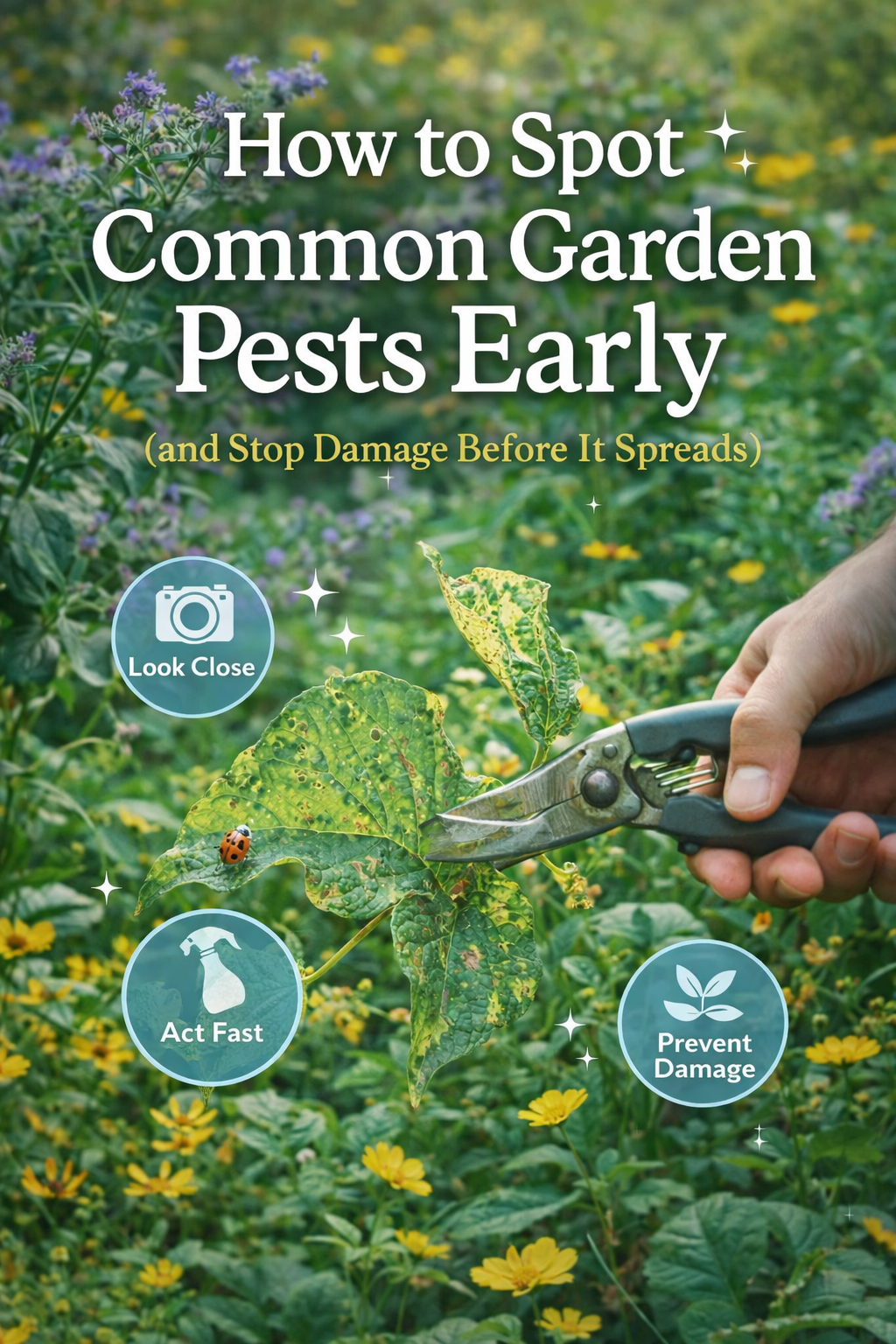
How to Spot Common Garden Pests Early (and Stop Damage Before It Spreads)
Hook + Why It Matters
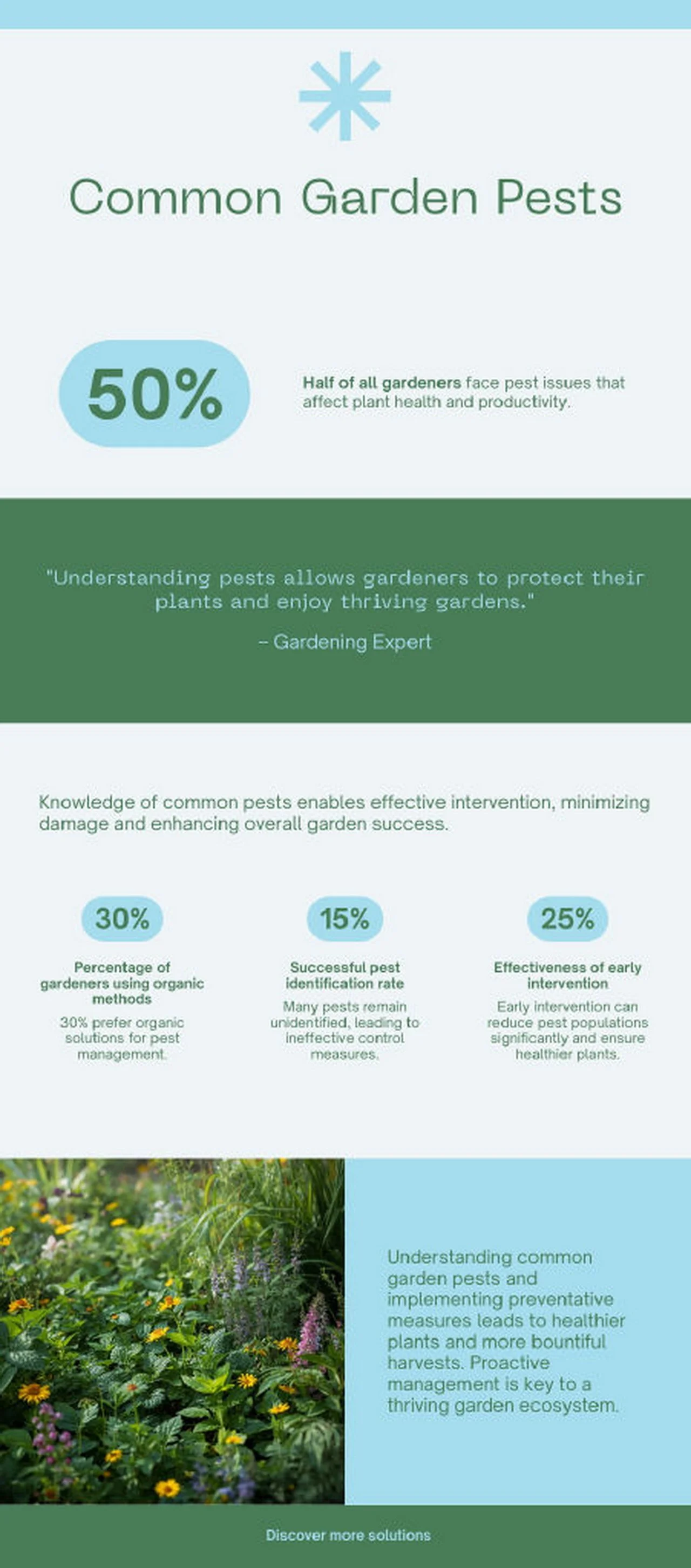
One day your garden looks lush and unstoppable—then suddenly leaves are stippled, curled, or chewed like someone took a tiny hole punch to your harvest dreams. That whiplash is exactly why pest awareness matters: 50% of gardeners face pest issues that affect plant health and productivity.
The good news? You don’t need to panic-spray everything in sight. When you learn what to look for and respond fast, you can keep plants healthier and your yields steadier. As the infographic puts it: “Understanding pests allows gardeners to protect their plants and enjoy thriving gardens.”
At-a-Glance Summary
- Pest problems are common and can impact both plant health and harvests.
- Knowing what you’re dealing with makes your response more effective.
- Many pests go unidentified—only 15% are successfully identified, which leads to weak control choices.
- Early action matters: 25% effectiveness is attributed to early intervention improving outcomes.
- A meaningful share of gardeners prefer gentler approaches—30% use organic methods.
- Your best strategy is proactive: observe, identify, intervene early, then prevent the next wave.
- Healthy garden ecosystems reduce repeat infestations over time.
The Big Picture: Why Identification Comes Before Any “Fix”
What the infographic says
It emphasizes that knowledge of common pests enables effective intervention, minimizing damage and improving overall garden success. The catch is that many pests remain unidentified, and that misstep tends to snowball into ineffective control measures.
What to do next
- Start with a quick “symptom scan”: look at the newest growth, leaf undersides, buds/flowers, and soil surface.
- Match the damage pattern (chewed holes vs. stippling vs. curling vs. honeydew/stickiness) to narrow suspects.
- Take a close-up photo (underside of leaves is key). Repeat photos over 24–48 hours to see progression.
- If you’re unsure, isolate the plant (or at least stop brushing against it) so you don’t spread pests.
A small tool upgrade makes identification dramatically easier: a simple pocket magnifier like a handy jeweler’s loupe for plant inspection helps you confirm tiny pests before you treat the wrong thing.
Common mistakes to avoid
- Treating based on guesswork instead of damage clues.
- Only checking the top of leaves (many pests hide underneath).
- Waiting a week “to see if it gets better.”
Early Intervention: The Moment That Saves the Season
What the infographic says
Early intervention can reduce pest populations significantly and ensure healthier plants, with the infographic highlighting 25% effectiveness of early intervention.
What to do next
- Use a “first response” that’s low-risk and immediate:
- Rinse foliage with a strong water spray (especially undersides).
- Remove heavily infested leaves if it won’t stress the plant.
- Hand-pick visible offenders into soapy water.
- Re-check in 24 hours. If the population is still building, escalate thoughtfully (don’t jump straight to the harshest option).
To make early intervention easier (and less messy), keep a dedicated sprayer ready—something like a reliable pump sprayer for garden use so you can respond immediately instead of hunting for tools.
Common mistakes to avoid
- Waiting until damage is obvious from across the yard.
- Spraying in full sun and scorching leaves.
- Doing one treatment and assuming it’s “handled.”
Organic Methods: Gentle, Effective, and Popular for a Reason
What the infographic says
It notes that 30% of gardeners use organic methods, preferring organic solutions for pest management.
What to do next
- Think “targeted + repeatable” rather than “one-and-done.”
- Use organic options as part of a loop:
- Knock pests down mechanically (water/hand removal),
- Follow with a gentle control,
- Repeat on a schedule to catch new hatchlings.
- Always test on a small area first (even organic products can stress certain plants).
A staple many gardeners keep on hand is a neem oil concentrate for organic gardening, used thoughtfully and consistently rather than as a last-minute hail-mary.
Common mistakes to avoid
- Overconcentrating “because more is better.”
- Spraying beneficial insects directly.
- Using organic controls but skipping follow-up checks.
The Hidden Problem: Most Pests Don’t Announce Themselves
What the infographic says
With only a 15% successful pest identification rate, many pests are misidentified or missed—leading to ineffective control choices.
What to do next
- Build a simple routine: two quick inspections per week (more during warm spells).
- Learn to look for “evidence,” not just the pest:
- Sticky residue (honeydew),
- Fine webbing,
- Distorted new growth,
- Tiny speckles/stippling,
- Sudden wilting despite moist soil.
- Track where it starts (one plant? one bed edge? near a door/light?)—patterns are clues.
For hands-free monitoring, hang a few yellow sticky traps for greenhouse and houseplants near vulnerable areas to detect flying pests early.
Common mistakes to avoid
- Only reacting after plants look “sad.”
- Assuming one pest is the only problem (sometimes there’s a combo).
- Ignoring the soil surface and pots/containers.
Prevention: Proactive Management Builds a Thriving Garden Ecosystem
What the infographic says
It stresses that understanding pests and implementing preventative measures leads to healthier plants and more bountiful harvests, and that proactive management is key to a thriving garden ecosystem.
What to do next
- Keep plants resilient: stressed plants invite trouble.
- Reduce pest-friendly conditions:
- Improve airflow (space plants and prune crowded growth).
- Water at the base (avoid constant leaf wetness).
- Remove weak/damaged foliage promptly.
- Encourage balance:
- Mix plant types (monocultures attract repeat attacks).
- Avoid broad-spectrum “nuke it” approaches that wipe out beneficials.
A practical prevention tool that pays off fast is a pair of pruning snips for garden clean-up so you can remove problem leaves and improve airflow the moment you spot issues.
Common mistakes to avoid
- Overfertilizing (lush, tender growth can attract pests).
- Letting weeds or debris pile up near beds.
- Treating symptoms without improving plant conditions.
Build a Simple Pest Plan You’ll Actually Stick With
What the infographic says
The message throughout is straightforward: when you understand pests and act early, you minimize damage and improve overall garden success.
What to do next
Use a three-step decision loop:
- Confirm (what does the damage suggest?)
- Reduce (water blast, remove affected parts, traps)
- Prevent (airflow, consistent monitoring, plant vigor)
If you want one reference that helps turn “I think it’s a pest?” into “I know what to do next,” keep a visual guide nearby—like a garden pest identification book for quick lookups when you’re mid-crisis.
Common mistakes to avoid
- Making it complicated and abandoning the plan.
- Switching methods too quickly to know what worked.
- Forgetting to re-check after the first response.
Quick Start Checklist
- Inspect leaf undersides and new growth twice weekly.
- Photograph damage to track whether it’s spreading.
- Use a strong water spray as a first response when appropriate.
- Remove the most infested leaves if the plant can tolerate it.
- Set sticky traps near problem areas to catch early signs.
- Choose a targeted control method and repeat as needed.
- Improve airflow by spacing and light pruning.
- Keep plants strong with consistent watering and good care.
For a simple “grab-and-go” setup, a small garden tool tote keeps your sprayer, snips, gloves, and traps together so early intervention actually happens.
FAQ
1) What’s the very first thing I should do when I notice leaf damage?
Inspect the plant closely—especially undersides of leaves and tender new growth—then use a gentle first response (water spray or removing the worst leaves) while you narrow down the cause.
2) Why does pest identification matter so much?
Because misidentifying pests often leads to ineffective control. The infographic highlights that successful pest identification is low (15%), and that gap can waste time while damage spreads.
3) How often should I check my garden for pests?
At least twice a week during active growth, and more frequently during warm spells or if you’ve recently had a pest flare-up.
4) Are organic methods “strong enough” to work?
They can be—especially when used early and consistently. The infographic notes 30% of gardeners prefer organic methods, and they’re most effective when paired with monitoring and repeat treatments.
5) What does “early intervention” look like in real life?
It means acting at the first signs—tiny clusters, light stippling, minor curling—rather than waiting for severe defoliation. Early action is tied to better outcomes (25% effectiveness highlighted in the infographic).
6) Should I treat the whole garden if one plant has pests?
Usually no. Start targeted: isolate the affected plant area, inspect neighbors, and respond where you see evidence. Broad treatments can disrupt beneficial insects and make future outbreaks more likely.
7) How do I prevent pests from coming back?
Keep plants vigorous, reduce crowding, improve airflow, monitor consistently, and remove stressed/damaged growth quickly. Prevention is the long game that keeps the ecosystem stable.
Conclusion + Next Step
Garden pests are common, but they’re not unstoppable. The infographic’s core takeaway is simple: know what you’re seeing, respond early, and lean into prevention for healthier plants and better harvests.
Your next step: pick one habit you’ll keep—like checking leaf undersides twice a week—and make it automatic. That single routine is often the difference between a minor annoyance and a season-long battle.