Brass & Butter Steak Shells in Roasted Garlic Cream
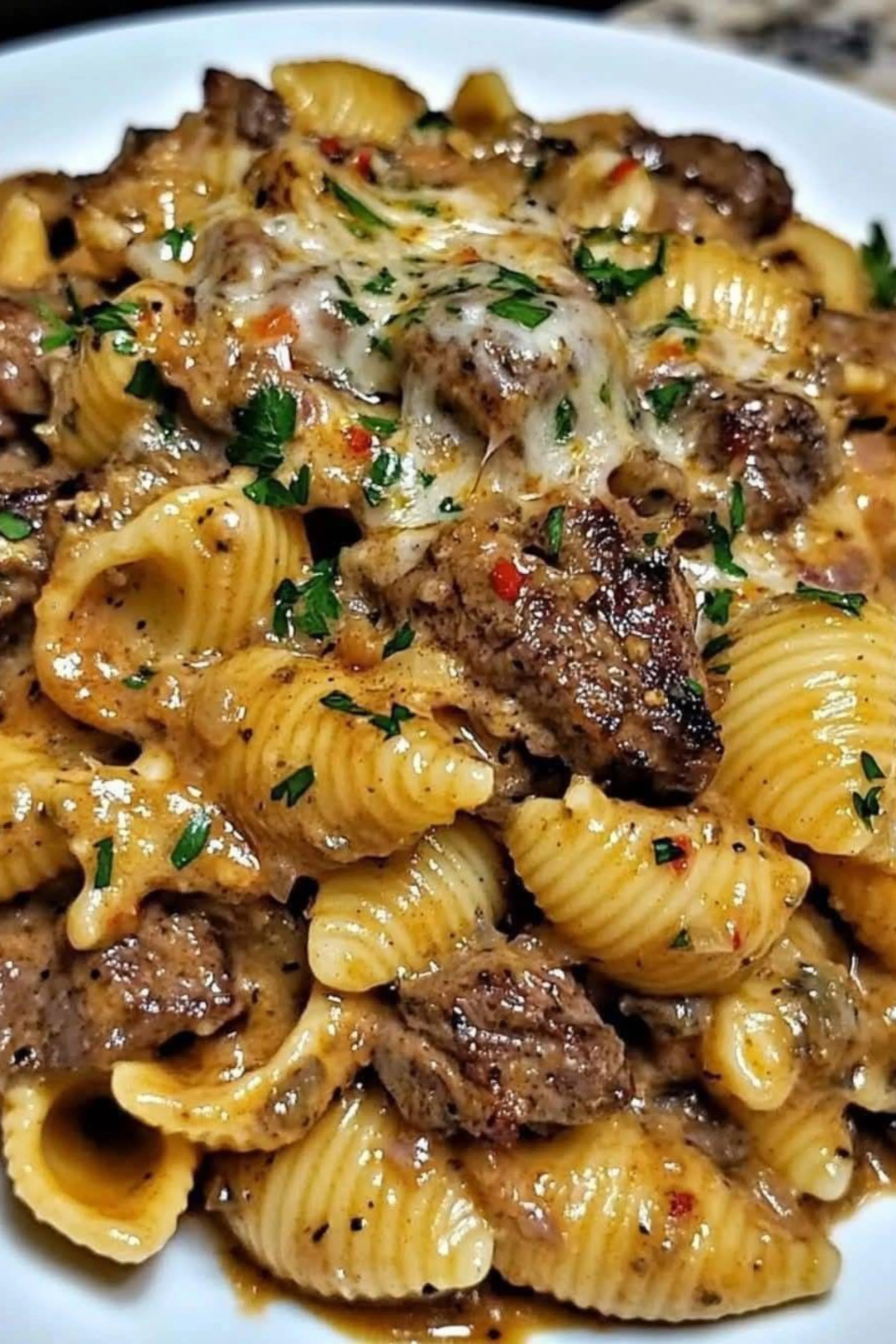
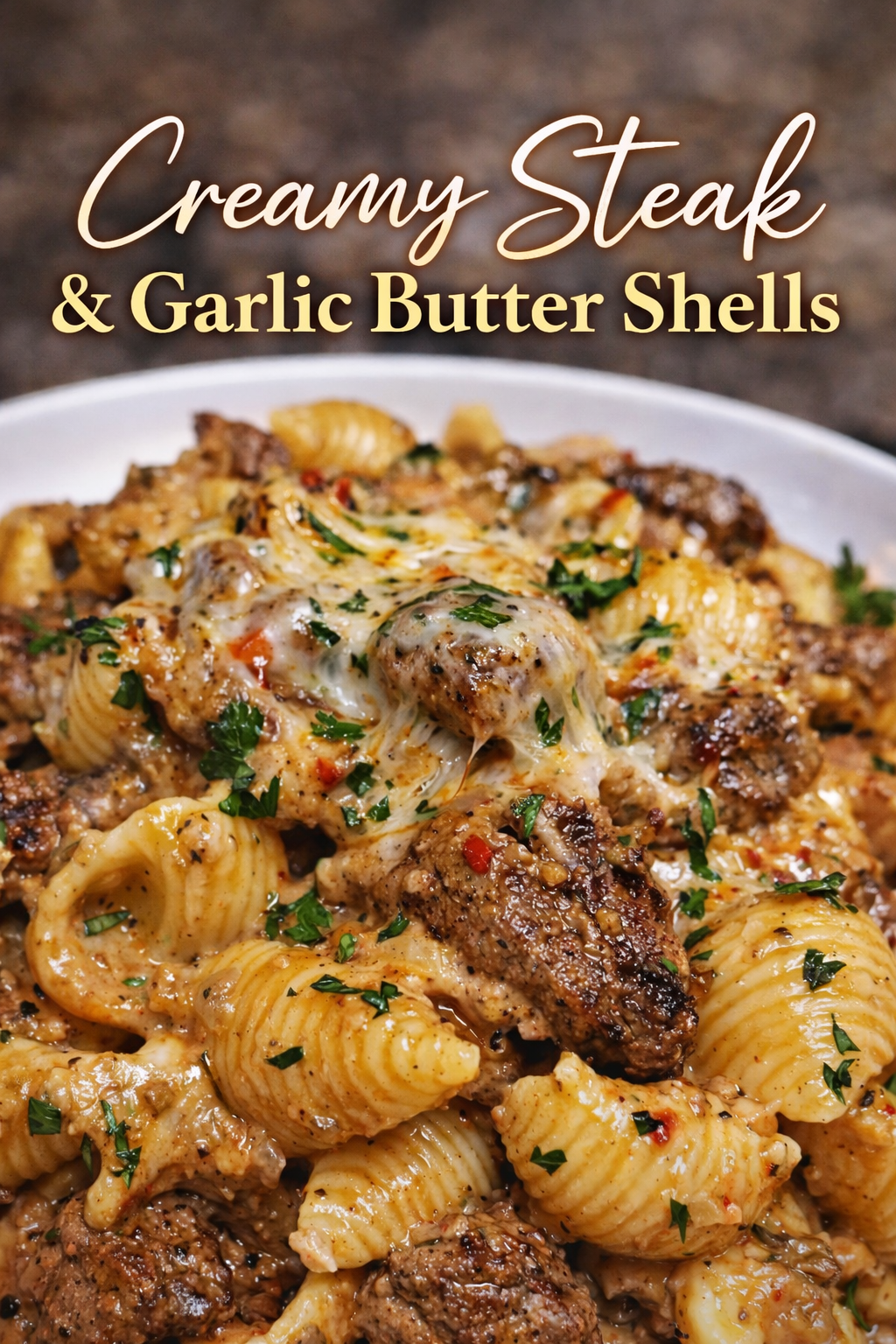
The first thing that hits you is the sheen—those ridged shells glossed in a sauce that clings like satin, pooling in the grooves and catching the light in warm bronze. It’s the kind of plate that looks like it arrived mid-story: a skillet-to-bowl moment where everything is still alive with heat, where the sauce hasn’t fully decided whether it’s going to settle or keep moving. The pasta sits in generous curves, each shell shaped like a small promise to hold onto something rich, something savory, something worth slowing down for.
Then you notice the steak. Not thin, polite slices—real bites, browned hard at the edges, darker where the sear kissed the surface long enough to build that deep, roasted flavor. There’s the faint pepper-speckle across the meat and sauce, and little sparks of red—pepper flakes or tiny diced peppers—like a quiet dare tucked into the comfort. Melted cheese stretches in soft strands across the top, not overdone, just enough to signal that the dish is still warm enough to pull. Fresh green herbs scatter over everything, sharp and bright against the caramel tones, like someone remembered at the last second that richness loves a clean finish.
This is the kind of meal that changes the room. It quiets conversation without asking. It makes people lean in. You can picture it on a cold night when the windows turn black early, or on a weekend when you’re hungry for something that feels earned—something you make with intention, not because it’s fast, but because it’s exactly what the moment needs. The sauce is creamy, yes, but not timid. It looks like it started with garlic, took a turn through browned butter territory, and found its way back by way of a good deglaze and a steady hand. That’s the magic of a pan that’s been allowed to do real work.
You can almost hear the sound that made it: steak hitting a ripping-hot surface in a heavy pan, that immediate sizzle that smells like dinner turning serious. A well-seasoned cast iron skillet or a thick stainless pan gives you that kind of browned edge—the kind that turns simple bites into something restaurant-level with nothing but heat and patience. Garlic follows, not raw and harsh, but softened, toasted, coaxed into sweetness. A solid garlic press makes it easy to get that fine texture that disappears into sauce, while a microplane grater turns hard cheese into snowy threads that melt before they even think about clumping.
Somewhere in the process, the kitchen air changes—there’s butter and pepper and that faint tang of dairy warming, the way cream smells when it’s just beginning to thicken and take on the flavor of everything around it. It’s not a delicate aroma; it’s comforting in a confident way. The kind of scent that lingers in the hallway and makes someone wander in asking, casually, what you’re making, while already reaching for a fork. The pasta pot bubbles steadily, salted water rolling, shells tumbling and turning like they’re getting ready for their job. A wide pasta pot makes the boil feel effortless, and a mesh spider strainer lets you pull the shells straight into the sauce without losing the starchy water that makes the whole thing come together.
The plate in the image looks like it was finished with a little restraint, which is the secret to making richness feel luxurious instead of heavy. The cheese isn’t buried; it’s placed. The herbs aren’t an afterthought; they’re a contrast. The steak isn’t lost; it’s integrated, tucked between shells so every bite has a different ratio—more sauce here, more sear there, a ribbon of melted cheese crossing the middle like a final signature. Even the spice feels intentional: not a burn, just warmth that keeps the cream from feeling sleepy.
This is the kind of dish that lives in the overlap between comfort and indulgence. It doesn’t try to be clever. It just insists on being good. The textures do the talking: ridges of pasta holding sauce, browned edges of steak offering bite, the creamy middle smoothing everything into one continuous note. And because steak can be unforgiving when overcooked, a little precision pays off—something as simple as an instant-read meat thermometer can keep those bites tender, especially when you want them browned outside and still juicy within.
The final moment is always the same: the pan comes off the heat, the sauce relaxes, and everything gets tossed one last time so the shells wear the sauce instead of swimming in it. A set of sturdy silicone tongs makes that toss clean and controlled, and a deep serving bowl gives it the kind of presentation that feels like you meant to impress—even if it’s just you, a quiet night, and the satisfaction of making something that looks exactly like it tastes: bold, creamy, and unapologetically savory.
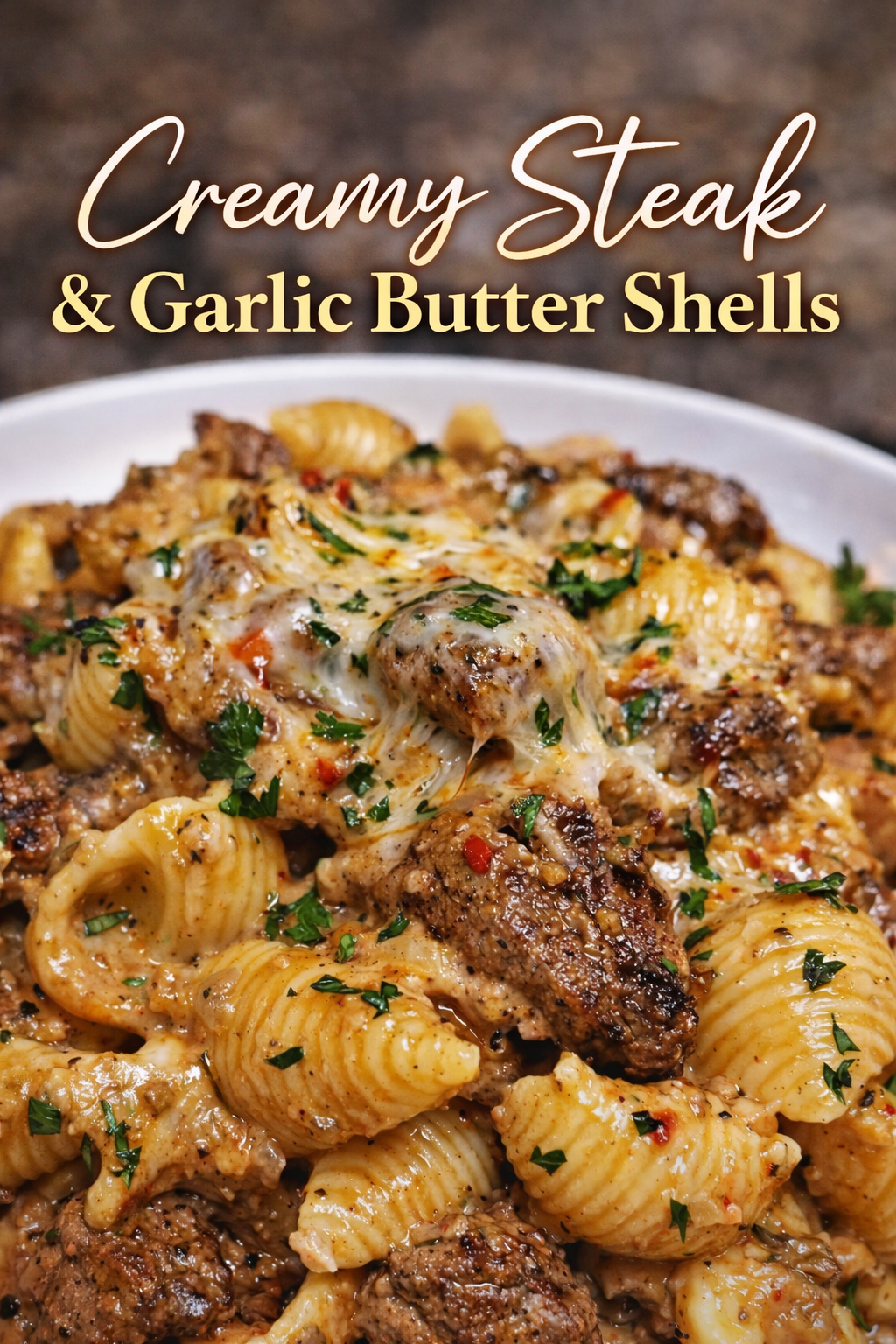
Brass & Butter Steak Shells in Roasted Garlic Cream is a creamy, peppery pasta loaded with seared steak bites, finished with melted cheese and herbs for a rich, restaurant-style bowl at home.
Ingredients
- 12 oz medium pasta shells
- 1 to 1¼ lb steak (sirloin, ribeye, or strip), cut into bite-size pieces
- 1½ tsp kosher salt, divided
- 1 tsp black pepper, plus more to taste
- 1 tsp smoked paprika (optional but great)
- 2 tbsp olive oil
- 3 tbsp butter
- 5–6 cloves garlic, minced
- 1 tsp red pepper flakes (adjust to taste)
- 1 cup beef broth
- 1 cup heavy cream
- ¾ cup finely grated parmesan
- ½ cup shredded mozzarella (optional for that melt)
- 2–4 tbsp reserved pasta water
- Chopped parsley or basil to finish
Method
- Boil shells in well-salted water until al dente. Reserve 1 cup pasta water; drain.
- Season steak with 1 tsp salt, pepper, and paprika. Sear in a hot heavy skillet with oil until browned, 2–3 minutes per side. Remove.
- Lower heat. Melt butter; cook garlic and pepper flakes 30–60 seconds.
- Add broth; simmer 2 minutes, scraping up browned bits.
- Stir in cream; simmer 3–5 minutes to thicken slightly.
- Add parmesan (and mozzarella if using) and stir until smooth. Loosen with a splash of reserved pasta water as needed.
- Toss in shells and steak. Taste and adjust salt/pepper. Finish with herbs and serve hot.
In-Depth Step-by-Step Guide
Start by getting the pasta water going first—this dish moves fast once the steak hits heat. A rolling boil in a large pot, generously salted, is your foundation for flavor. Medium shells are ideal because the ridges and hollow centers catch the sauce, but if you’re swapping shapes later, stick to something that can “hold” a creamy pan sauce (cavatappi, rigatoni, or orecchiette all behave well). While the water heats, set out everything you’ll need: steak, butter, garlic, broth, cream, cheeses, and herbs. Having it staged keeps you from overcooking the meat while you hunt for ingredients.
Next, focus on the steak. Bite-size pieces cook quickly, which is exactly what you want—fast browning, then out. Pat the steak dry with paper towels before seasoning; moisture is the enemy of searing. Season with salt, black pepper, and garlic powder, and don’t be shy with the pepper if you want that bold, steakhouse-style edge. If you want ultra-even pieces, a sharp blade makes the prep cleaner and safer than hacking at partially thawed meat—use a well-balanced chef’s knife and cut across the grain for tenderness. For a more luxurious bite, ribeye brings extra fat, while sirloin stays leaner and still delivers that beefy depth.
When you’re ready to sear, heat the skillet until it’s properly hot. High heat is the whole point: it builds the browned crust and the sticky fond on the pan that becomes the backbone of your sauce. A heavy pan helps you keep temperature steady—especially if you’re cooking on a smaller burner—so a heavy cast iron skillet or thick stainless skillet is a big advantage. Add oil, then steak in a single layer. Overcrowding steams the meat instead of browning it, so work in batches if needed. Let the pieces sit undisturbed for 60–90 seconds before tossing—those first seconds create the crust. You’re not trying to fully cook the steak here; you’re building color and flavor. Once browned, pull it out to a plate and leave any juices behind—they’ll return later.
Drop the heat to medium and build your aromatics. Butter goes in first, then garlic (and shallot if you like that mild sweetness). This is a short window: 30–60 seconds, just until fragrant. If garlic starts to brown hard, it can turn bitter, so keep it moving. This stage is also where you can customize the vibe: a pinch of red pepper flakes for heat, a touch of smoked paprika for a deeper roastiness, or a quick splash of Worcestershire if you want a darker, more savory base (go light—too much can dominate).
Now comes the sauce structure. Sprinkling flour into the butter creates a quick roux that keeps the cream sauce glossy and stable instead of thin and split. Stir the flour into the fat for about 30 seconds; you’re cooking off raw flour taste, not turning it into a deep brown roux. Then add beef broth gradually while stirring, scraping the bottom of the pan to dissolve every browned bit. This deglazing step is where the skillet turns into flavor—those caramelized bits are concentrated beef essence. If you want more control and less splashing, use a silicone whisk so you can scrape without worrying about damaging a coated surface.
Let the broth simmer a minute or two until it thickens slightly. You’re aiming for a sauce that coats the back of a spoon before the cream even arrives. Then pour in the heavy cream and lower the heat to a gentle simmer. High heat and cream don’t mix—boiling can cause separation, especially after adding cheese. Keep it calm, let it warm through, and you’ll get that velvety, restaurant-style cling.
Cheese time is about technique as much as ingredients. Add parmesan first; it melts smoothly and deepens savoriness. For the cleanest melt, finely grated works best—pre-shredded cheeses often contain anti-caking agents that can make sauces grainy. If you want the most consistent texture, shred fresh with a microplane grater. Stir until the sauce looks silky and cohesive. If it seems too thick at this point, don’t panic—pasta water is your dial.
That reserved pasta water is liquid gold: it’s salty and starchy, and it brings the sauce together into a glossy coating instead of a heavy blanket. Add the cooked shells to the sauce and toss thoroughly. If the sauce tightens up, splash in pasta water a tablespoon at a time until everything looks shiny and loose. You’re aiming for “coats and clings,” not “sits in a puddle.”
Return the steak last. This is the difference between tender and chewy. The steak is already seared; now it just needs to warm through in the sauce for 30–60 seconds. If you have an instant-read thermometer, you can be precise—pull the pan off heat when the steak is around your preferred doneness (about 130–135°F for medium-rare, 140–145°F for medium). A quick check with an instant-read meat thermometer helps you hit that perfect point without guesswork.
For the melty finish, sprinkle mozzarella (or provolone) over the top, cover the skillet, and let residual heat do the work. Covered heat melts cheese without over-reducing the sauce. Once melted, finish with chopped parsley and a final crack of black pepper for that sharp, aromatic top note.
Variations That Stay True to the Vibe
- Mushroom steak shells: Sauté sliced mushrooms after removing the steak, then proceed with garlic and flour. Mushrooms amplify the beefiness and add an earthy, glossy richness.
- Peppercorn cream: Crush whole peppercorns and bloom them briefly in butter before adding garlic. It leans steakhouse without needing anything complicated.
- Spicy garlic version: Increase red pepper flakes and add a small spoonful of chili crisp at the end for heat that perfumes the entire sauce.
- Lighter cream option: Use half-and-half, but keep the simmer gentle and add a little extra parmesan for body. If you go too hot, it can split more easily than heavy cream.
Substitutions That Work
- No beef broth: Use chicken broth plus a small spoon of beef bouillon. You’ll still get depth.
- No parmesan: Romano works (saltier), or use a blend of aged hard cheeses. Add slowly and taste as you go.
- No shells: Any ridged pasta works. Just avoid delicate strands that get lost under a thick sauce.
Troubleshooting (So It Always Lands)
- Sauce looks grainy: Heat was too high when cheese went in, or the cheese was pre-shredded. Reduce heat, add a splash of warm cream or pasta water, and stir gently until smooth.
- Sauce too thick: Pasta water fixes this fast. Add gradually while tossing until glossy again.
- Sauce too thin: Simmer a minute longer before adding pasta, or add a touch more parmesan to tighten it.
- Steak turned chewy: It stayed in the pan too long. Next time, sear fast, remove early, and warm it at the end only.
Once you nail the rhythm—sear, remove, build, deglaze, cream, cheese, toss, warm—you get a dish that tastes like it took all evening, even though it’s really just smart timing and a skillet doing its best work.