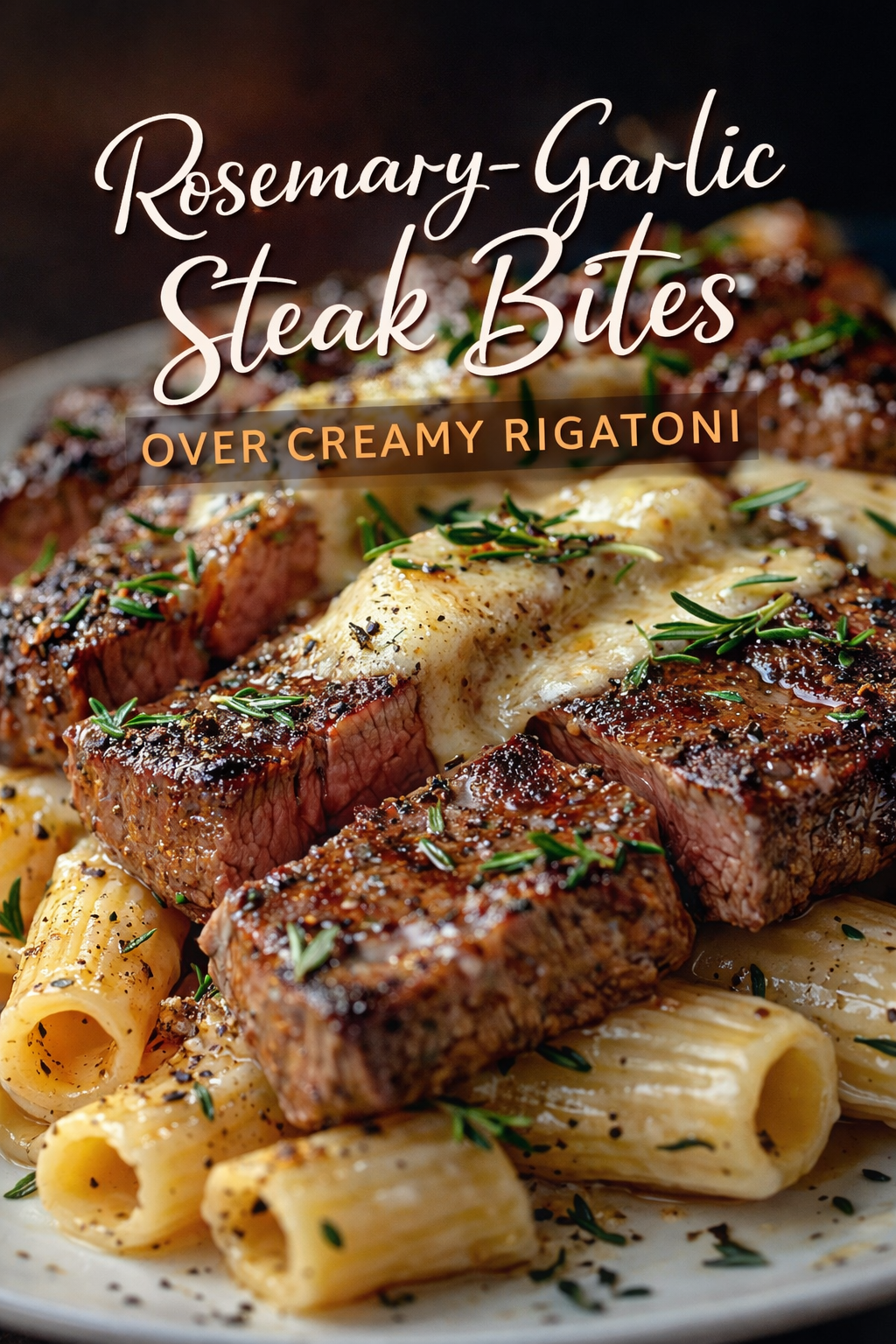
Rosemary-Garlic Steak Bites Over Creamy Rigatoni
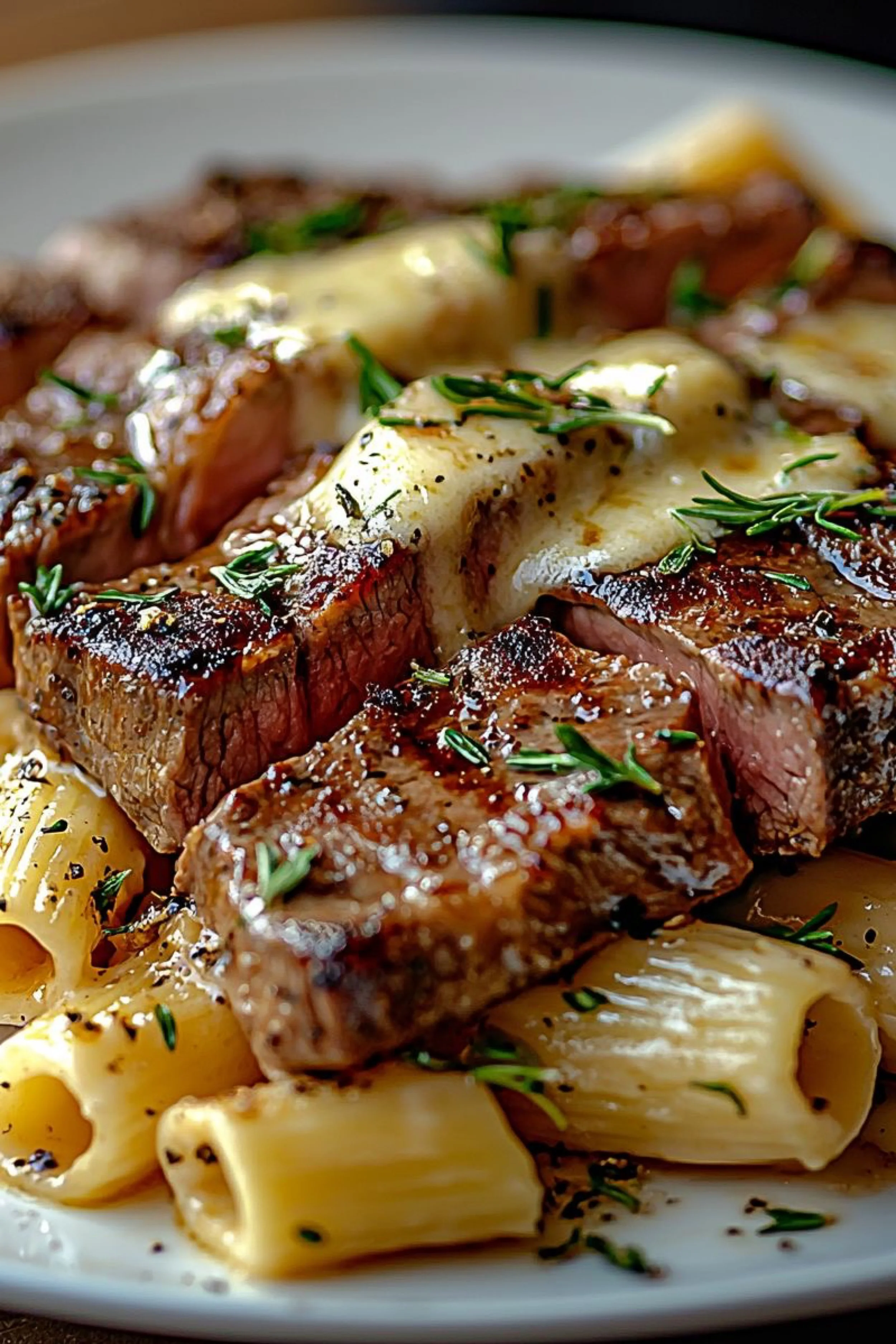
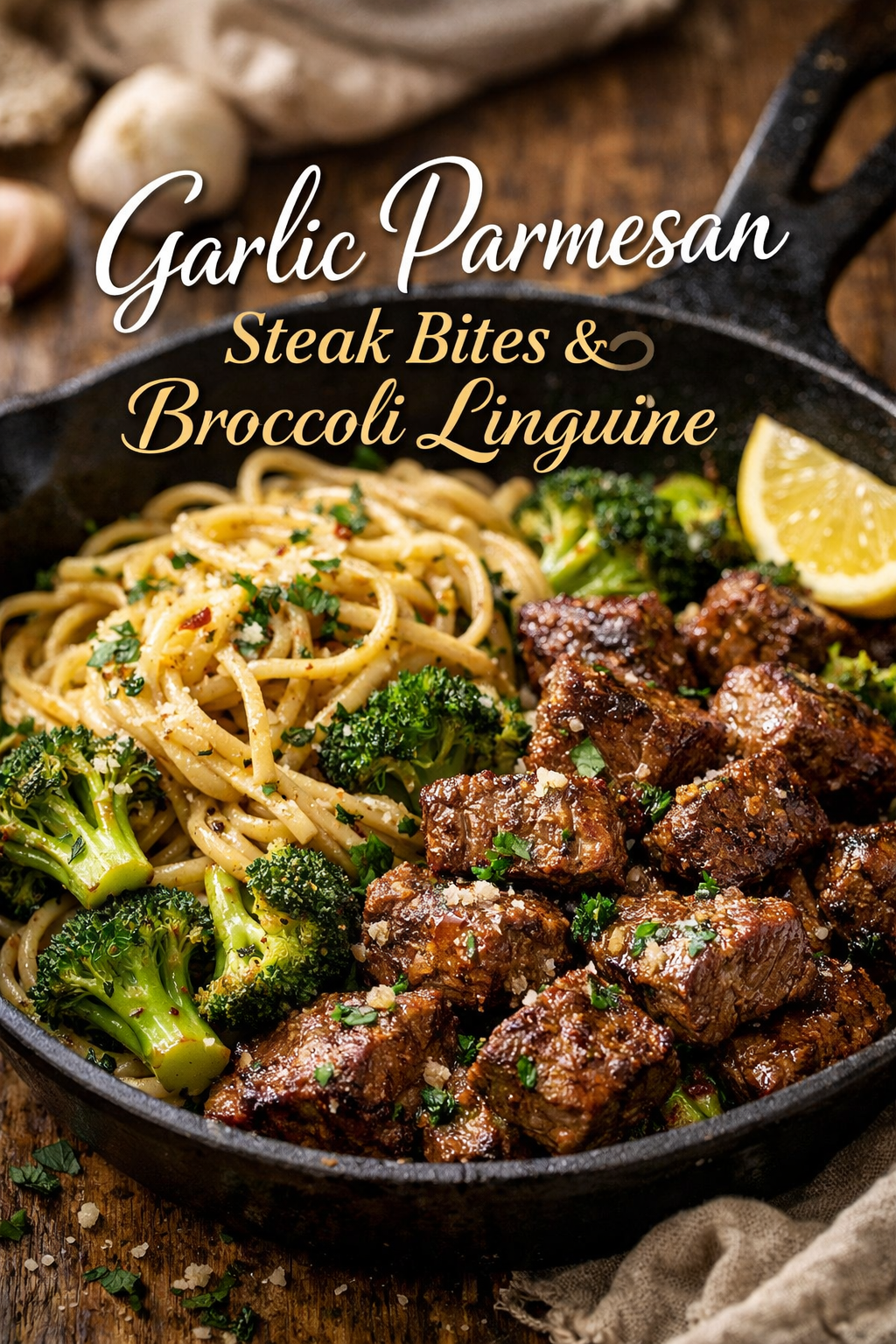
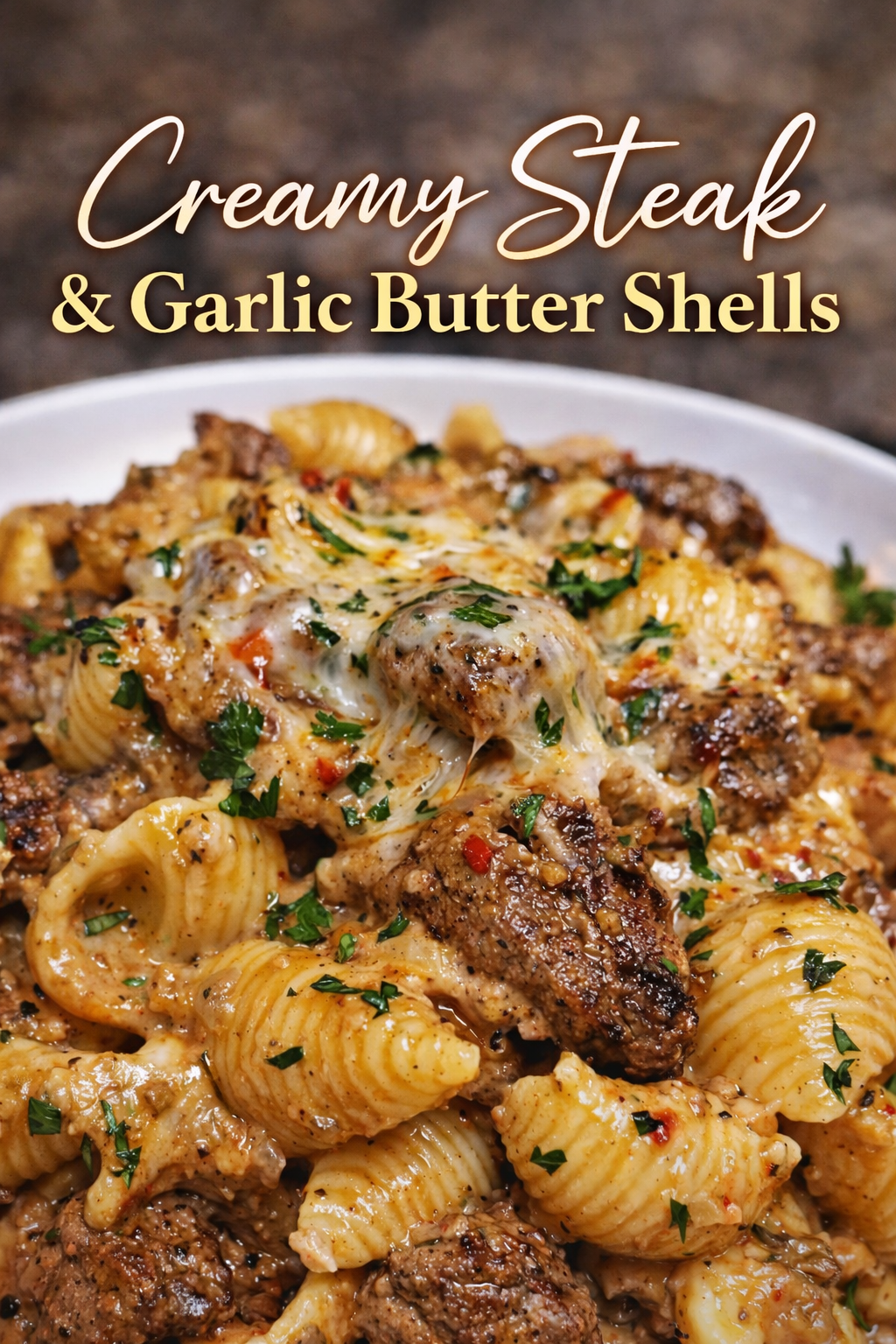
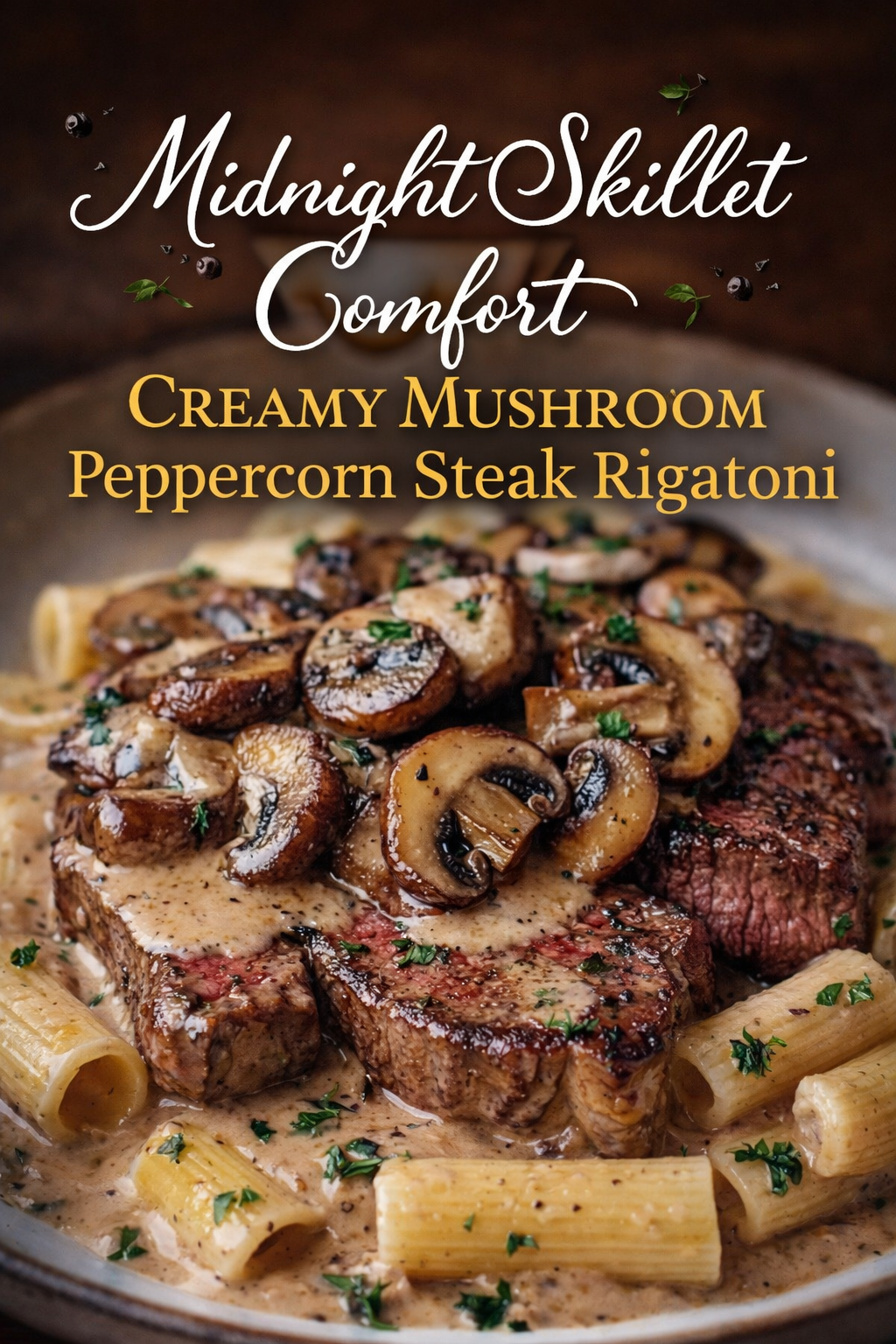
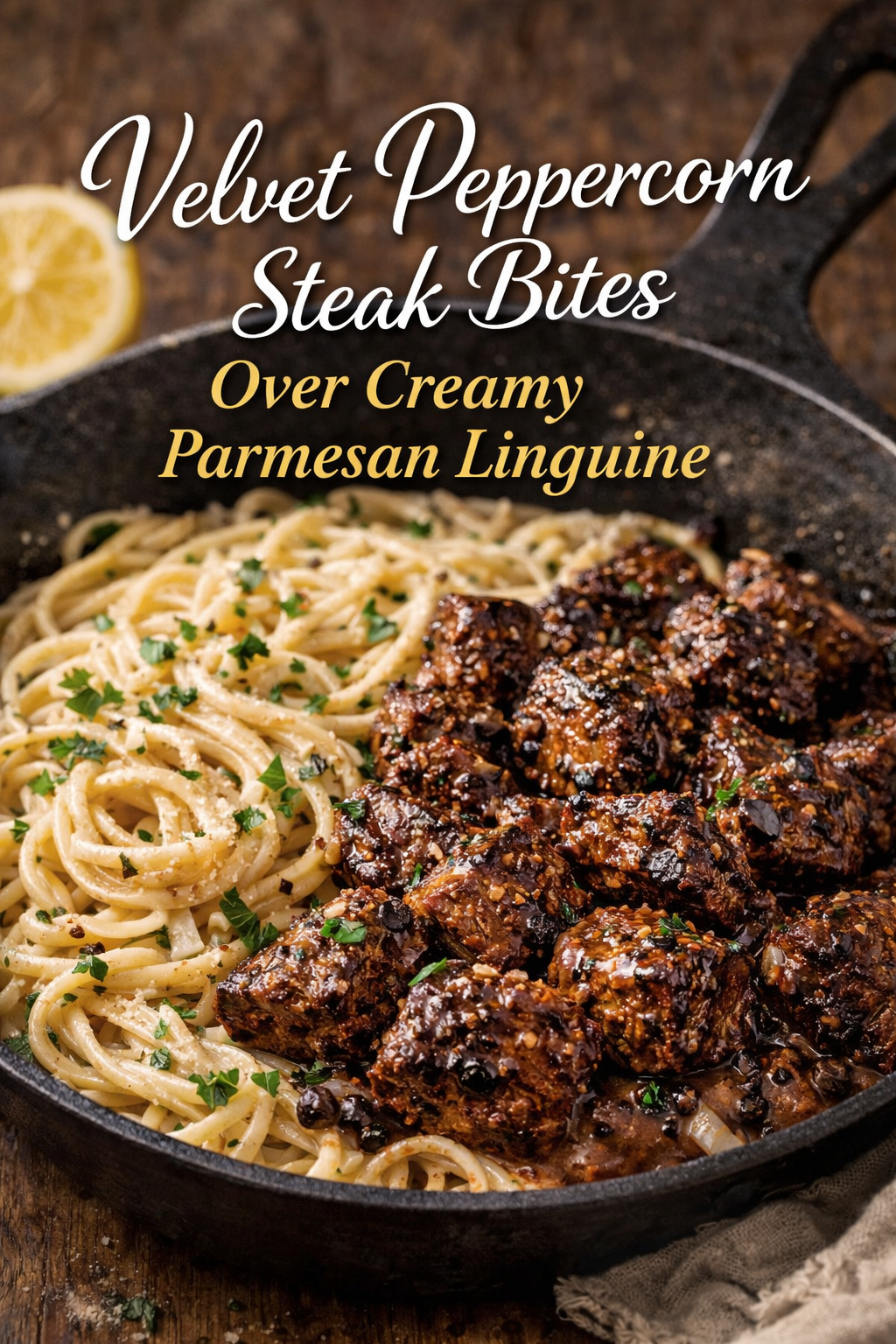
The plate arrives like a quiet flex—close enough to the edge of indulgence that you feel it before you taste it. Rigatoni sits in soft, glossy folds, each tube holding onto a pale, velvet sauce that clings like warmed silk. The pasta isn’t drowned; it’s dressed—coated just enough to catch the light and leave a gentle sheen along every ridge. Flecks of pepper are scattered like ink, and a few rosemary needles land with purpose, green and aromatic, as if they were placed by hand at the last second.
Then there’s the steak. Not a single uninterrupted cut, but generous pieces—seared hard on the outside, still tender at the center, the kind of bite that gives you that faint resistance before it yields. The crust is dark and bronzed, the surface lacquered with fat and heat, and the edges look kissed by a pan that was properly hot. You can practically hear it: that short, sharp sizzle when meat hits metal, the moment the kitchen smells like caramelized protein and peppered butter.
There’s a melt of something pale and luxurious pooling between the steak bites—either a softened pat of butter or a spoon of sauce gathering in the warmest spot of the dish—turning into a buttery gloss that slips down the sides of each piece. It’s the kind of detail that makes the whole thing feel intentional: not fussy, not precious, just deeply satisfying. A dinner that feels like a reward, even if it’s a Tuesday.
You don’t need a sprawling setup to get there—just a pan that holds heat well, a little patience, and a willingness to let the simple things do their job. A heavy cast-iron skillet that sears like a pro changes everything, because it doesn’t blink when the steak hits the surface. The sound is immediate. The color develops fast. The kitchen fills with that confident aroma that says: you’re doing it right.
The sauce is where the mood turns plush. Cream warms slowly, garlic softens into sweetness, and cheese melts into a smooth, savory base that tastes expensive without being complicated. The trick is restraint—keeping the heat gentle enough that the dairy stays silky, and seasoning with the kind of certainty you only get from doing it a few times. A microplane-style grater for fine, fluffy cheese makes the melt cleaner, the texture smoother, the finish more polished.
And rosemary—sharp, piney, almost wintry—threads through the richness to keep everything awake. Fresh sprigs are ideal, but even dried can work if you treat it carefully. Having fragrant dried rosemary that doesn’t taste dusty on hand means you can pull this off without a grocery run, the way the best weeknight luxuries happen.
This is a plate built on contrasts: seared and creamy, peppery and mellow, hearty and somehow still elegant. The rigatoni carries warmth and comfort, while the steak brings that smoky, browned intensity that feels like a restaurant move. It’s not loud. It doesn’t need to be. It just lands—rich, confident, and completely worth the pan splatter.
If you want it to feel extra composed, finish with a final grind of pepper and a few rosemary needles pinched between your fingers to wake up the oils. A pepper grinder that gives a bold, fresh crack turns the last second into a signature. And if you’re the kind of cook who likes to hit perfect doneness every time, an instant-read thermometer for steak keeps the center exactly where you want it—no guesswork, no regret.
The whole thing tastes like candlelight without the candles. Like a little ceremony you can build in your own kitchen—steam rising, sauce shining, steak still sizzling as it hits the pasta. One forkful in, and the room gets quieter in the best way.
A short intro
This recipe delivers steakhouse-style seared steak bites paired with creamy rosemary-garlic rigatoni—rich, peppery, and balanced with herb brightness.
Ingredients
Steak bites
- 1 1/4 lb sirloin or ribeye, cut into 1–1.5-inch cubes
- 1 1/2 tsp kosher salt
- 1 tsp freshly cracked black pepper
- 1 tsp garlic powder
- 1 tbsp high-heat oil
- 2 tbsp butter
- 2–3 cloves garlic, minced
- 2–3 sprigs rosemary (or 1/2 tsp dried)
Creamy rigatoni
- 12 oz rigatoni
- 1 tbsp butter
- 2 cloves garlic, minced
- 1 cup heavy cream
- 3/4 cup finely grated parmesan
- 1/4 tsp black pepper (plus more to finish)
- Salt to taste
- Splash of pasta water (as needed)
Method / Instructions
- Boil pasta: Cook rigatoni in salted water until al dente. Reserve 1 cup pasta water; drain.
- Season steak: Pat dry thoroughly, then season with salt, pepper, and garlic powder.
- Sear steak bites: Heat a skillet over medium-high until very hot. Add oil, then steak in a single layer. Sear 2–3 minutes per side until browned.
- Butter + aromatics: Reduce heat to medium. Add butter, garlic, and rosemary; toss steak bites 30–60 seconds until fragrant. Remove steak to a plate.
- Make sauce: In the same pan, add butter and garlic (if needed). Pour in cream and warm gently 2–3 minutes. Stir in parmesan until smooth. Loosen with reserved pasta water a little at a time until glossy.
- Combine: Add rigatoni to sauce and toss. Top with steak bites, pan drippings, extra pepper, and rosemary. Serve immediately.
Start with the right texture: dry steak, hot pan, calm sauce. Those three things are the difference between “pretty good” and the kind of plate that makes people pause mid-bite.
1) Choose the cut and size it for a fast sear
Sirloin gives you a clean beefy flavor and cooks quickly without being fussy. Ribeye brings more marbling and a richer finish. Either works—just cut the cubes evenly (about 1 to 1.5 inches) so they brown at the same pace. Uneven pieces guarantee some overcook while others lag behind.
Before anything touches heat, get the surface dry. Pat the cubes aggressively with paper towels. Moisture is the enemy of browning; water has to evaporate before a crust can form, and that steals time and temperature. If you want the easiest route to restaurant-style sear, use a cast-iron skillet that holds serious heat and let it preheat until a drop of water skitters.
2) Season simply, but season like you mean it
Salt + pepper is the backbone. Garlic powder adds roasted depth without burning the way fresh garlic can at high heat. Season right before searing if your steak is already dry; if you have time, salt 30–60 minutes ahead and leave it uncovered in the fridge to deepen flavor and improve browning.
For consistency, a kosher salt that’s easy to pinch and control helps you avoid under-seasoning—especially with creamy pasta, which softens flavors.
3) Sear in batches—crowding is the silent killer
A crowded pan steams steak. You want space between pieces so heat can stay high and moisture can escape. Add a thin layer of high-heat oil, then place the cubes down and don’t touch them for a full 2 minutes. That stillness is where the crust forms. Flip and repeat. You’re building color, not cooking them to death.
If you’re aiming for specific doneness, pull the steak bites a touch earlier than you think—carryover heat is real. For medium-rare, target about 130–135°F in the thickest cube. A fast instant-read thermometer makes this repeatable, especially when cube sizes vary slightly.
4) Butter-baste for gloss and aroma
Once you’ve got the crust, reduce heat to medium and add butter. Butter plus browned steak turns into a quick pan sauce all by itself—nutty, savory, and shiny. Now add minced garlic and rosemary, but keep it brief: 30–60 seconds. You’re blooming aromatics, not frying them. Overcooked garlic tastes bitter and drags the whole dish down.
If you’re prepping tools, a sturdy set of stainless tongs makes tossing steak bites in butter cleaner and faster, which matters when timing is tight.
5) Build the creamy sauce gently—low heat is the luxury move
Cream sauces don’t like panic. After you remove the steak, lower the heat. Add a small knob of butter if the pan looks dry, then warm the cream slowly. You’re not boiling; you’re coaxing. Once it’s steaming, add parmesan gradually and stir until it melts fully.
Grating matters more than people think. Fine shreds melt smoothly; thick shreds can clump. A microplane-style grater gives you that soft, snow-like cheese that disappears into the sauce instead of turning into strings.
If the sauce thickens too much, loosen it with reserved pasta water—just a splash at a time. That starchy water is your finishing tool: it keeps the sauce glossy and helps it cling to the ridges of rigatoni.
6) Pasta timing: finish in the sauce, not beside it
Cook rigatoni to al dente. Drain, then immediately toss it in the sauce. Let it simmer together for 30–60 seconds so the pasta drinks a little of the flavor and the sauce settles into the ridges. If you add pasta water here, you’ll see the sauce turn smoother and more cohesive.
For best texture, use a quality rigatoni that holds its bite and don’t overcook—it matters because the sauce is rich and you want structure, not softness.
7) Bring the steak back at the last second
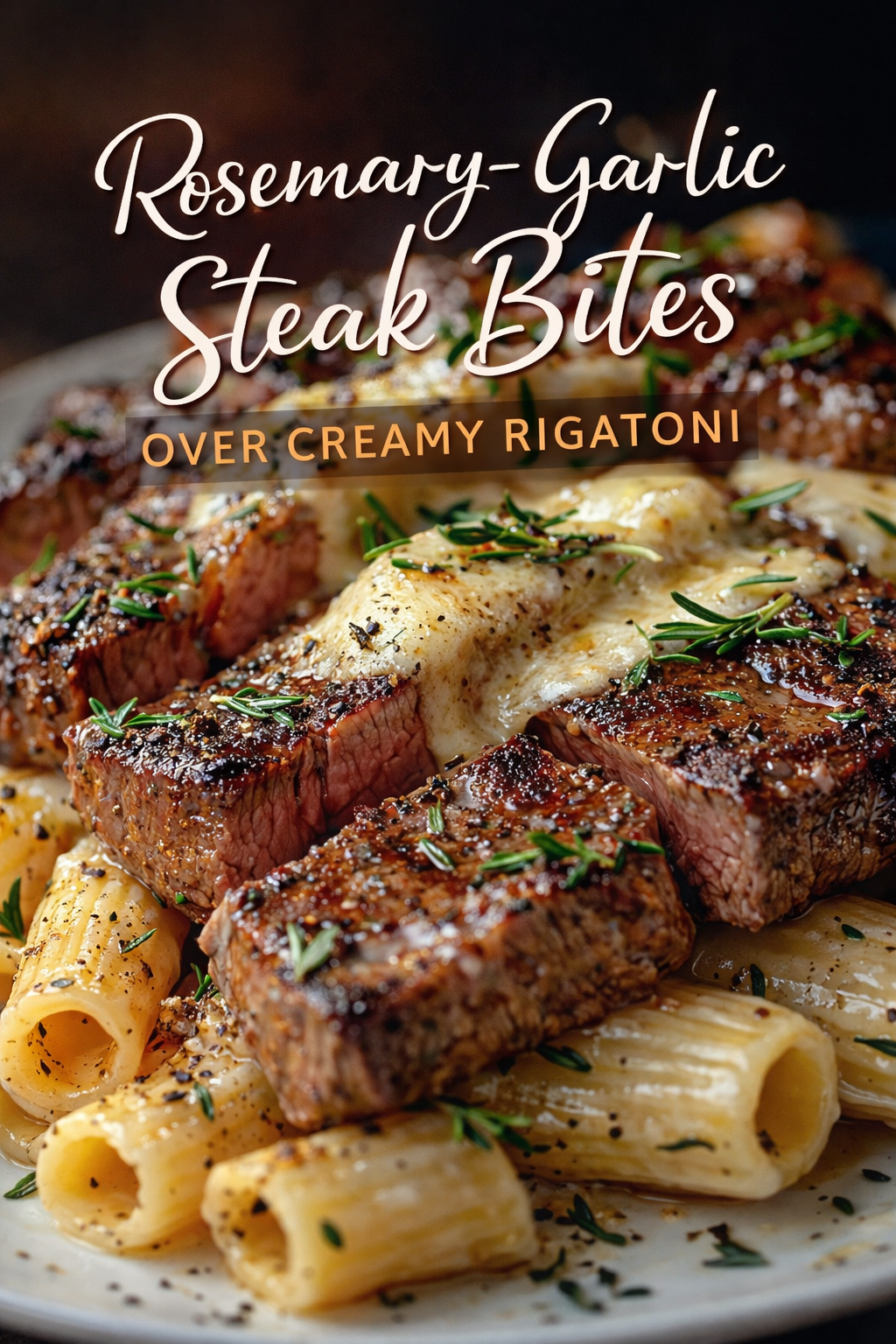
Once the pasta is glossy, pile it into bowls and top with steak bites. Spoon any buttery pan drippings over the top. This is where it starts to look like the photo: browned edges, creamy pasta, and that final shine.
Finish with cracked pepper and rosemary. Fresh is ideal, but if you’re using dried, crush a little between your fingers to wake it up. Keeping fresh rosemary sprigs on rotation makes this dish feel intentional even when it’s spontaneous.
Variations that still feel elevated
- Mushroom version: Sauté sliced mushrooms after the steak comes out, then proceed with cream and cheese.
- Spicy version: Add a pinch of crushed red pepper to the cream as it warms.
- Lighter version: Swap part of the cream for half-and-half and use a smaller amount of cheese; keep pasta water handy to maintain silkiness.
- Herb swap: Thyme works beautifully if rosemary isn’t your favorite.
Troubleshooting (the fixes that save dinner)
- Sauce broke or looks oily: Heat was too high. Pull off the burner, whisk in a splash of warm pasta water, and stir patiently until it re-emulsifies.
- Sauce is too thick: Add pasta water in small splashes until it turns glossy again.
- Steak is tough: It was either overcooked or cut too small. Next time, larger cubes + quicker sear + earlier pull.
- Not enough browning: Pan wasn’t hot enough or the steak wasn’t dry enough. Preheat longer and pat dry harder.
This is the kind of dinner that feels composed because the steps are intentional, not complicated. High heat for the crust. Low heat for the cream. A little herb brightness to keep it sharp. Once you’ve done it once, it turns into a reliable signature—rich, savory, and polished without ever feeling precious.