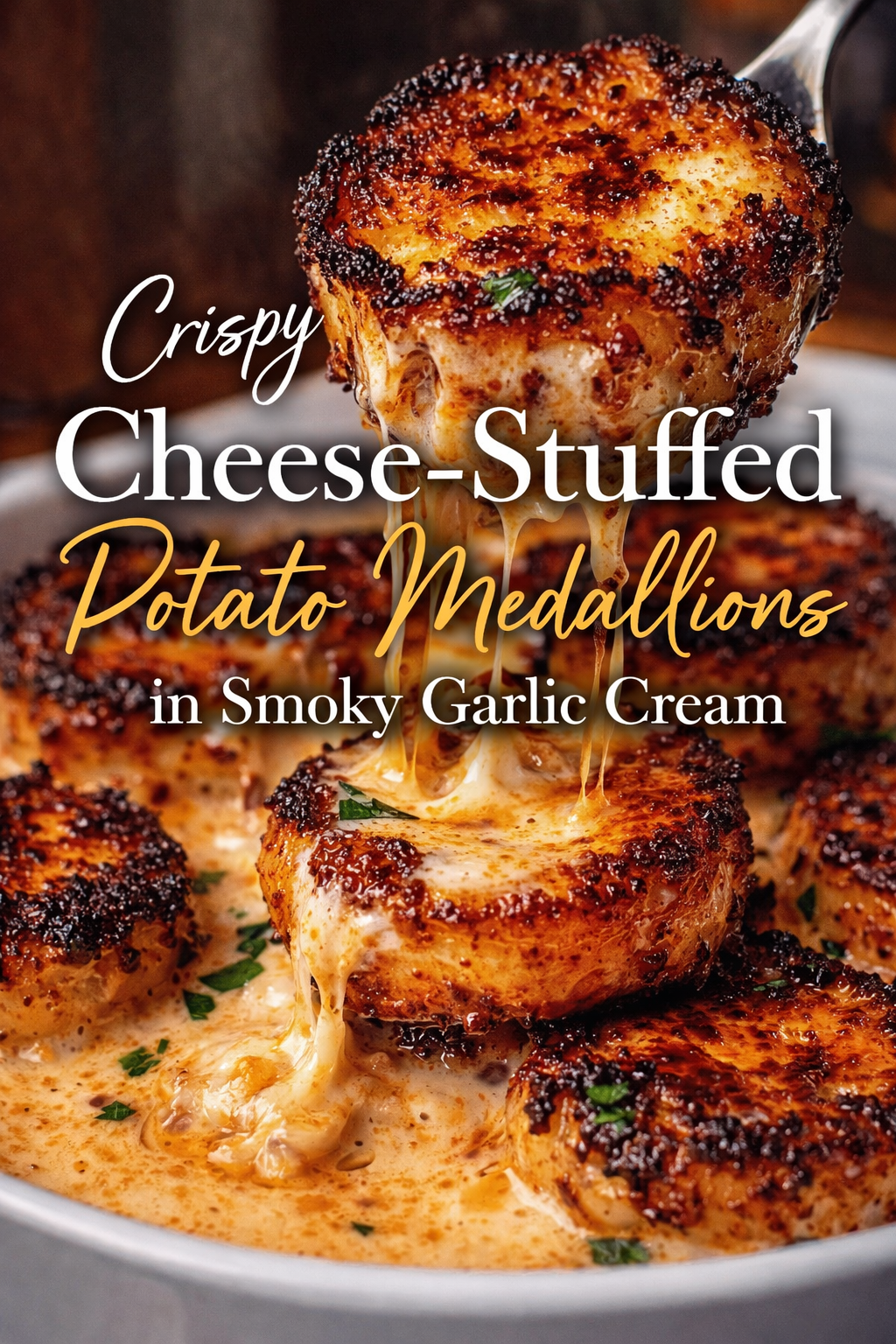
Crispy Cheese-Stuffed Potato Medallions in Smoky Garlic Cream
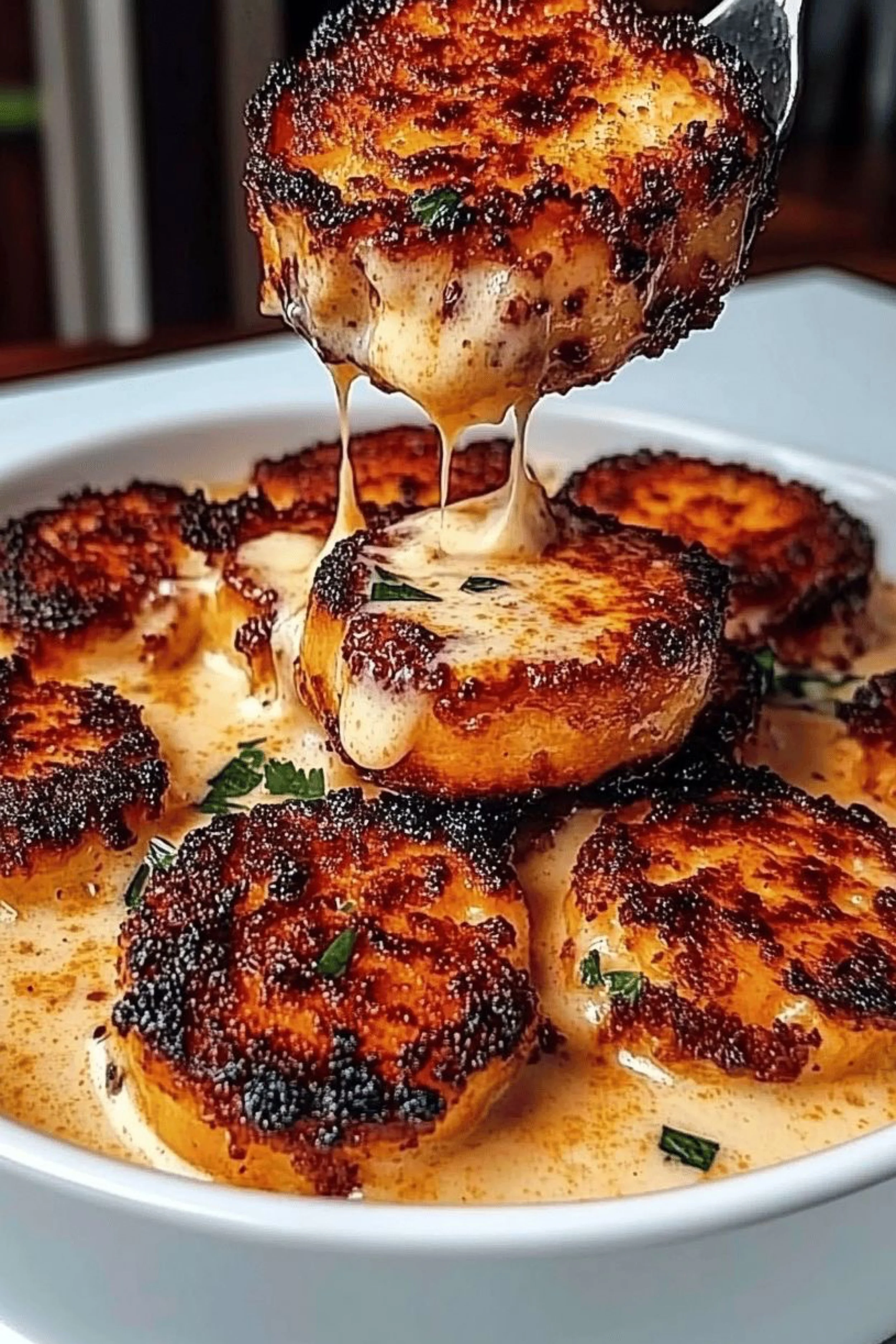
The first thing you notice is the crust: a dark, lacquered sear that looks like it was coaxed into existence by patience and a little audacity. Each medallion sits like a small, golden-brown coin that’s been kissed by heat until the edges turn crisp and almost lacy, the kind of browned perimeter that crackles when the fork finds it. Beneath that crust is a softer promise—pale, tender layers that give slightly, as if the center has been kept safe from the blaze. And then there’s the moment that makes people lean in: the lift. A spoon slides under one round, rises, and the middle answers back in slow, molten strands—cheese stretching like a warm ribbon before it finally surrenders and drips into the sauce below.
That sauce is its own atmosphere. Creamy and pale, but not bland—freckled with spices that stain it the color of toasted sand and faint sunset. It clings to the bottoms of the medallions, pooling in the shallow bowl and catching every bit of char and flavor that falls away. There’s a subtle shimmer to it, the way butter and cream look when they’ve been gently persuaded into silk. You can almost taste the smoke before you even take a bite, the kind that comes from a good smoked paprika with real depth, not just red dust for color. A few green flecks—herbs cut small—land like punctuation marks, brightening the whole scene.
This is comfort food that learned to dress up. It feels like something you’d order at a candlelit table and then spend the rest of the night trying to recreate from memory, chasing that exact balance of crunch, cream, and savory heat. The medallions are sturdy enough to hold their shape, but soft enough to melt into the sauce at the edges. The crust tastes like toasted cheese and browned butter and the faint sweetness of potato, all tightened into one bite. Inside, the cheese is lush—stretchy, generous, and familiar in the best way, especially if you reach for low-moisture mozzarella that melts in long, clean strands. And the sauce—warm, smoky, and garlicky—doesn’t just sit beside the medallions. It ties everything together, catching the crispy bits like treasure.
The kitchen mood matters here. The sound of a medallion hitting hot fat is immediate and satisfying, a quick hiss that signals the pan is ready. The scent changes as the first side browns: butter turning nutty, garlic blooming, paprika waking up. Steam rises in soft waves, and the bowl waiting nearby feels like the final stage—a place where all that pan-seared intensity gets softened into something spoonable and luxurious. If you’ve got a heavy skillet that holds heat without flinching, you can build that deep crust without overcooking the center. If you’ve got a fish spatula or thin metal turner, you can flip without breaking the edges you worked for.
On the table, these don’t need much. A simple salad with something sharp, a glass of something cold, maybe bread for the last swipe of sauce—something like a crusty bread knife that glides cleanly waiting on the board. The medallions themselves are the headline: crisp outside, tender inside, and threaded through with melty richness. It’s the kind of dish that turns a regular night into a small event, the kind that makes people slow down between bites—not because it’s heavy, but because it’s too good to rush.
Ingredients
For the medallions
- 2 large russet potatoes (or Yukon Gold), peeled
- 6–8 oz low-moisture mozzarella, cut into small cubes
- 1/2 cup grated Parmesan
- 1/3 cup all-purpose flour
- 1 large egg
- 1 tsp kosher salt
- 1/2 tsp black pepper
- 1/2 tsp smoked paprika
- Neutral oil (for searing)
- 2 tbsp butter (for searing)
For the smoky garlic cream
- 2 tbsp butter
- 4 cloves garlic, finely minced
- 1 1/4 cups heavy cream
- 1/2 cup chicken broth (or vegetable broth)
- 1 tsp smoked paprika (plus more to taste)
- 1/4 tsp cayenne (optional)
- 1 tsp Dijon mustard
- Salt and pepper to taste
- 1–2 tsp lemon juice (to finish)
To finish
- Chopped parsley or chives
Method / Instructions
- Slice + prep potatoes: Slice potatoes into 1-inch rounds. Simmer in salted water 8–10 minutes until just tender (not falling apart). Drain and cool.
- Form medallions: Gently hollow a small pocket in each round (a teaspoon works). Fill with a mozzarella cube, then press edges back together.
- Coat: Set up a quick dredge: flour mixed with salt, pepper, smoked paprika; beaten egg; Parmesan. Coat each medallion in flour → egg → Parmesan.
- Sear: Heat a skillet over medium-high. Add a thin layer of oil and 1 tbsp butter. Sear medallions 2–3 minutes per side until deeply golden and crisp. Work in batches.
- Make sauce: Lower heat to medium. Add butter, then garlic for 30 seconds. Stir in cream, broth, paprika, Dijon, and cayenne. Simmer 3–5 minutes until lightly thickened.
- Finish + serve: Season to taste, add lemon juice, return medallions briefly to warm through, then spoon sauce over. Garnish with herbs.
A great crust starts before the pan ever heats. The potatoes need to be tender enough to yield under pressure, but still structured enough to behave like a “shell.” That’s why the simmer is short and controlled—think par-cook, not fully cooked. Slice them evenly (a clean one-inch thickness is the sweet spot), then simmer until a knife slips in with mild resistance. If they go too far, they’ll crumble when you fill and coat them. If you want precision without fuss, a sturdy chef’s knife that stays sharp makes those rounds clean and consistent, which means even browning later.
Cooling matters more than it sounds. Warm potatoes steam; steam turns coatings soggy. Let the rounds cool until they’re no longer humid to the touch. While they cool, cube your filling cheese. Low-moisture mozzarella gives you that iconic pull, and it’s less likely to leak watery liquid into the crust. If you want a slightly bolder bite, you can blend in a little provolone, but keep the core mostly melt-friendly—something like melting cheeses suited for cooking rather than fresh, high-moisture varieties.
Creating the pocket is the most delicate step, but it’s simpler than it looks. Use the tip of a teaspoon and gently press into the center, twisting slightly to create a shallow cavity—just enough for a cube of cheese. You’re not excavating; you’re shaping. Press the cube in, then pinch and smooth the potato around it. If a little cheese peeks out, fix it now. Any exposed cheese will find the pan and escape, turning into scorched bits before the potato crust is ready. (Delicious, but not the goal.)
The coating is where the crust becomes inevitable. First comes flour seasoned with salt, pepper, and smoked paprika. This base layer absorbs surface moisture and creates traction for the egg. Next is egg, which acts like glue. Finally, Parmesan forms the crisp shell—salty, nutty, and eager to brown. If you want an extra-thick armor, double-dip: flour → egg → Parmesan → egg → Parmesan. It’s dramatic, but it pays off when you’re chasing that deep, blistered edge. A wide shallow dredging setup helps keep the process clean and fast, especially if you’re making a full platter.
Now the pan. Heat is everything, and steady heat is the difference between “golden” and “burnt before warm.” A heavy skillet gives you control—less temperature swing when the cold medallions hit the surface. Preheat over medium-high until a drop of water dances and evaporates quickly. Add neutral oil for high-heat searing and butter for flavor; the butter will brown, and that’s a feature, not a flaw. If you prefer fewer surprises, choose a neutral high-heat cooking oil and add butter only once the medallions are already sizzling.
Place the medallions gently, leaving space between them. Overcrowding makes steam, and steam makes softness. You want the sound: a confident sizzle, not a faint hiss. Let the first side cook without fussing—moving them early tears the crust. After 2–3 minutes, peek at the edge. You’re looking for deep amber with dark freckles, the kind of browning that tastes like toasted cheese. Flip with a thin turner so you don’t crush the edges; a flexible metal spatula slides under without trauma. Cook the second side until it matches the first, then move them to a rack or paper towel while you finish batches.
With the medallions resting, the sauce becomes your soft landing. Drop the heat to medium and add butter. Garlic goes in briefly—just long enough to bloom. If garlic browns, it turns bitter, and bitterness fights cream. Pour in the cream and broth, then whisk in smoked paprika, Dijon, and optional cayenne. The broth keeps the sauce from feeling heavy; the Dijon gives structure and a gentle tang. Simmer until it coats a spoon—3 to 5 minutes. If you want total smoothness, a small whisk that reaches into corners is oddly perfect here.
Seasoning is not one-and-done. Salt to taste once the sauce reduces, because reduction concentrates everything. Then add lemon juice at the end for lift. Lemon doesn’t make it “lemony”—it makes it awake. If the sauce ever tightens too much, splash in a little broth and whisk. If it seems too thin, simmer one more minute; cream thickens quickly once it finds its stride.
Now the reunion: slide the medallions back into the sauce just long enough to warm through, then spoon sauce over the tops. Don’t simmer them hard in the sauce or the crust will soften. Think of it as glazing, not stewing. Finish with chopped parsley or chives for contrast, and add a final pinch of paprika if you want the look to match the flavor.
Troubleshooting makes this repeatable. If the crust burns before the center warms, your pan is too hot—drop the heat slightly and extend cook time. If the medallions stick, your pan wasn’t hot enough at the start; heat creates release. If cheese leaks, it’s usually exposure (seal the pocket better) or using high-moisture cheese (swap to low-moisture). If the sauce tastes flat, it needs either more salt or more acid—start with a few drops of lemon, then reassess.
Variations are easy once the method clicks. Swap mozzarella for pepper jack for heat. Add finely chopped cooked bacon to the cheese pocket. Season the flour with garlic powder or dried herbs. Make it vegetarian with vegetable broth. If you want a more elegant finish, sprinkle a little extra Parmesan over the plated sauce and let it melt into the surface, especially if you’ve got a fine microplane-style grater that turns hard cheese into snow.
Serve these with something crisp and fresh—arugula with vinaigrette, quick pickles, or a simple tomato salad. The dish is rich, but not overwhelming when it has a sharp, green counterpoint. And if you end up with extra sauce, it’s the kind that mysteriously disappears on bread, vegetables, or whatever else happens to be nearby—proof that the best part of a meal is often what’s left in the bowl.