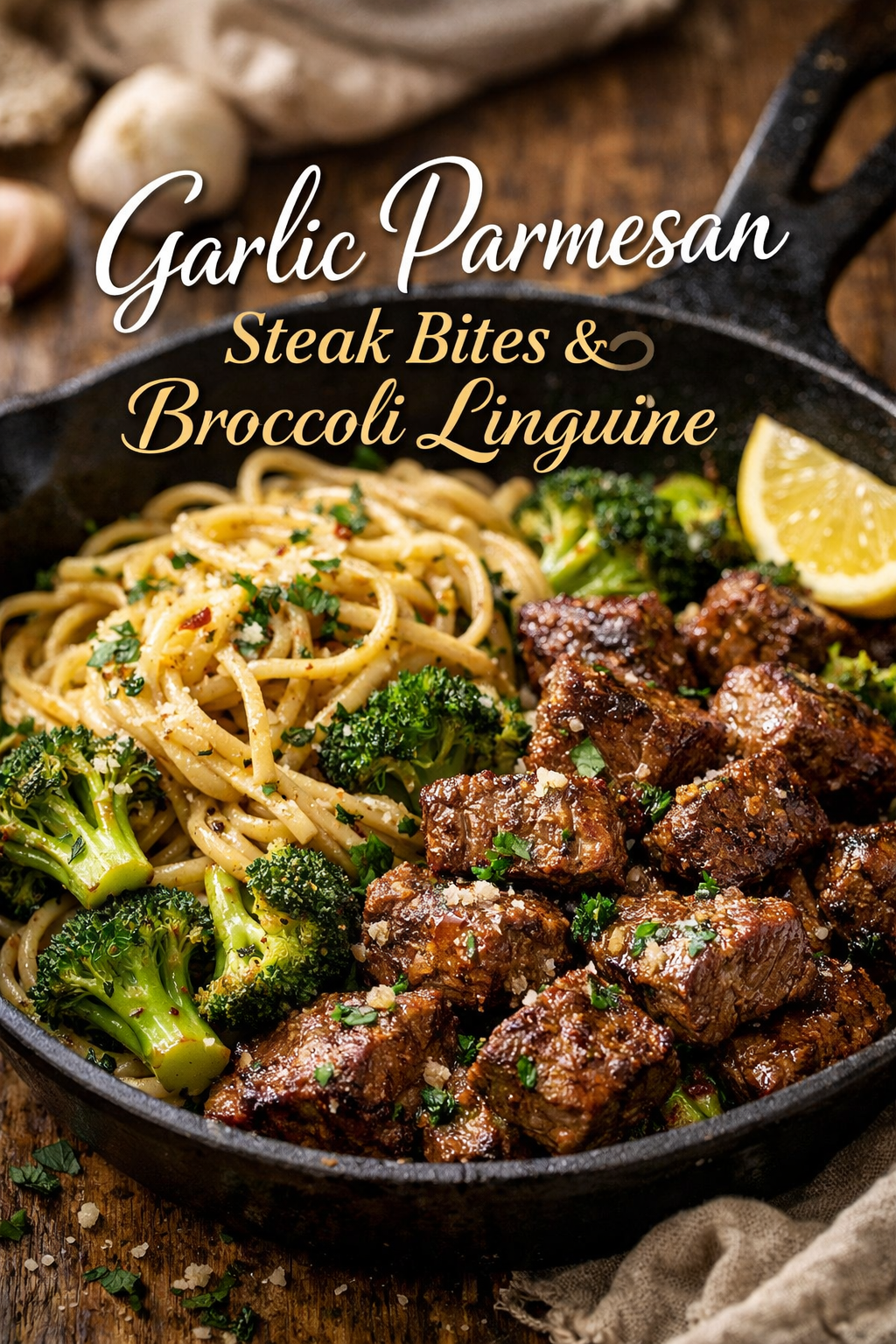
The Night the Skillet Sang: Garlic-Parmesan Steak Bites & Broccoli Linguine
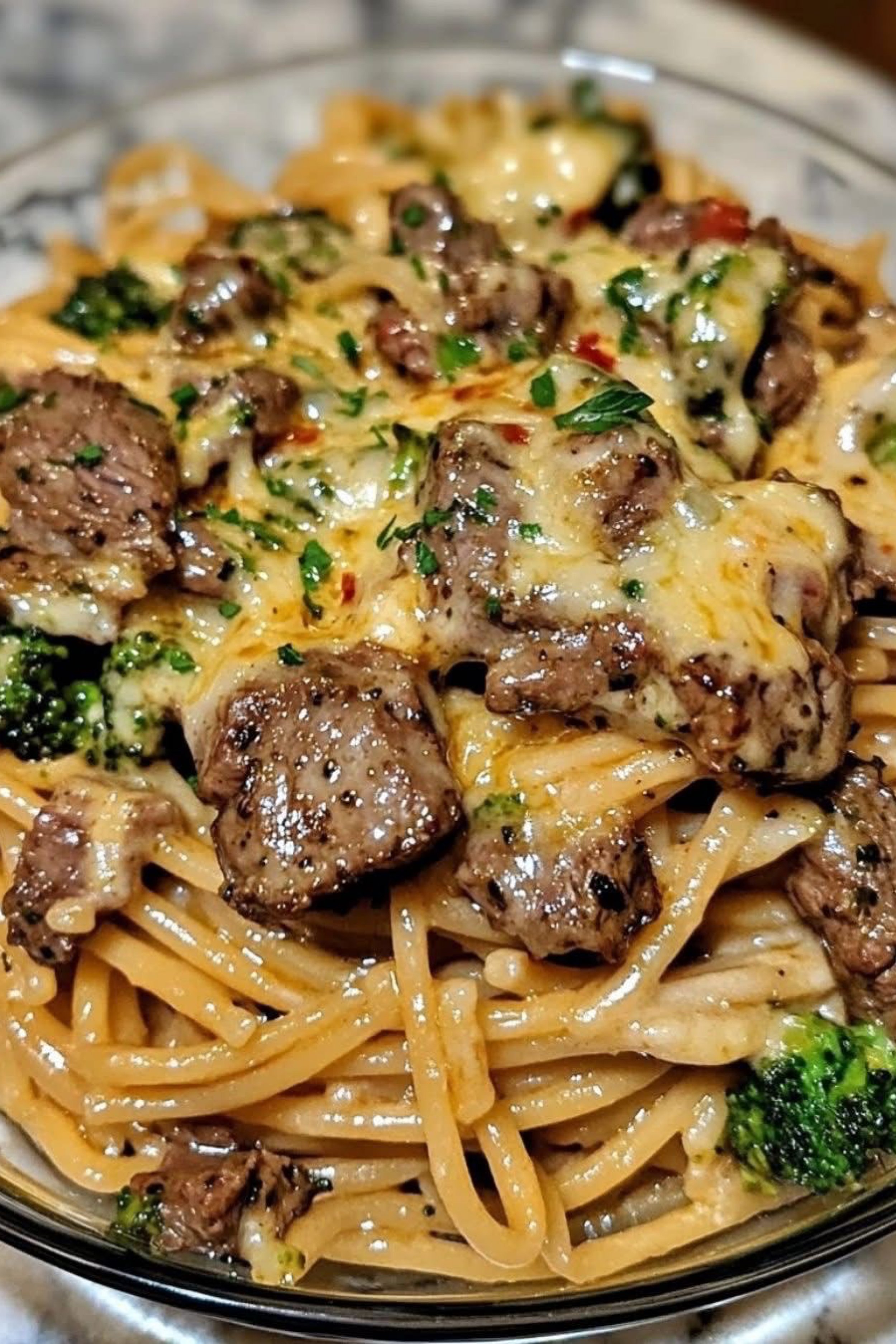
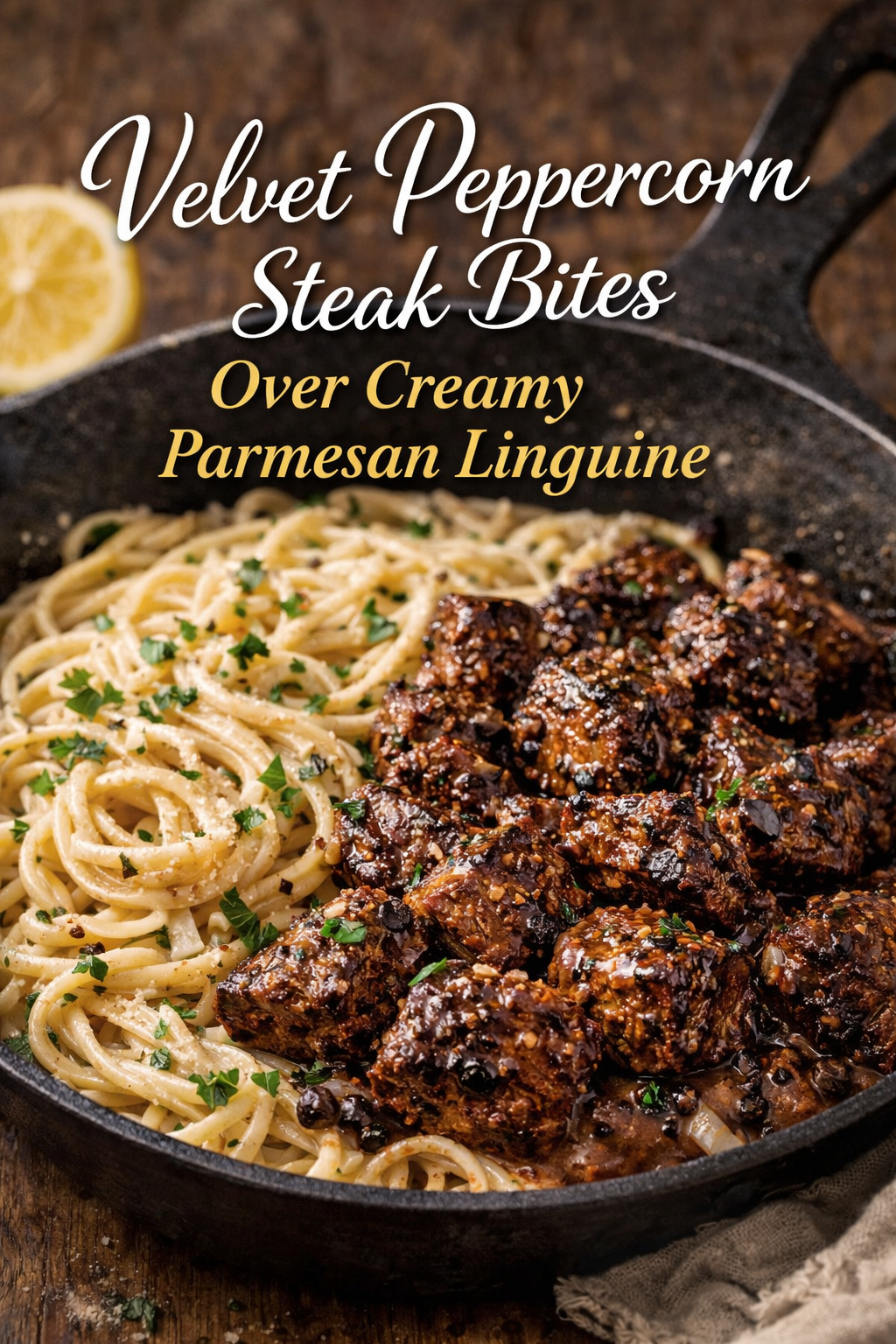
Steam clings to the rim of the bowl like a soft halo, the kind that fogs the air just long enough to make the kitchen feel private—sealed off from weather, from noise, from whatever the day tried to leave behind. In the center, linguine loops and folds into itself, glossy and bronze-gold where sauce has found every strand. It isn’t a delicate sheen; it’s a deliberate lacquer, the kind that promises salt, fat, and heat in perfect agreement. Between the pasta, broccoli peeks through in bright, unapologetic green—small florets that look like they were invited for both color and crunch, a fresh counterpoint to everything rich and molten.
Then there are the steak bites: dark-edged cubes scattered across the top like prized treasure, each one seared until the surface looks tight and caramelized, as if the skillet pressed a signature into the meat. They sit heavy and confident, the way a good sear always does—holding onto pepper, holding onto smoke, holding onto the last sharp crackle of high heat. Over them, cheese has melted into soft drifts and glossy ribbons, pooling in places and stretching in others, catching the light the way satin does. A scatter of green herbs—parsley, maybe—breaks it up like confetti you didn’t plan but needed. A few flecks of red pepper glint here and there, tiny sparks that hint the next bite won’t be shy.
This is comfort food with an edge: familiar enough to feel like home, bold enough to feel like a choice. It’s the kind of bowl that makes the table irrelevant. You could eat it standing at the counter, leaning in, letting the heat warm your hands while the rest of the house stays dim. You could split it with someone and still feel possessive about the last forkful. It’s weeknight food that looks like it wandered in from a date-night menu, and it carries that same quiet thrill—like you’re getting away with something.
There’s a small romance in the way it comes together, too. Steak wants intensity, a fast, fearless heat that turns plain cubes into something with character. Pasta wants patience, a rolling boil and the discipline to stop before it goes soft. Sauce wants attention—garlic perfumed just enough, dairy warmed without breaking, cheese melted without turning heavy. The reward is that moment when everything meets: steak juices and buttery garlic sliding into the pasta, broccoli catching the sauce in its little branches, and cheese sealing it all into one cohesive, decadent bite.
The tools matter in a dish like this, not because it’s complicated, but because the margins are deliciously precise. A pan that stays hot helps the steak brown instead of steam, like a well-seasoned cast-iron skillet built for serious sears. Tongs give you control without fuss, especially long stainless-steel tongs that can flip steak quickly. And if you’ve ever wondered why restaurant steak bites feel so consistent, it’s often because someone checked the center with an instant-read thermometer for perfect doneness instead of guessing.
The flavors here are the kind that arrive in layers. Garlic doesn’t shout; it blooms. Parmesan doesn’t just taste salty; it tastes like depth and warmth. A pinch of red pepper doesn’t make it “spicy,” it just lifts the richness so your palate stays awake. The broccoli is more than a token vegetable—it brings a clean bite that keeps the dish from collapsing into one-note comfort. And the steak, browned and peppery, keeps reminding you that pasta can be luxurious in a way that isn’t precious.
Even the pasta shape feels intentional. Long noodles wrap around everything, catching sauce and tugging at melted cheese so each forkful comes up dramatic. A good pot helps you keep the boil strong and steady, the kind you get with a roomy pasta pot with a fitted lid. And when it’s time to drain, you want it fast—no overcooking, no lingering—so a sturdy colander that won’t wobble earns its place without fanfare.
There’s a specific kind of appetite this bowl answers. Not the polite kind. The kind that wants something hot and savory and a little bit indulgent, something that makes you slow down because it’s too good to rush. The cheese on top has that just-melted gloss that suggests you didn’t wait long after finishing, that you brought it to the table while the last bubbles were still settling. The herbs look like a final breath of freshness. The pepper flakes look like a wink. And the steak, still holding its seared edges, looks like the reason you’ll remember this meal later—when you’re hungry again, when you’re planning dinner again, when you’re craving that exact combination of richness and bite.
It’s a bowl that doesn’t apologize for being generous. It leans into the garlic, leans into the butter, leans into the cheese. But it also balances itself with broccoli’s snap and steak’s savory depth, so you don’t feel weighed down—you feel satisfied. The kind of satisfied that makes the kitchen quieter afterward, because there’s nothing left to chase. Just a fork set down. A bowl scraped clean. And the lingering scent of garlic and pepper in the warm air, like a signature you can’t quite wash away.
Garlic-Parmesan Steak Bites & Broccoli Linguine
A glossy, cheesy bowl of seared steak bites tangled into garlicky linguine with broccoli and a parmesan-rich finish—fast enough for a weeknight, indulgent enough to feel like a treat.
Ingredients
- 12 oz linguine (or fettuccine)
- 1 lb sirloin or ribeye, cut into 1-inch cubes
- 3 cups broccoli florets (fresh or frozen)
- 2 tbsp olive oil
- 3 tbsp butter, divided
- 5–6 cloves garlic, minced
- 1 tsp kosher salt, plus more for pasta water
- 1 tsp black pepper (or to taste)
- 1 tsp Italian seasoning (optional)
- 1/2 tsp red pepper flakes (optional)
- 3/4 cup heavy cream (or half-and-half for lighter)
- 3/4 cup freshly grated parmesan
- 1 to 1 1/2 cups shredded mozzarella or provolone
- 1/3 cup reserved pasta water
- 2 tbsp chopped parsley (optional)
Method
- Salt a pot of water generously and cook linguine until just al dente. Add broccoli during the last 2 minutes (or blanch separately). Reserve 1/3 cup pasta water, then drain.
- Pat steak cubes dry. Season with salt and pepper.
- Heat a skillet over medium-high. Add olive oil, then sear steak in a single layer 2–3 minutes per side until browned. Remove to a plate.
- Lower heat to medium. Add 2 tbsp butter, then garlic and red pepper flakes. Stir 30–45 seconds until fragrant.
- Add cream and bring to a gentle simmer. Stir in parmesan until smooth.
- Toss in pasta and broccoli. Add reserved pasta water as needed to loosen into a glossy sauce.
- Return steak (and juices) to the skillet. Top with shredded mozzarella/provolone, cover 1–2 minutes to melt.
- Finish with parsley and extra black pepper. Serve hot.
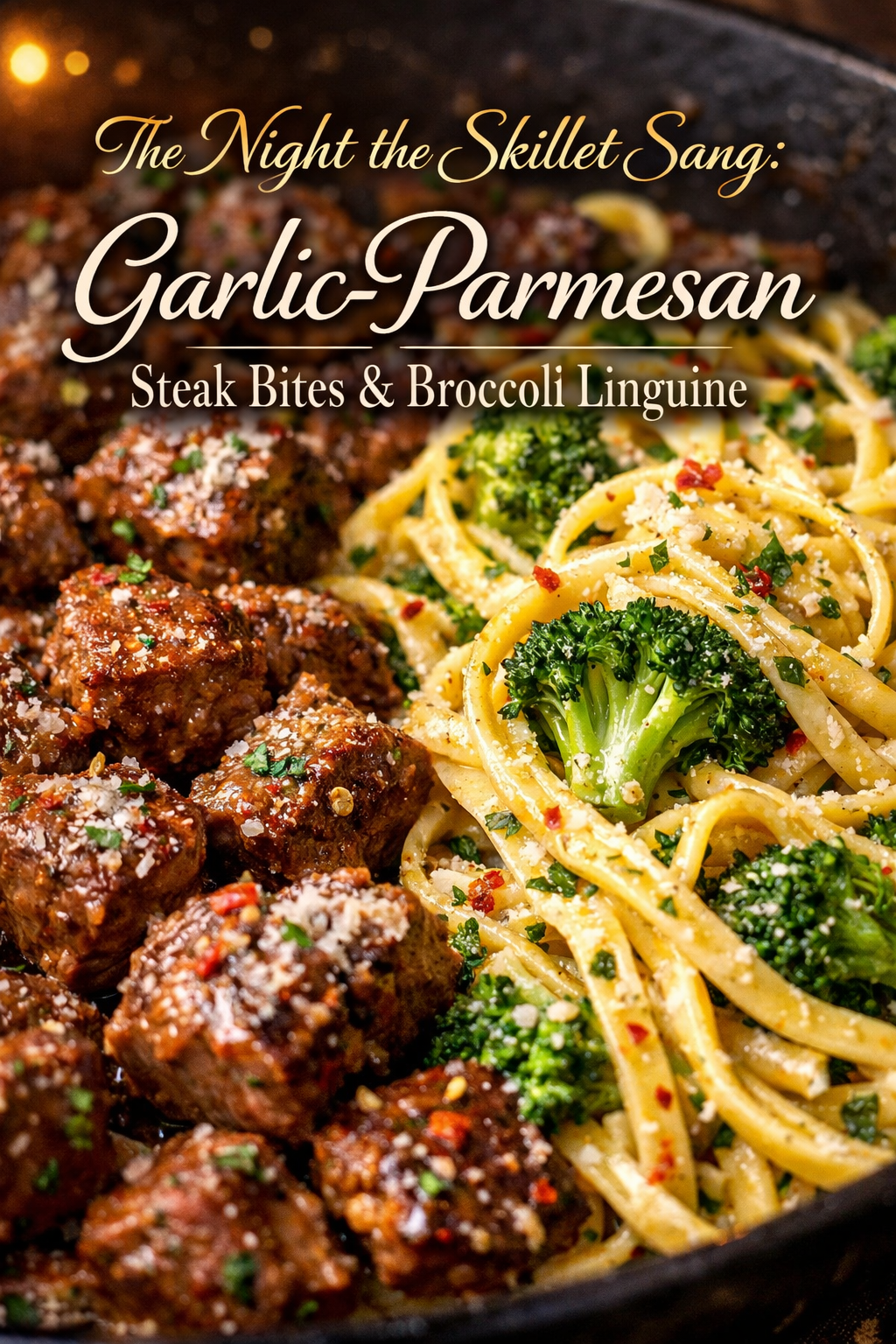
The difference between an average bowl and the kind that makes you stop mid-bite comes down to a few small decisions—heat control, timing, and how you treat the sauce like something alive instead of something you simply “add.” This walkthrough keeps everything intentional, so you get steak that stays browned, pasta that stays springy, and a cheese finish that melts into silk instead of turning heavy.
Start with the steak, because steak sets the tone. Cut your cubes evenly—one inch is ideal—so they cook at the same pace. Then do the step most people skip: dry the surface thoroughly. Moisture is the enemy of browning. Paper towels and two minutes of patience buy you that deep, bronzed crust you’re seeing on top. Season simply: salt and pepper, maybe a whisper of Italian seasoning. If you want the pepper to read more clearly, freshly cracked makes a difference, and a solid pepper grinder built for coarse cracks makes it effortless.
Get the pan truly hot before the steak goes in. A heavy skillet is your best ally because it won’t lose heat the second the meat touches it. If you’re aiming for that dark, glossy sear, a thick-bottom stainless-steel skillet made for high heat or cast iron is ideal. Add oil, let it shimmer, then place the steak cubes in a single layer with space between them. Crowding is steaming. Space is searing. Work in batches if you have to—it’s worth it.
Sear without fussing. Let the first side develop color before you flip; that’s usually two to three minutes depending on your stove. You’re not “cooking it through” here—you’re building flavor on the outside. Pull the steak as soon as it’s browned and still slightly underdone in the center. It will finish later when it returns to the sauce. If you want perfect consistency, check one cube with an instant-read thermometer that takes the guesswork out: around 125–130°F is great if you like it medium-rare after the final warm-through, 135°F if you want medium.
While the steak rests, cook the pasta. Use plenty of salted water—salty like the sea—because it’s the only moment the noodles get seasoned from within. Cook to al dente, a minute shy of the box if you can, because the noodles will finish in sauce. Add broccoli near the end so it goes tender-crisp instead of soft. If you’re using frozen florets, they work beautifully—just drop them in during the last minute or two. Drain, but reserve pasta water. That cloudy water is liquid gold: starch that helps sauce cling.
Now you build the sauce in the same pan that seared the steak. Those browned bits stuck to the surface are concentrated flavor; you’re about to dissolve them into something creamy. Lower the heat to medium. Add butter, let it foam, then add minced garlic. Keep it moving. You’re looking for fragrance, not color—30 to 45 seconds. If you love garlic but hate the bitterness of scorched cloves, consider a garlic press that turns it into a fine paste, which perfumes the fat quickly without needing long cooking time.
Pour in cream and bring it to a gentle simmer, not a boil. Boiling can separate dairy, and you want the texture smooth and glossy. Once it’s warm, add parmesan gradually, stirring as it melts. Freshly grated parmesan melts far better than powdery shreds; if you want that velvety finish every time, a microplane-style grater for hard cheese is one of those small upgrades that pays off constantly.
If the sauce looks too thick, add pasta water a splash at a time. This is the trick: starch + fat + gentle heat = sauce that clings like it belongs there. Toss in the noodles and broccoli, and keep turning them in the pan so every strand gets coated. This is also where you decide your heat level. A pinch of red pepper flakes doesn’t dominate—it brightens. If you want a warmer glow rather than sharp heat, go lighter. If you want the bite to announce itself, go a little heavier.
Now return the steak—along with any juices on the plate—back into the pan. Those juices are pure flavor. Let the steak warm through for a minute or two. You’re not simmering it to death; you’re just bringing it home. If you want the final look and feel from the photo—cheese visibly melted on top—sprinkle mozzarella or provolone over everything, then cover briefly. Two minutes is usually enough. A lid traps steam and melts cheese quickly without overcooking the steak. If you don’t have a good lid match for your skillet, a universal pan lid that fits multiple sizes solves that problem cleanly.
Troubleshooting is simple once you know what each issue means. If the sauce breaks (looks oily or grainy), the heat was too high or the cheese went in too fast. Fix it by lowering the heat and whisking in a tablespoon or two of warm pasta water until it smooths out. If the pasta looks dry, it’s almost always because it needs more liquid—add pasta water, not more cream, so it loosens while staying glossy. If the steak tastes less browned than you wanted, it was crowded or the pan wasn’t hot enough—next time, sear in batches and wait for the oil to shimmer.
Variations are easy without losing the soul of the dish. Want it brighter? Add a squeeze of lemon at the end. Want it deeper? Add a spoon of Dijon to the cream before the parmesan for a subtle savory edge. Want it smokier? A pinch of smoked paprika on the steak does wonders. Prefer chicken? Swap in chicken thigh cubes and sear the same way. Want extra vegetables? Sauté mushrooms after the steak comes out, then proceed with butter and garlic—mushrooms love a creamy parmesan finish.
When it’s done, finish with chopped parsley for lift and a little extra black pepper for bite. Serve immediately, while the cheese still has that glossy pull and the noodles still hold their spring. This is a bowl that rewards urgency—hot, rich, and perfectly balanced between comfort and intensity—where every bite tastes like the skillet did exactly what it was meant to do.