Rosemary-Balsamic Roast with Baby Potatoes & Burst Tomatoes
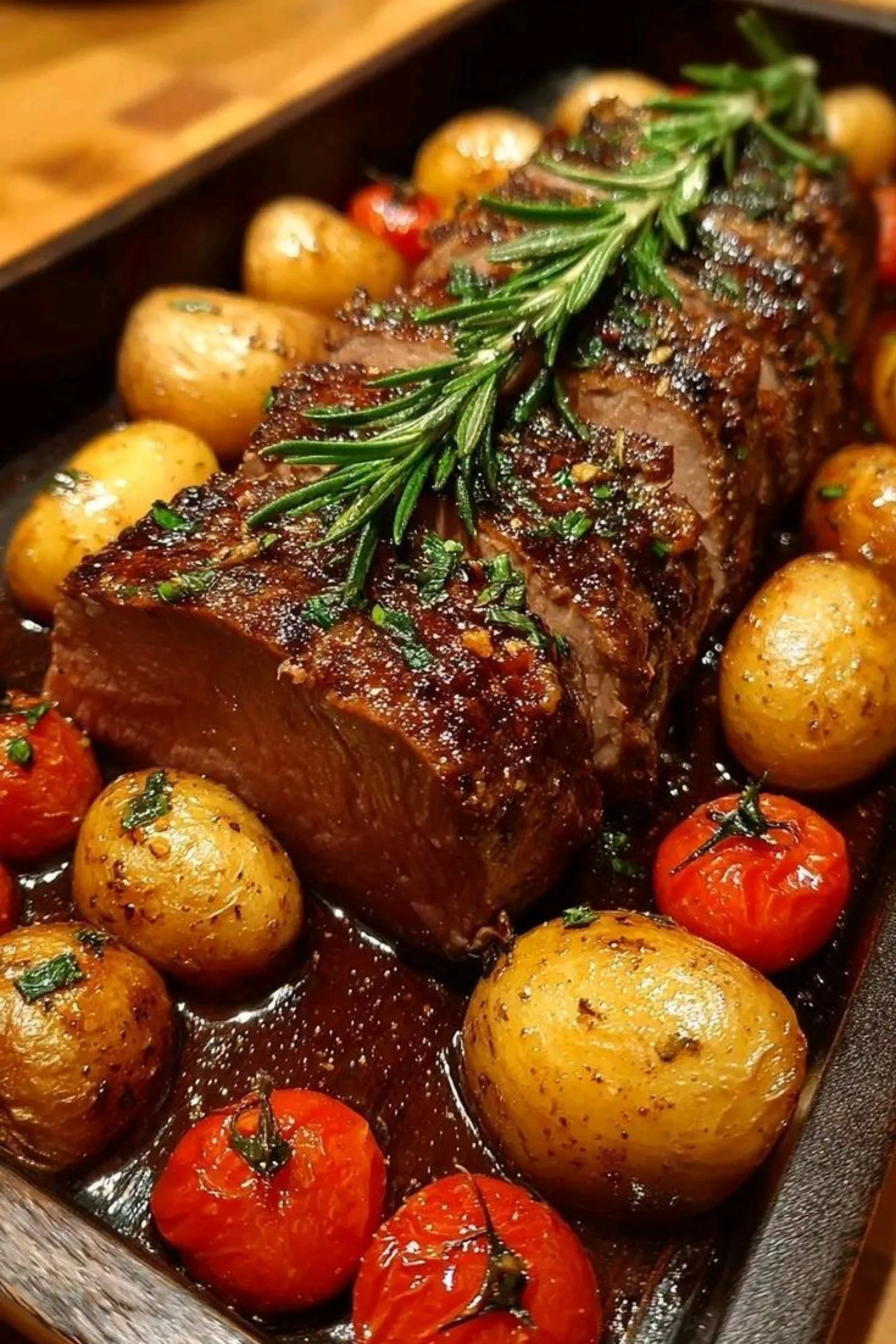
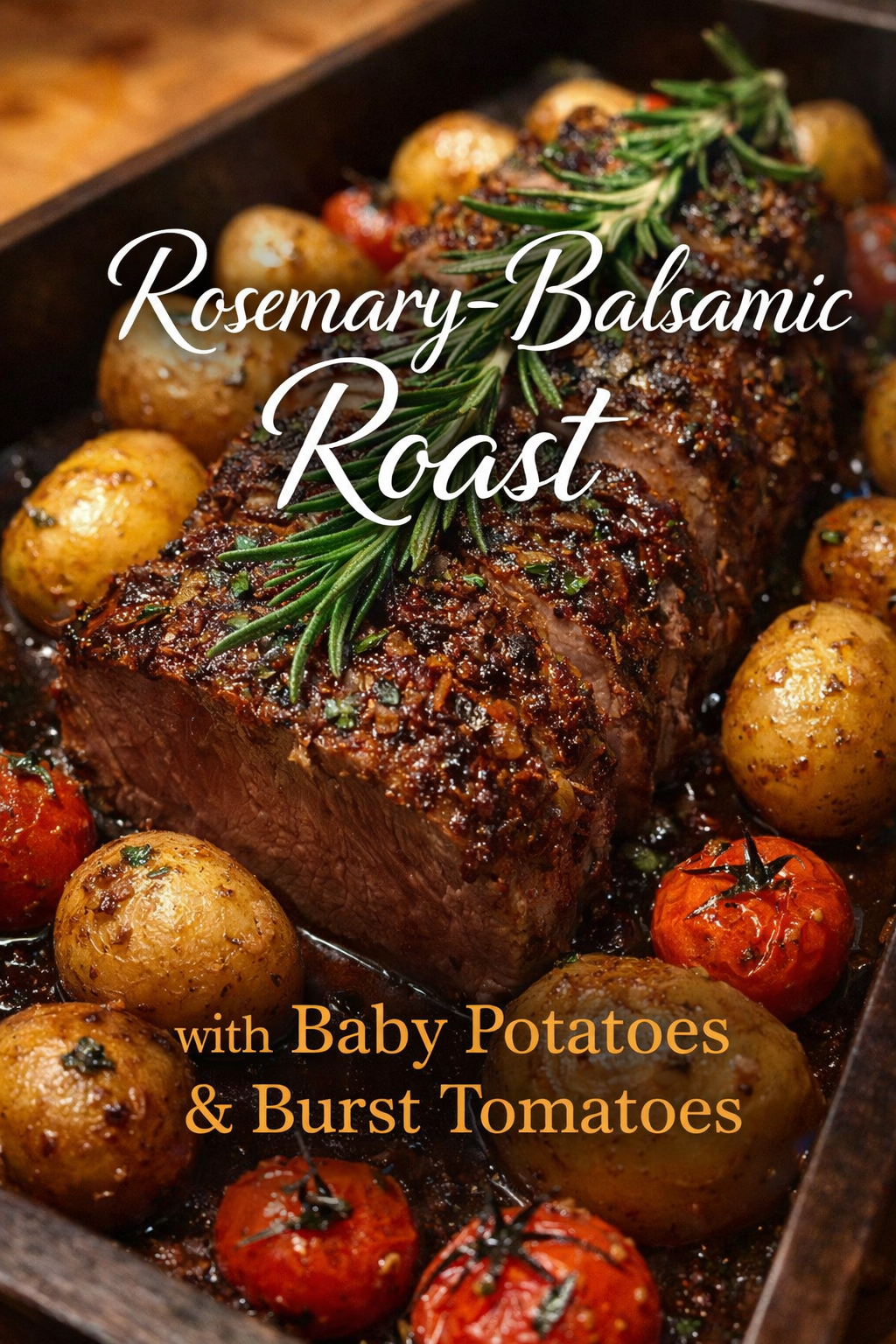
There are dinners that arrive loudly—steam, clatter, urgency—and then there are the ones that glide onto the table like a quiet win. The kind where the kitchen smells like browned butter and crushed herbs, where the air turns warm and savory in a way that makes the rest of the evening feel slower, better, more intentional. This is that dinner: a glossy roast resting in its own dark pan juices, flanked by baby potatoes that look lacquered with flavor and cherry tomatoes that have collapsed into sweet little bursts of red.
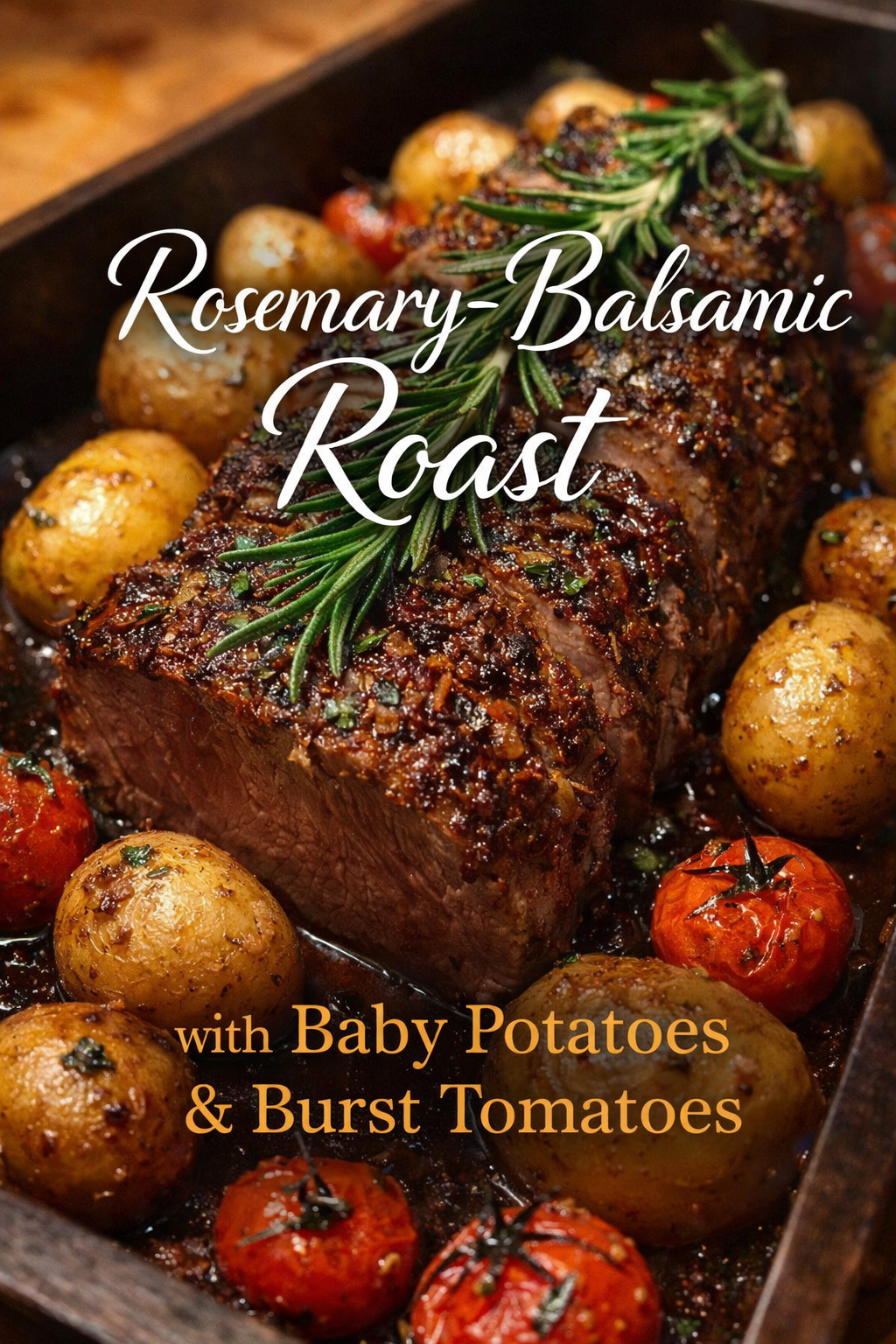
The scene is all contrast and comfort. A deep, caramelized crust clings to the roast, the surface speckled with fine herbs and pepper, the edges catching the light like bronze. A fresh rosemary sprig sits across the top—bold, evergreen, unapologetically aromatic—still bright against the darker, richer tones of the meat. Around it, the potatoes are plump and golden, their skins taut and shining, dotted with seasoning. The tomatoes, once firm and bright, now slump and blister, their sweetness concentrated into glossy pockets that mingle with the savory drippings. Everything sits in a shallow pool of sauce that looks like it took hours to build—dark, silky, and clinging.
This is the kind of roast that doesn’t need fanfare to feel celebratory. It’s built on small, confident decisions: letting the pan get hot enough for real browning, choosing acid that lifts without stealing the spotlight, layering herbs so the aroma hits first and the flavor stays. The trick is that it’s also forgiving. Even if the day has been sharp-edged—deadlines, cold weather, a house that needs something fixed again—this meal feels like a reset button you can slice into.
The best part is how everything cooks together, trading flavors in the pan. The potatoes roast in the fat and juices, turning tender at the center while their skins pick up a faint chew. The tomatoes soften and sweeten, lending brightness to the darker notes of the sauce. And the roast—whether you go with a leaner cut that stays elegant or something a little richer—soaks up rosemary, garlic, and the tangy depth of balsamic, then gives it all back as it rests.
A meal like this rewards a few good tools, not because you need gadgets, but because the right basics make the whole process feel calm. A sturdy heavy roasting pan keeps heat steady so you get that deep crust without scorching. A sharp chef’s knife for clean slicing turns the final moment—cutting through the roast—into something satisfying instead of messy. Even something as simple as a reliable instant-read meat thermometer changes the mood in the kitchen; you’re not guessing, you’re choosing your doneness on purpose.
The flavors are classic but not sleepy. Rosemary brings that piney, wintergreen lift; garlic and black pepper add warmth; balsamic gives a sweet-tart backbone that makes the sauce taste deeper than it is. A finishing handful of chopped herbs—parsley is perfect—adds a flicker of brightness over the top. If you’ve ever wanted a dinner that feels like it belongs in a candlelit dining room but still works on a weeknight, this is it.
And then there’s the pan sauce, the thing that ties the whole tray together. It’s not complicated; it just respects the drippings. A splash of stock loosens the browned bits, balsamic rounds it out, and a small knob of butter makes it glossy enough to catch on the potatoes. When you spoon that sauce over the sliced roast, it looks like the whole meal was planned around that single, shining moment.
The table that receives this roast always feels a little more grounded. Plates fill with thick slices, potatoes roll into place, tomatoes scatter like jewels. The rosemary scent rises first, then the roasted garlic and pepper. The first bite is a blend of crust and tenderness, sweet tomato and savory pan juices, bright herbs and deep caramel notes. It tastes like warmth you can actually measure.
If you want to lean into the ritual, set out a board and let the roast rest where everyone can see it—steam fading, juices settling, the crust holding its shine. Keep a wooden cutting board with a juice groove nearby so the carving feels clean and effortless. Pour the pan juices into a small bowl, or serve them straight from the corner of the roasting pan like a secret you’re willing to share.
This is food that understands atmosphere: dark sauce, golden potatoes, red tomatoes, a green rosemary sprig like punctuation. It’s cozy without being heavy, elegant without being fussy, and deeply satisfying in the way only roasted things can be—edges browned, centers tender, flavors concentrated into something that feels larger than the sum of its parts. When the night is cold or the week is long, this is the kind of dinner that makes the whole house feel better.
RECIPE / CORE CONTENT SECTION
A one-pan roast built for bold flavor: rosemary, garlic, and balsamic glaze a beautifully browned roast while baby potatoes and cherry tomatoes cook in the pan juices.
Ingredients
- 2.5–3.5 lb roast (sirloin roast, beef tenderloin roast, or pork loin roast)
- 1.5–2 lb baby potatoes (gold or mixed)
- 2 cups cherry tomatoes
- 4–6 garlic cloves, minced
- 2–3 sprigs fresh rosemary (plus extra for garnish)
- 2 tbsp balsamic vinegar
- 2 tbsp olive oil
- 1 tbsp Dijon mustard
- 1 tsp kosher salt (plus more to taste)
- 1 tsp black pepper
- 1 tsp dried thyme (optional)
- 1 cup beef or chicken stock (or broth)
- 2 tbsp butter (optional, for finishing sauce)
- 2 tbsp chopped parsley (optional)
Method / Instructions
- Preheat oven to 425°F (220°C). Pat the roast dry and season all over with salt and pepper.
- Mix olive oil, balsamic, Dijon, garlic, and (optional) thyme. Rub over the roast.
- Toss baby potatoes with a drizzle of oil, salt, and pepper. Scatter potatoes and cherry tomatoes in a roasting pan; nestle rosemary sprigs among them.
- Place roast in the center of the pan. Roast 35–60 minutes (time depends on cut and desired doneness), until a thermometer reads:
- Beef medium-rare: 130–135°F
- Beef medium: 140–145°F
- Pork loin: 145°F
- Remove roast to rest 10–15 minutes.
- Place pan on stovetop over medium heat. Add stock and scrape up browned bits. Simmer 3–5 minutes until slightly reduced; whisk in butter if using.
- Slice roast and serve with potatoes, tomatoes, and pan sauce. Finish with parsley and a rosemary sprig.
1) Choose the right cut and set your target doneness
This roast works with a few different cuts, and the “right” one depends on the vibe you want. A sirloin roast brings beefy flavor and a satisfying chew; a tenderloin roast turns the meal into something silkier and more refined; pork loin keeps things lean and bright, especially with the balsamic. The key is deciding your finish line before you start, because roasting is all about timing.
If you want the least stress and the best precision, use an instant-read meat thermometer. Thermometers remove guesswork, which means you don’t have to keep opening the oven or cutting into the roast to “check.” For beef, pull it 5–10°F before your final doneness—carryover heat will finish the job while it rests. For pork, 145°F is the sweet spot for juicy slices.
2) Dry the surface for real browning
That dark, glossy crust in the pan doesn’t happen by accident. Moisture is the enemy of browning; it steams the outside instead of searing it. Pat the roast dry thoroughly with paper towels, then season generously. Salt doesn’t just flavor—it also helps the surface dry out and encourages a better crust.
If you have the time, salt the roast and let it sit uncovered in the fridge for a few hours. It’s a quiet upgrade that pays off with deeper color and a cleaner, meatier flavor.
3) Build a rub that balances rich and bright
The flavor profile here is a confident mix: rosemary and garlic for aroma, black pepper for warmth, balsamic for depth and lift, and Dijon to help everything cling. Think of the mustard as a flavor adhesive—it binds the rub to the meat and rounds out the sharp edges of vinegar.
Mix the rub in a small bowl, then coat the roast evenly. Keep a little extra for the potatoes if you want them to pick up that same balsamic-herb note.
A small mixing bowl set makes prep feel tidy, especially when you’re working with garlic and sticky balsamic.
4) Prep the vegetables so they cook in sync
Baby potatoes are perfect because they roast quickly and stay creamy inside. If they’re truly small, leave them whole; if some are larger than others, halve them so everything finishes together. Toss with oil, salt, and pepper, then spread them out in a single layer. Crowding makes them steam and soften instead of roast and brown.
Cherry tomatoes go in whole. They’ll blister, then collapse into little pockets of sweetness that blend into the pan juices. Don’t worry if some split—those are the best ones, because they release their juices and deepen the sauce.
Use a heavy roasting pan or sturdy baking dish so the vegetables actually roast instead of scorching in thin metal. Weight matters for even heat.
5) Roast hot to build flavor fast
A 425°F oven is your friend here. High heat means faster browning, better texture on the potatoes, and more concentrated flavor in the pan. Set the roast right in the center, with potatoes and tomatoes around it. Tuck rosemary sprigs close to the meat so the aroma perfumes the drippings.
Avoid constant turning and fussing—let the oven do the work. If you notice the potatoes are browning too quickly on one side, give the pan a gentle shake halfway through, but keep the roast mostly undisturbed.
6) Know when to pull it—and why resting matters
Pulling at the right temperature is half the win; resting is the other half. When you remove the roast, the muscle fibers relax and the juices redistribute. Slice too soon and you’ll watch flavor spill onto the board instead of staying in the meat.
Rest the roast 10–15 minutes on a board. A cutting board with a juice groove keeps things neat and saves every drop for serving. Tent loosely with foil if you want to keep it warm, but don’t wrap tightly—steam can soften that crust you worked for.
7) Turn drippings into a glossy pan sauce
The sauce is where everything comes together. Those browned bits stuck to the pan—fond—are concentrated flavor. Put the roasting pan on the stovetop over medium heat and add stock. As it bubbles, scrape up the fond with a wooden spoon until the liquid turns darker and more fragrant.
Let it simmer a few minutes to reduce and thicken slightly. If you want extra shine and richness, whisk in a knob of butter at the end. That’s the difference between “juices” and “sauce.” If you like a slightly sweeter finish, add a small extra splash of balsamic, tasting as you go.
A silicone whisk is great here if you’re using a nonstick roasting pan, and it makes that butter emulsify smoothly.
8) Slice properly for tenderness
Slicing technique changes texture. For beef, slice across the grain into thick, clean pieces; for pork loin, medium slices stay juicy. Use a sharp blade so you don’t tear the meat and lose juices. A reliable carving knife makes the whole moment feel effortless and keeps the slices looking restaurant-clean.
Pour any board juices back into the pan sauce. That’s pure flavor—don’t waste it.
9) Variations and smart substitutions
- Herb swap: No rosemary? Use thyme, oregano, or sage.
- Acid swap: Balsamic can be replaced with red wine vinegar plus a teaspoon of honey.
- Vegetable swap: Add carrots, shallots, or mushrooms. Keep pieces similar in size to the potatoes.
- Spice lift: A pinch of chili flakes in the rub adds subtle heat without changing the vibe.
- Richer sauce: Add a spoonful of tomato paste to the pan before the stock, then cook it for 30 seconds to deepen flavor.
10) Troubleshooting
- Roast looks browned but is underdone: Your oven runs hot on the surface. Lower to 375°F and roast longer, checking with a thermometer.
- Potatoes are tender but not browned: They were crowded or too wet. Spread them out and roast 5–10 minutes longer, or broil briefly.
- Sauce tastes flat: Add salt first, then a tiny splash of vinegar or a squeeze of lemon to brighten.
- Sauce is too thin: Simmer longer. If needed, whisk in cold butter at the end for body.
When everything lands right, the payoff is immediate: slices of roast with a burnished crust, potatoes that taste like they absorbed every good thing in the pan, tomatoes that pop sweet against the savory sauce, and rosemary perfume lingering in the air. It’s a single-pan dinner that looks dramatic, tastes layered, and feels like the kind of meal you’ll want to repeat—without it ever feeling repetitive.