Midnight Skillet Comfort: Creamy Mushroom Peppercorn Steak Rigatoni
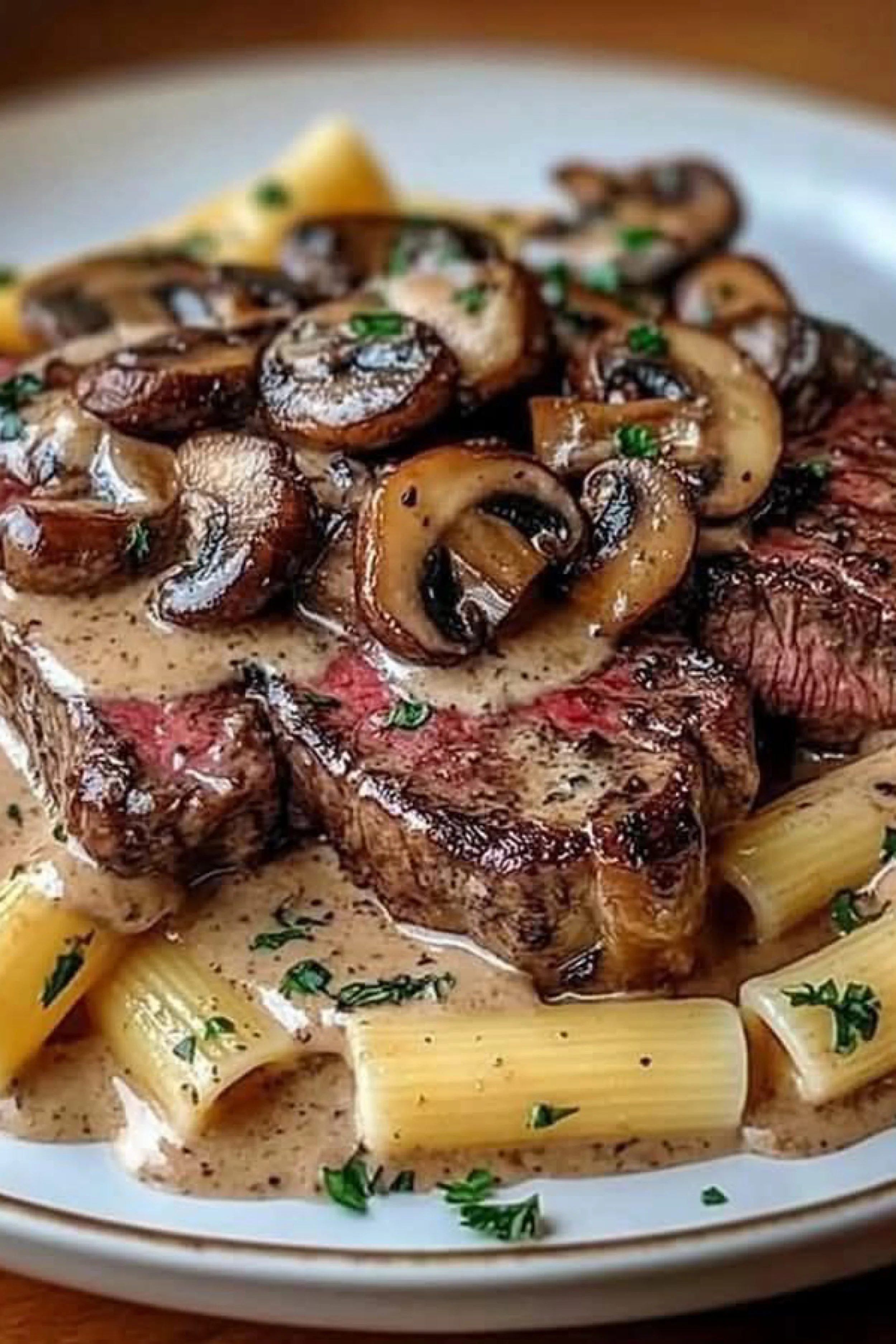
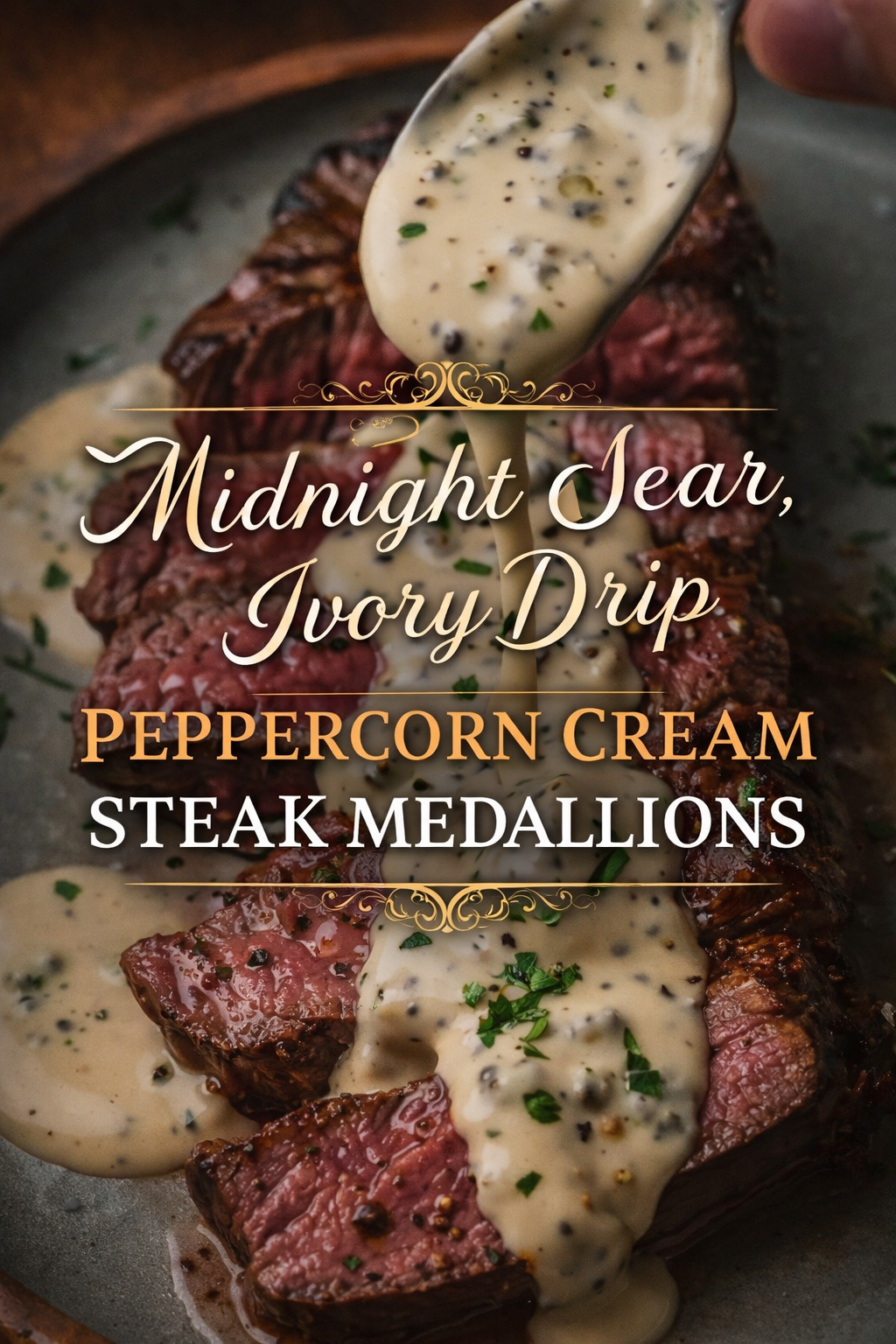
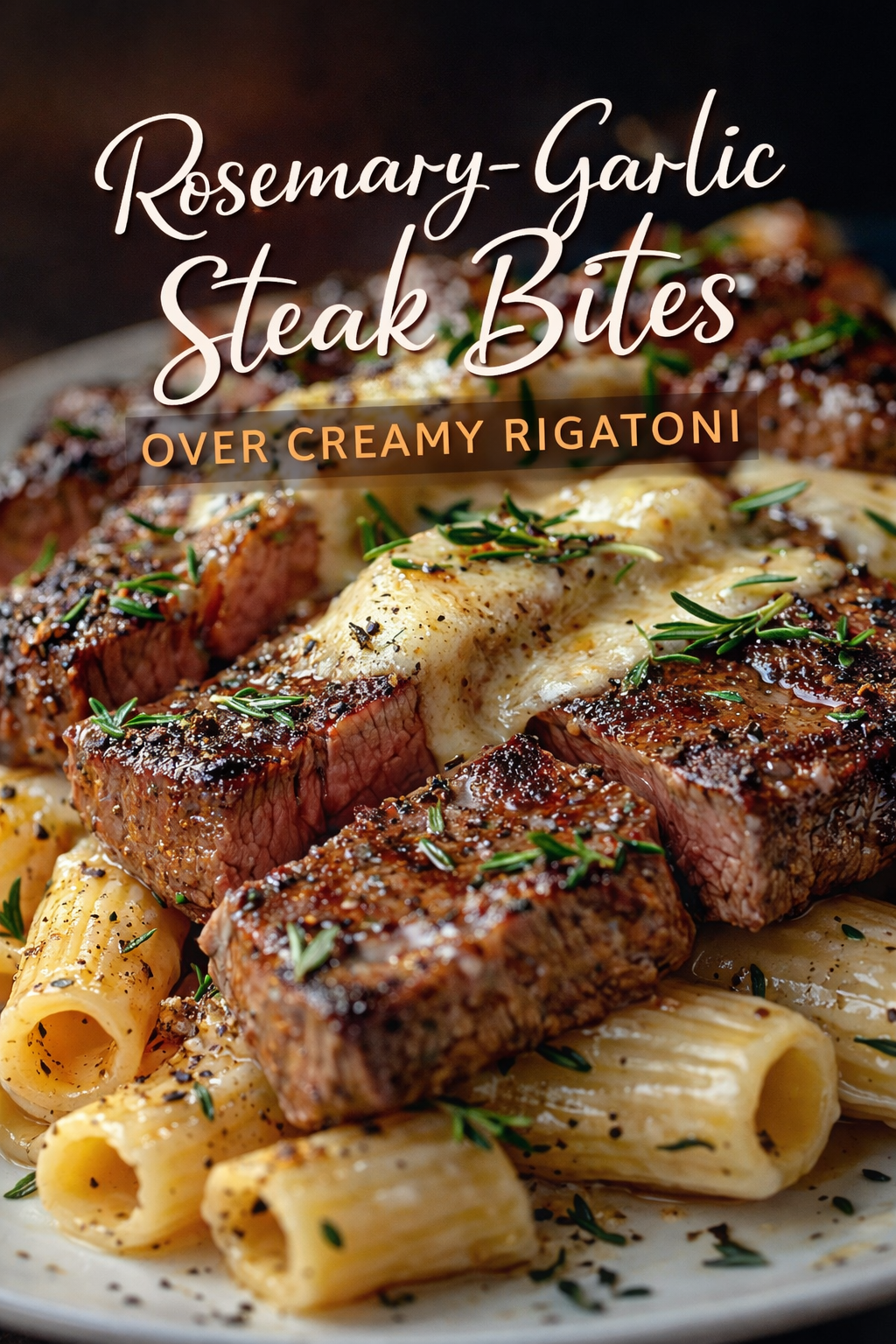
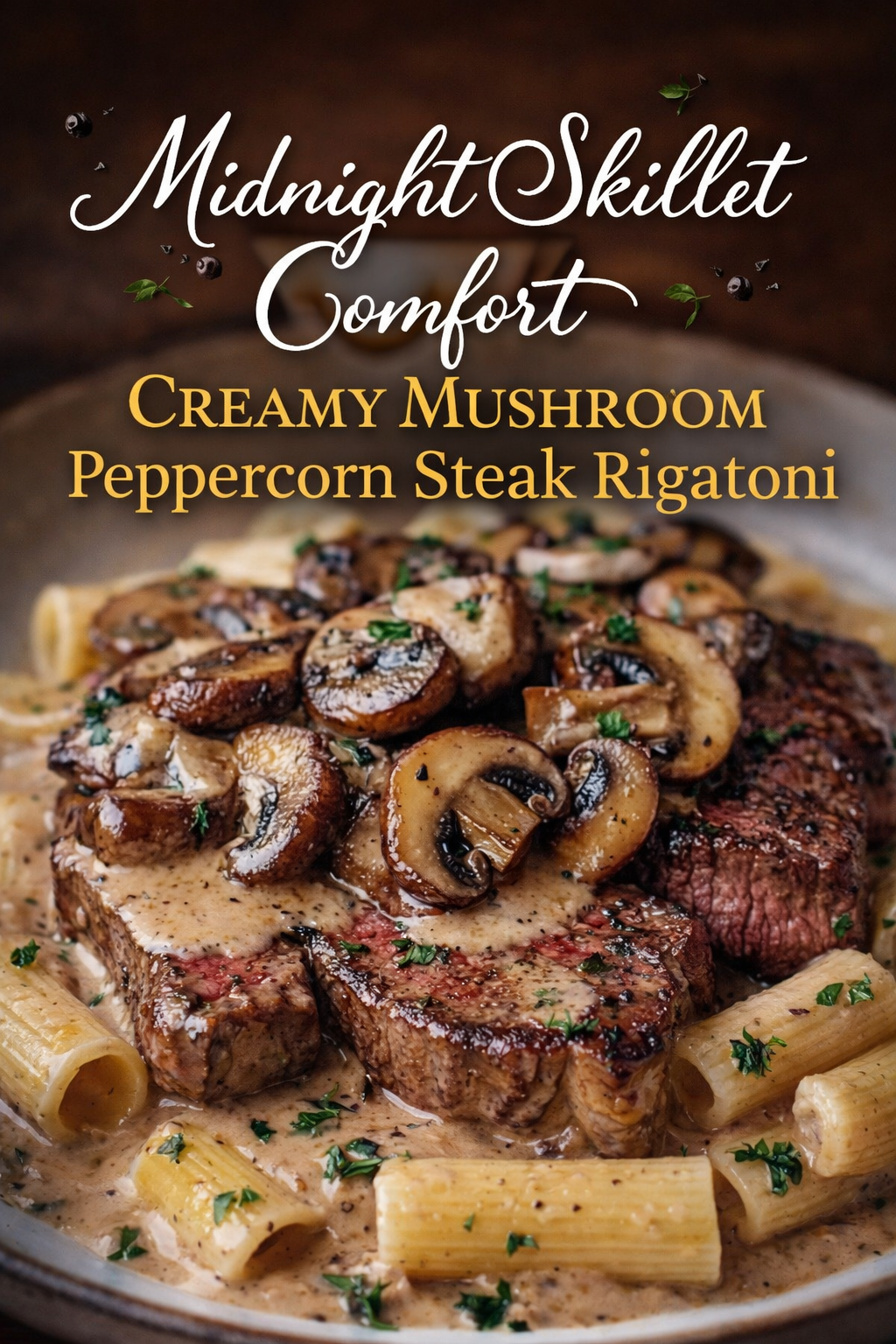
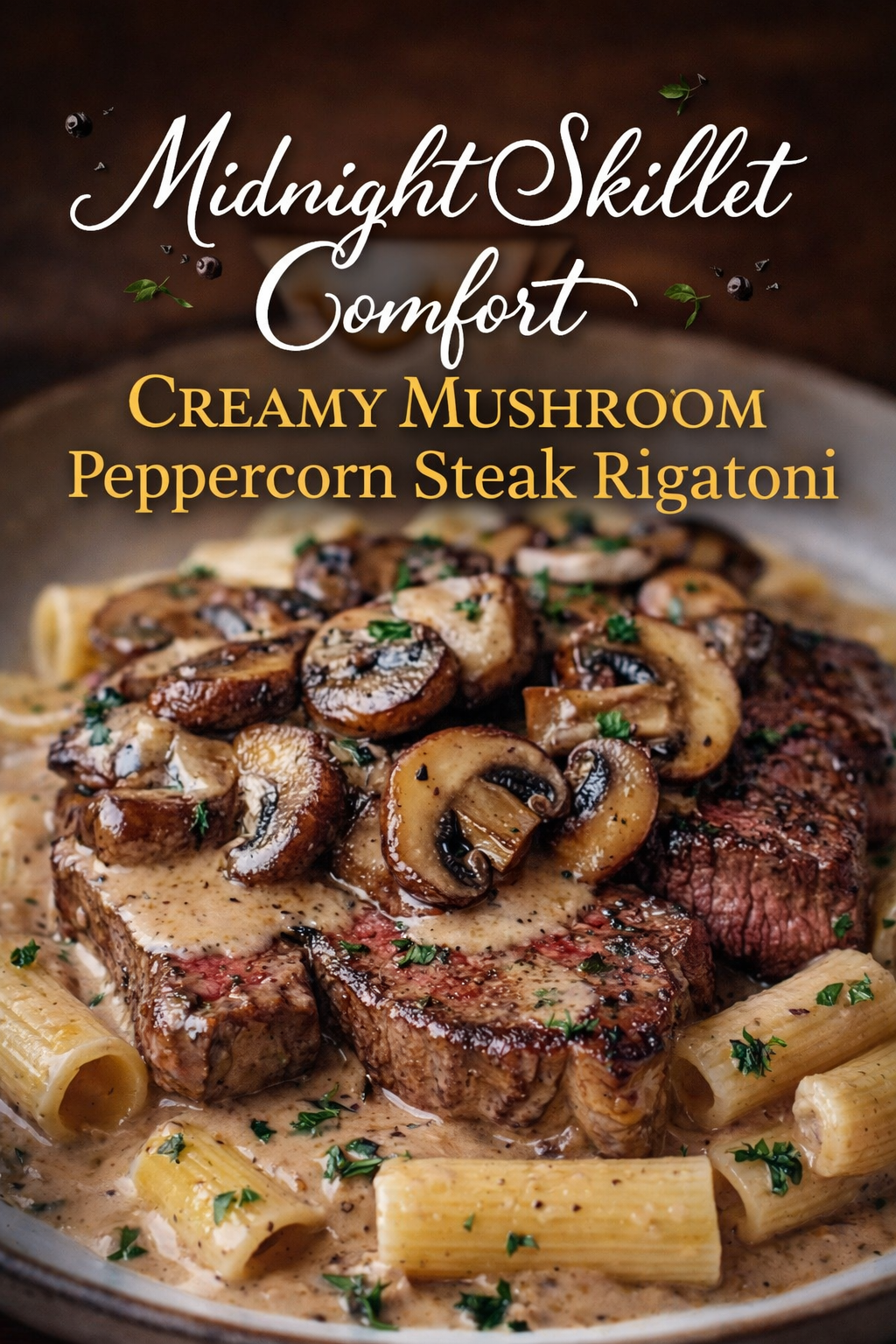
The first thing that hits is the sheen—silky, warm, and just glossy enough to catch the light the way satin does when it moves. A steak sits at the center like a dark, seared anchor, its edges lacquered from the pan, its middle blushing with that quiet confidence only a good cook can coax out of heat and timing. Over the top, mushrooms tumble in soft, bronzed slices—some caramelized at the rims, some still plump and juicy—each one holding onto the sauce like it’s been waiting for this moment all day. The cream sauce is not merely poured; it’s pooled and gathered, pepper-flecked and faintly speckled, the kind that clings to everything it touches and makes a plate feel suddenly expensive.
Around the steak, rigatoni rests in thick, sturdy tubes, each piece built to trap sauce in its ridges the way a good story traps your attention. The pasta isn’t background—it’s a second stage, catching every drip, every buttery whisper, every peppery note that slips off the steak. A few flecks of parsley land across the scene like confetti that isn’t trying too hard: green brightness against the beige cream, the deep brown mushrooms, the charred crust. The plate itself feels calm and minimal, letting the food do the talking. And it talks in the language of late-night satisfaction, of a kitchen that smells like browned butter and cracked pepper, of the kind of meal that makes the rest of the evening slow down.
This is the sort of dinner you make when you want your home to feel like a refuge—when you want the air to taste like comfort and the table to feel like a soft landing. It’s also the kind of dish that rewards small choices: a good cut of steak, a pan that holds heat evenly, mushrooms that get real color instead of steaming into sadness. When the skillet is right, you can hear it—first the sharp sizzle as the steak meets metal, then the quieter, deeper sound when the mushrooms start to give up their moisture and the browning begins. A dependable, heavy-bottomed cast iron skillet that sears like a dream turns that sound into certainty.
There’s a little ritual to it, too. You salt the steak like you mean it, you wait until the pan is properly hot, you let the crust form without fussing. A simple instant-read thermometer for perfect doneness keeps the process calm—no guesswork, no overcooking, just a clean pull at the exact moment the center becomes tender and rosy. While the steak rests, mushrooms take their turn, soaking up the leftover browned bits like they’re collecting secrets from the pan. They become richer, darker, more themselves. Then comes the sauce: a swirl of cream, a hit of broth, a snow of parmesan, and that essential moment when cracked pepper blooms in heat and suddenly smells like depth.
If you’ve ever wanted a meal to feel like a velvet curtain closing on a long day, this is it. It isn’t delicate; it’s composed. It leans into richness without losing balance, because the pepper cuts through the cream, the mushrooms bring earth and savory weight, and the steak carries that unmistakable steakhouse energy—bold, direct, satisfying. Even the pasta plays a role beyond comfort: it stretches the sauce, catches the drippings, and makes every bite feel intentional. A sturdy set of tongs that grips pasta without slipping helps fold the rigatoni through the sauce so each tube gets coated, not drowned.
And then there’s the finishing touch—the small things that make it feel like more than dinner. Parsley for brightness. A final crack of pepper for aroma. A warm plate so the sauce stays glossy instead of tightening up too soon. If you’re feeling extra, a shave of parmesan that melts at the edges. If you’re feeling bold, a whisper of garlic and thyme in the mushrooms. If you’re keeping it classic, you let the sear, the cream, and the pepper do what they do best: create that “one more bite” gravity that pulls the fork back again and again.
It’s a plate that looks like a promise—creamy comfort with a dark, savory backbone—and it eats the same way. The steak is tender and juicy under the crust, the mushrooms are silky with browned edges, and the rigatoni is built for sauce like it was designed for this exact moment. A good pepper mill for fresh cracked black pepper makes a noticeable difference here, not for show, but for fragrance—the kind that rises from the plate and makes the kitchen feel alive. The whole thing feels like something you’d order when you want to be taken care of, except it’s coming from your own stove, your own hands, your own timing.
Some meals are meant to impress people. This one is meant to impress the day you just survived. It’s warm, indulgent, and deeply grounded—steakhouse comfort with a pasta-night soul—served up in a sauce that doesn’t apologize for being creamy, peppery, and unapologetically satisfying.
Creamy Mushroom Peppercorn Steak Rigatoni — Recipe
Rich seared steak, browned mushrooms, and rigatoni come together in a peppery cream-pan sauce that tastes like a quiet luxury dinner at home.
Ingredients
- 2 ribeye, strip steaks, or sirloin steaks (1 to 1½ inches thick)
- Kosher salt
- Freshly cracked black pepper
- 2 tbsp neutral oil (or beef tallow)
- 3 tbsp unsalted butter, divided
- 12 oz cremini or button mushrooms, sliced
- 3–4 cloves garlic, minced (optional but excellent)
- 1 tsp fresh thyme leaves (or ½ tsp dried)
- ½ cup beef broth
- ¾ cup heavy cream
- ½ cup finely grated parmesan, plus more to finish
- 10–12 oz rigatoni
- 2 tbsp chopped parsley
- Optional: 1 tsp Dijon mustard (for extra depth)
Helpful tools: a heavy skillet for a deep sear, a microplane for parmesan
Method
- Cook rigatoni in well-salted water until al dente. Reserve 1 cup pasta water, then drain.
- Pat steaks dry. Season generously with salt and pepper. Sear in hot oil in a skillet, 3–5 minutes per side (depending on thickness), until deeply browned. Remove and rest.
- In the same skillet, add 1 tbsp butter and mushrooms. Cook until moisture releases and mushrooms brown well, 8–10 minutes. Add garlic and thyme for 30–60 seconds.
- Pour in beef broth and scrape up browned bits. Simmer 1–2 minutes.
- Lower heat. Add cream and remaining butter. Simmer gently until slightly thickened, 3–5 minutes. Stir in parmesan (and Dijon if using). Season with pepper and salt as needed.
- Add rigatoni to the sauce. Toss to coat, loosening with a splash of reserved pasta water if needed.
- Slice steak and return juices to the pan (or serve steak on top). Finish with parsley and extra parmesan.
The goal here is balance: a steakhouse-level sear, mushrooms that taste genuinely browned (not merely softened), and a cream sauce that stays glossy instead of breaking. Think of the process as three movements—sear, build, finish—each one setting up the next so the final plate tastes cohesive rather than like separate parts.
Start with the steak, because everything that happens later depends on the flavor you leave behind in the pan. Patting the surface dry is not a fussy detail; it’s the difference between browning and steaming. Moisture is the enemy of crust. Season boldly with salt and pepper, then let the steak sit at room temperature for 15–20 minutes if you can—just enough to take the chill off and encourage even cooking. Heat a heavy skillet until it’s properly hot; you want a quick, aggressive sizzle the moment the steak hits. A reliable cast iron skillet with strong heat retention makes this far easier because it doesn’t cool down the second the meat touches it.
Add oil, then the steak, and commit to stillness. Moving it too soon tears at the developing crust and steals browning. Let the first side build its color fully, then flip and repeat. If you want control without anxiety, use an instant-read thermometer: pull around 125–130°F for medium-rare, 135°F for medium, knowing it will rise a few degrees as it rests. Resting isn’t optional—it’s how the juices redistribute so the steak stays tender when sliced. Set it aside on a plate and let it breathe while you move to the mushrooms.
Now, the mushrooms. This is where most people accidentally dilute flavor. Mushrooms carry water, and water prevents browning. The solution is patience and space. Don’t crowd the pan; if needed, brown in batches. Add a little butter to the steak drippings, then toss in the mushrooms with a pinch of salt. First they’ll sweat, then they’ll start to color. Wait for real bronzing on the edges—those deeper tones are where the savory, steakhouse flavor lives. If the pan seems dry, add a touch more butter, but avoid flooding; mushrooms love fat, yet they need heat to brown. When they’re richly colored, add garlic and thyme briefly—just long enough to bloom aroma without turning bitter.
Deglazing is where the sauce earns its depth. Pour in beef broth and scrape the bottom of the pan with a wooden spoon. Those browned bits are concentrated flavor, and they dissolve into the liquid like a built-in sauce base. Let it simmer for a minute or two so it reduces slightly. Then lower the heat before adding cream. High heat plus cream can tighten or split; gentle heat keeps it smooth. Stir, simmer, and watch it thicken just enough to coat a spoon.
Parmesan comes next, and the technique matters: add it gradually, off the highest heat, stirring until melted and integrated. Finely grated cheese melts cleaner, which is why a simple microplane-style grater is a secret weapon here. If you want a subtle tang that makes the cream feel less heavy, whisk in a small spoon of Dijon. It won’t shout “mustard”; it just sharpens everything and makes the sauce taste more layered.
The pasta is not an afterthought. Rigatoni is ideal because the ridges grab sauce and the hollow centers hold it. Cook it in well-salted water until al dente, and reserve a cup of pasta water before draining. That starchy water is a texture tool: if the sauce thickens too much or you want it silkier, a splash loosens it while helping it cling. Toss the pasta directly into the sauce in the skillet and fold until every piece is coated. Use sturdy silicone-tipped tongs to avoid tearing the pasta and to keep the toss controlled.
Now bring the steak back into the story. Slice against the grain for tenderness. Pour any resting juices into the sauce—those juices are concentrated flavor and they help marry the whole dish. You can either nestle the slices into the pasta for a fully integrated skillet finish, or plate the pasta first and crown it with steak and mushrooms for the dramatic, center-stage look. Finish with parsley for freshness, a final crack of pepper for aroma, and a light snowfall of parmesan.
Troubleshooting is simple once you know what to watch. If the sauce breaks or looks oily, the heat was likely too high—pull it off the burner, whisk in a tablespoon of warm pasta water, and it often pulls back together. If it tastes flat, it needs salt and fresh pepper more than anything else. If it tastes too heavy, add brightness: a tiny squeeze of lemon or more parsley. If the mushrooms aren’t flavorful, they weren’t browned enough—next time, give them space and time, and don’t rush the color.
Variations are easy without losing the soul of the dish. Swap beef broth for chicken broth in a pinch. Use sliced shallots with the mushrooms for sweetness. Add a splash of Worcestershire for deeper savory pull. Prefer heat? A pinch of red pepper flakes wakes the cream up. Want it extra lush? Stir in a spoon of cream cheese at the end for body, especially if you’re using lighter cream.
At the end, what you’re building is a plate that feels restaurant-level but still home-warm: crusty steak, glossy peppercorn cream, browned mushrooms, and pasta that holds onto every bit of sauce. The magic isn’t mystery—it’s sequencing, heat control, and the confidence to let browning happen before you move on.