Bayou Heat in a Bowl: Louisiana Crawfish Étouffée Chili

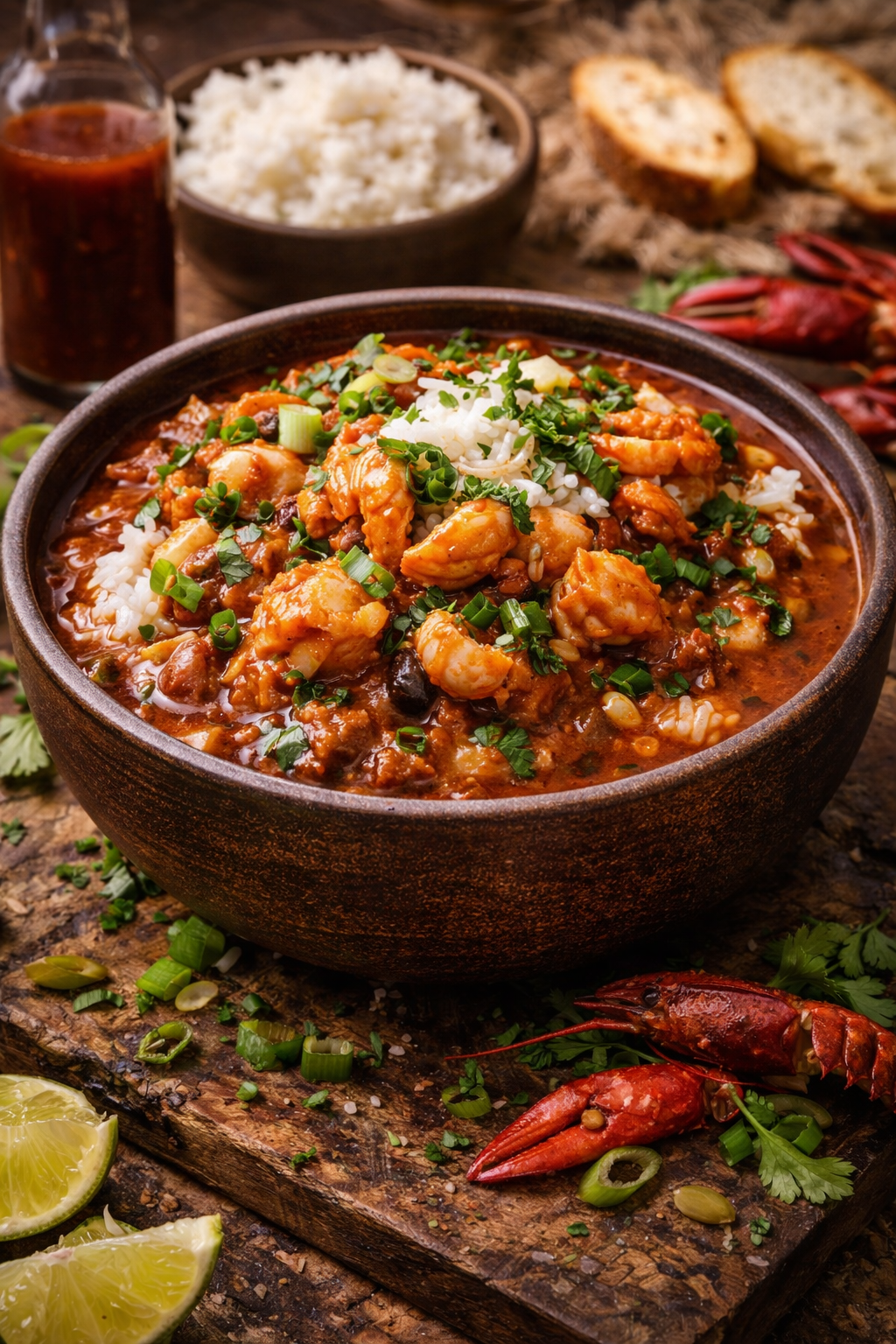
The first thing that hits you is the color—deep rust-red, glossy and alive, the kind of hue that promises heat without apology. The bowl sits heavy and earthen, its rim stained just enough to suggest patience, time, and a sauce that has simmered until it learned how to speak. Plump crawfish tails curl against grains of white rice like punctuation marks in a sentence written in spice. Steam rises slowly, carrying the unmistakable perfume of the Gulf Coast: butter browned just past polite, paprika and cayenne blooming in oil, green onion sharpness cutting through the richness. This is Louisiana Crawfish Étouffée Chili, and it doesn’t whisper its intentions.
Around the bowl, the scene feels lived-in and deliberate. A rough wooden board bears the scars of past meals, lime wedges sweating at the edges, a stray crawfish claw left behind like a signature. Somewhere just out of frame, bread waits—thick slices meant for dragging, not dainty dipping. The chili isn’t just food; it’s an atmosphere. It’s the low hum of a kitchen where something has been cooking all afternoon, the windows fogged, the radio playing softly while the roux darkens with care.
Étouffée is, by nature, intimate. The word itself means “smothered,” and that intimacy carries through every element here. The crawfish are not buried or lost; they’re cradled in sauce, cushioned by rice, held in suspension between fire and comfort. Turning that tradition into chili doesn’t dilute it—it amplifies it. Chili brings depth, body, and a slow-building warmth that lingers long after the spoon rests. Together, they create something that feels both familiar and rebellious, like a well-worn recipe that decided to break a rule.
The image tells you this dish wasn’t rushed. The sauce clings, thickened properly, enriched by a base that likely began with butter and flour worked patiently in a heavy pot—something like a cast iron Dutch oven built for long simmers. You can almost hear the wooden spoon scraping the bottom, the cook knowing exactly when to add the trinity, when to let the tomatoes melt into the spice, when to pull the heat back just enough.
There’s a generosity to the plating. This isn’t minimalist or restrained. It’s abundant, confident, proud of its roots. The crawfish are plentiful, the rice unapologetic, the garnish of chopped herbs fresh and green against the dark red base. Even the surrounding elements—hot sauce in a glass bottle, extra rice waiting in reserve—suggest choice. Adjust heat. Add more. Make it yours.
This is the kind of meal that belongs at the center of a table, served family-style, ladled generously. It’s a dish that invites conversation to slow down, spoons to scrape bowls clean, and someone to inevitably ask, “What’s in this?” The answer isn’t simple, because what’s in it is more than ingredients. It’s technique. It’s restraint. It’s knowing when to let flavors marry and when to step back.
Louisiana Crawfish Étouffée Chili carries the weight of tradition but refuses to be stuck in time. It’s bayou cooking filtered through a chili lens—bold, warming, deeply satisfying. One look at the bowl, one imagined bite, and it’s clear: this isn’t just something you eat. It’s something you settle into, something that fills the room as much as it fills you.
Louisiana Crawfish Étouffée Chili Recipe
This recipe merges classic étouffée technique with the heartiness of chili for a rich, warming dish.
Ingredients
- 1 lb crawfish tails, peeled
- 3 tbsp butter
- 3 tbsp all-purpose flour
- 1 small onion, finely chopped
- 1 green bell pepper, finely chopped
- 2 celery stalks, finely chopped
- 3 cloves garlic, minced
- 2 tbsp tomato paste
- 1 can crushed tomatoes
- 2 cups seafood or chicken stock
- 1 tbsp paprika
- 1–2 tsp cayenne pepper (to taste)
- 1 tsp dried thyme
- 1 bay leaf
- Salt and black pepper to taste
- Cooked white rice, for serving
- Chopped green onions and parsley, for garnish
Method
- Melt butter in a heavy pot over medium heat and whisk in flour to form a roux.
- Cook roux until medium-brown, stirring constantly.
- Add onion, bell pepper, and celery; cook until softened.
- Stir in garlic and tomato paste; cook briefly.
- Add crushed tomatoes, stock, and spices; simmer 30–40 minutes.
- Fold in crawfish tails and cook gently until just heated through.
- Adjust seasoning and serve over rice with fresh herbs.
The foundation of Louisiana Crawfish Étouffée Chili begins with the roux, and this step alone determines whether the final bowl sings or falls flat. Butter melts first, slow and even, followed by flour whisked in until smooth. The mixture should look like wet sand at the shoreline, glossy but controlled. Cooking it patiently allows the raw flour taste to disappear while developing a nutty depth that anchors everything that follows. A heavy vessel, such as a thick-bottomed enameled pot suited for even heat, makes this process forgiving and steady.
As the roux deepens to a warm brown, the holy trinity—onion, bell pepper, and celery—enters the pot. The temperature drops slightly, halting the roux’s progress while the vegetables release moisture and sweetness. This moment is critical. Stirring continuously prevents scorching and ensures the vegetables soften into the base rather than sitting on top of it. The aroma should shift from toasted to savory, signaling readiness for the next layer.
Garlic follows briefly, just long enough to bloom without bitterness. Tomato paste then integrates, adding concentration and a subtle acidity that bridges étouffée and chili traditions. Cooking the paste before adding liquid caramelizes its sugars, rounding out sharp edges. When crushed tomatoes and stock are poured in, the mixture loosens, transforming into a sauce with both body and flow.
Spices should be added thoughtfully. Paprika provides warmth and color, cayenne brings adjustable heat, and thyme lends an herbaceous backbone that feels unmistakably Louisiana. A bay leaf adds quiet depth during the simmer. Maintaining a gentle bubble for at least half an hour allows the chili to thicken naturally while flavors align. Stir occasionally, especially along the bottom, using something like a solid wooden spoon designed for heavy sauces to keep everything moving without breaking texture.
Crawfish tails are always added at the end. Overcooking them turns tender sweetness into rubbery disappointment. Folding them in off a low simmer ensures they warm through and absorb flavor while staying delicate. Taste at this stage, adjusting salt and heat gradually. Crawfish bring natural salinity, so restraint pays off.
Serving over rice isn’t optional—it’s structural. Rice absorbs excess sauce, balances spice, and turns each spoonful into a complete bite. Long-grain white rice works best, fluffy and neutral, prepared with care using a reliable rice cooker for consistent texture. Garnishing with green onions and parsley adds brightness, cutting through richness visually and on the palate.
Variations are welcome. Smoked sausage can be browned early and simmered for added heft. A splash of hot sauce sharpens the finish. If crawfish aren’t available, shrimp make a respectable substitute, added with the same gentle timing. Should the chili thicken too much, a bit more stock restores balance without dilution.
Troubleshooting is simple. If the sauce tastes flat, it likely needs salt or time. If it’s bitter, the roux went too far—next time, pull it earlier. Heat too aggressive can be softened with extra rice or a knob of butter stirred in just before serving.
This dish rewards patience and attention. Louisiana Crawfish Étouffée Chili isn’t about speed; it’s about understanding how layers build and why each step matters. Done right, the result is a bowl that feels deep, generous, and unmistakably rooted in the bayou—comforting, bold, and worth every careful stir.