The Ruby Quiet: Pomegranate Mirror Cheesecake That Looks Like Glass
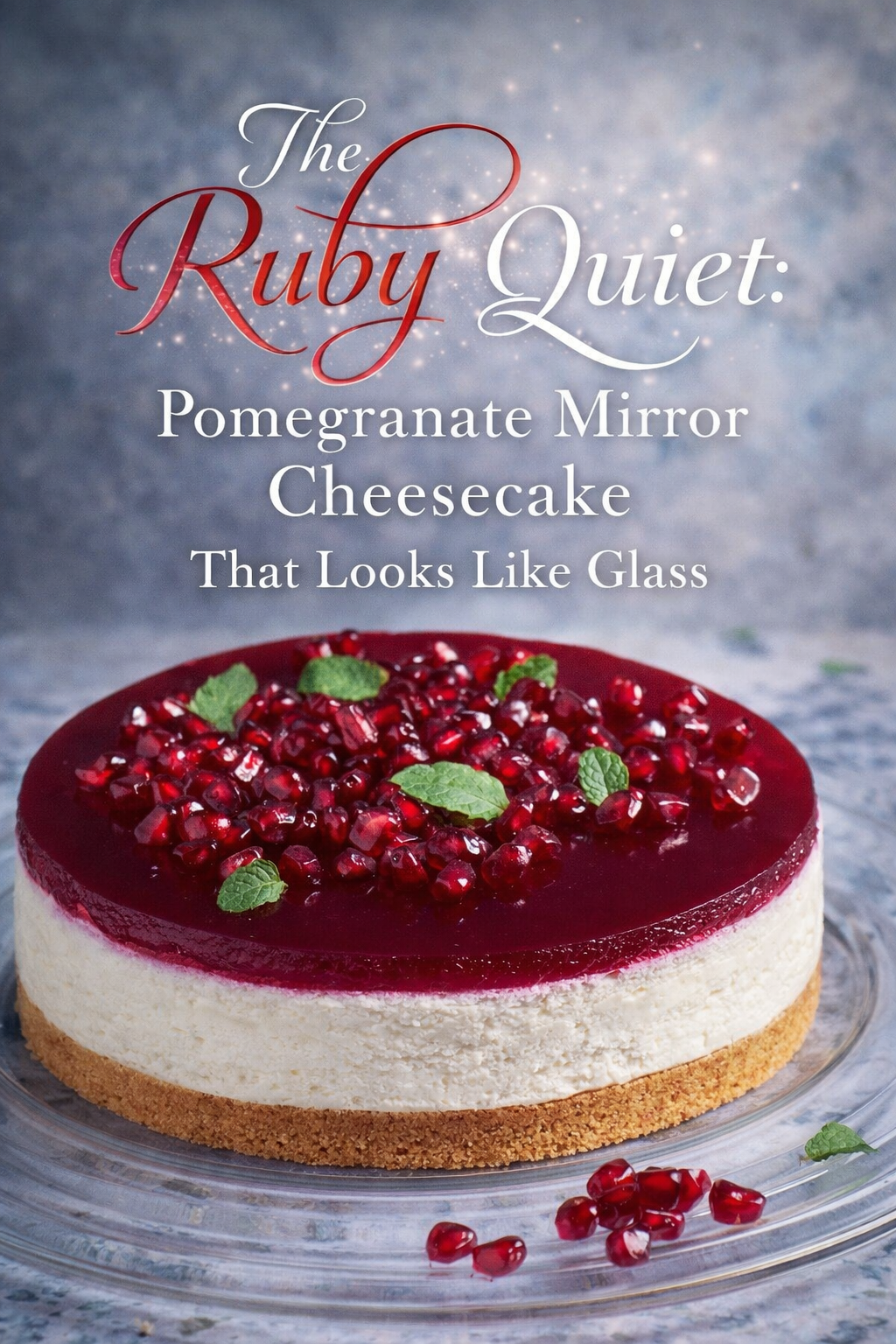
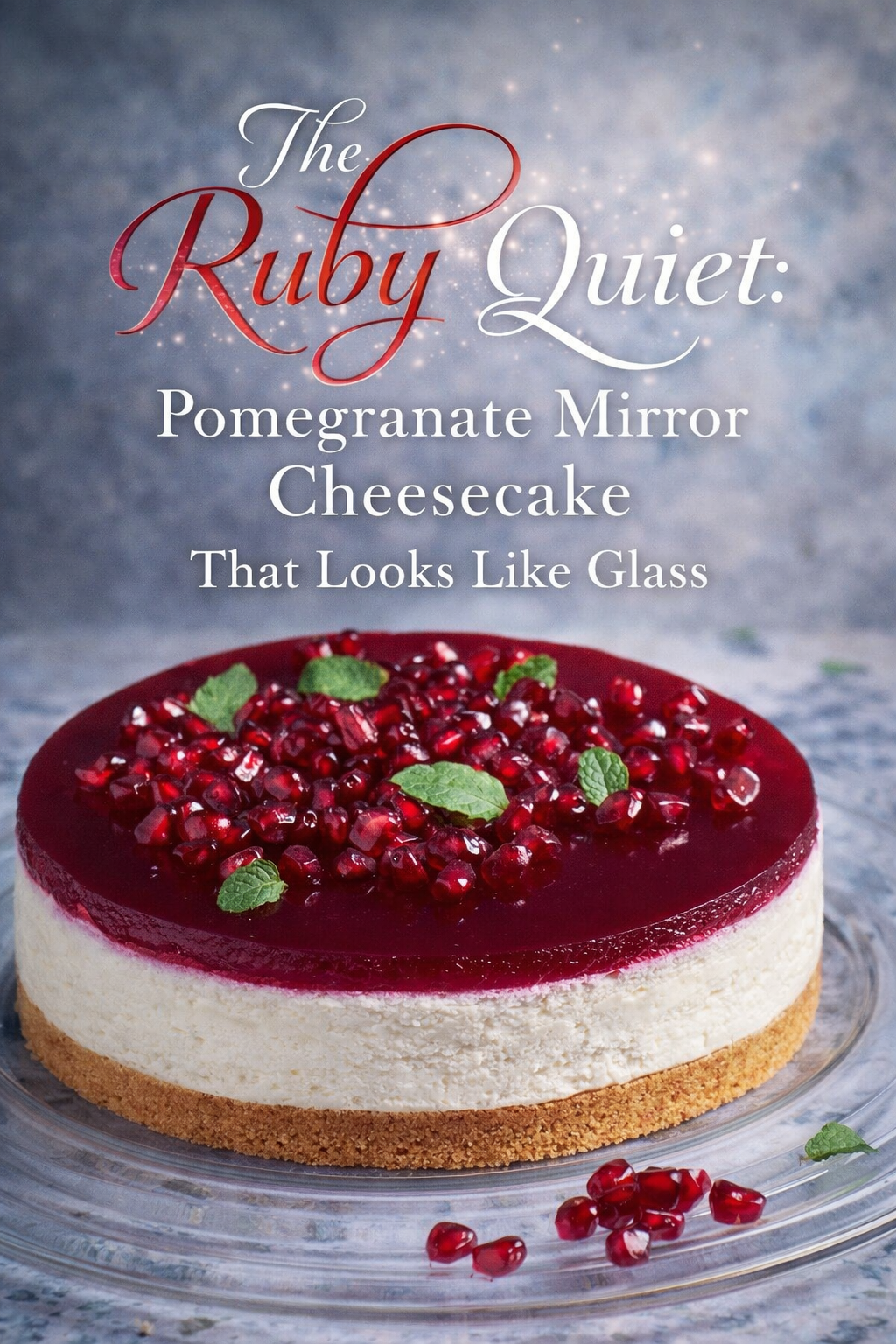
The first thing you notice is the color—an unapologetic, jeweled crimson that sits so perfectly still it feels like it’s holding its breath. A mirror-smooth pomegranate crown, glossy enough to catch the light, blankets a cloud-white cheesecake beneath it. The glaze is calm and lacquered, the kind of sheen you usually only see on patisserie counters where everything is aligned and impossibly precise. Then the surface breaks into texture: pomegranate arils scattered like gemstones, each one translucent and bright, their edges catching tiny highlights as if the cake were lit from within. A few mint leaves rest on top with that fresh, green snap—small, deliberate notes of contrast that make the red look even deeper and the white look even cleaner.
It’s the kind of dessert that makes a room quiet for a moment, because it looks finished in a way most things don’t. There’s a clean line where the pomegranate layer meets the cheesecake, and another where the cheesecake meets the crumbly, sand-gold crust. Even the crust reads like intention—pressed and compact, slightly rustic at the edge, the color of toasted graham and brown sugar. The cake sits on a clear glass stand that lifts it just enough to feel celebratory without turning it into a spectacle, like a secret dressed up for the evening.
On a cool marble surface, the whole scene feels crisp and modern, but also a little romantic—like winter fruit pretending it’s summer. Pomegranate does that. It’s bright and tart and a little floral, but it also carries that dark, wine-like depth that makes desserts feel grown-up. If you’ve ever broken open a pomegranate and watched the arils tumble out, you know the pleasure isn’t only in the taste. It’s in the sound and the shine and the way it stains your fingertips like proof you were there. This cake captures that same feeling—only refined, polished, and chilled until it holds its shape like a promise.
There’s a certain satisfaction in making a dessert that looks like it belongs behind glass, but lives in your kitchen anyway. The process has a rhythm: the quiet crush of crumbs, the buttery press of a crust into the pan, the slow bloom of vanilla in cream cheese as it warms and loosens. The tools don’t need to be precious, just reliable—like a sturdy springform pan that releases cleanly or a flat-bottom measuring cup for pressing an even crust. When you have the right pieces within reach, everything feels calmer, more certain, like you’re moving through a practiced choreography.
The cheesecake layer is all about restraint. It should be creamy without being heavy, sweet without losing the tang that makes cheesecake feel alive. You want a texture that slices clean but melts at the edges as it warms on a plate. That balance comes from temperature—letting the cream cheese soften so it blends without lumps—and from gentle mixing, so you don’t whip in too much air. A simple hand mixer with controllable speed makes this part feel effortless, but even then, the goal is smoothness, not volume. The batter should look like satin: thick, pale, and glossy, with vanilla and citrus humming softly underneath.
Then comes the part that turns a good cheesecake into a showstopper: the pomegranate mirror. It’s not complicated so much as it is attentive. You coax pomegranate juice into something that sets—clear, ruby, and firm enough to slice—without turning cloudy or rubbery. Gelatin is the quiet hero here, the invisible structure. You bloom it properly, melt it gently, then stir it into warm juice so it dissolves without clumping. Having a small whisk for smooth incorporation and a fine-mesh strainer for an ultra-sleek glaze turns the whole step into something almost meditative. The glaze should pour like silk and settle like glass.
And when it’s ready—when the cheesecake has chilled into its final form and the pomegranate layer is cool but still fluid—you pour it on top and watch it spread. It finds its level on its own, drifting to the edges in a slow, glossy tide. This is the moment that feels like magic, because it doesn’t require force. You don’t need to chase perfection; you just need to let it happen. If you’ve ever smoothed frosting and ended up overworking it, you’ll understand why this feels so luxurious. A mirror glaze forgives. It calms. It finishes.
The garnish is the final punctuation. Pomegranate arils scatter with an easy elegance, and mint leaves add freshness that reads like intention instead of decoration. If you want extra polish, a faint shimmer of citrus can lift the fruit even more—just the lightest grate from a sharp microplane zester, barely there, like perfume. The cake becomes a mood: bright, chilled, and quietly dramatic. It’s the kind of dessert that makes even a simple dinner feel like an occasion, not because it shouts, but because it gleams.
Serve it cold, on small plates, with the kind of confidence you usually save for special dates on the calendar. Let the knife glide through the pomegranate layer first—clean, decisive—then into the cheesecake, which yields with that soft resistance you can feel in your wrist. Each slice shows three perfect bands: ruby, ivory, and gold. And when someone takes a bite, the flavors line up the way the colors do: tart fruit first, then creamy tang, then a warm, buttery crumble at the end. It tastes exactly like it looks—cool, jewel-bright, and composed—like a dessert that knows it’s beautiful and doesn’t need to explain why.
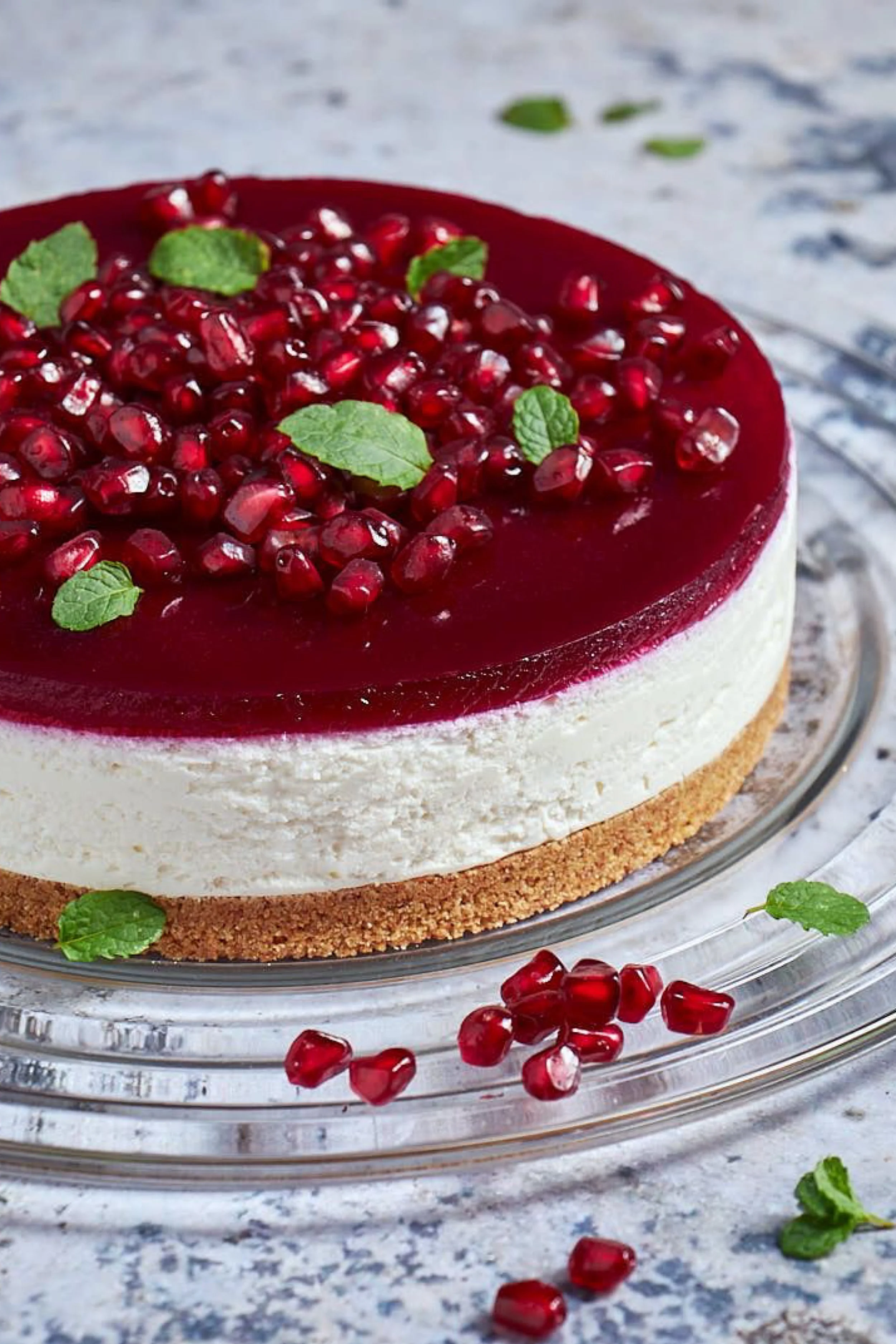
Pomegranate Mirror Cheesecake is a chilled cheesecake with a buttery graham crust, a creamy vanilla filling, and a glossy pomegranate gelatin “mirror” topped with pomegranate arils and mint.
Ingredients
Crust
- 2 cups graham cracker crumbs
- 6 tbsp unsalted butter, melted
- 2 tbsp sugar
- Pinch of salt
Cheesecake Filling
- 24 oz cream cheese, softened
- 3/4 cup sugar
- 1 cup sour cream
- 2 tsp vanilla extract
- 2 large eggs
- 1 tbsp lemon juice
- Pinch of salt
Pomegranate Mirror Layer
- 1 1/2 cups pomegranate juice
- 2–3 tbsp sugar (to taste)
- 1 tbsp lemon juice
- 2 1/4 tsp unflavored gelatin (1 packet)
- 3 tbsp cold water (for blooming)
Topping
- 1 cup pomegranate arils
- Fresh mint leaves
Method / Instructions
- Prep the pan: Line the base of a 9-inch springform pan with parchment; lightly grease sides.
- Make the crust: Mix crumbs, sugar, salt, and melted butter. Press firmly into the pan. Chill 15 minutes.
- Mix filling: Beat cream cheese and sugar until smooth. Blend in sour cream, vanilla, lemon juice, and salt. Add eggs one at a time, mixing just until combined.
- Bake: Pour filling over crust. Bake at 325°F for 45–55 minutes until edges are set and center still slightly wobbly. Cool to room temp, then chill 6 hours (or overnight).
- Make mirror layer: Bloom gelatin in cold water 5 minutes. Warm pomegranate juice with sugar and lemon until steaming (not boiling). Whisk in bloomed gelatin until fully dissolved; strain if needed.
- Pour and chill: Cool glaze until lukewarm and slightly thickened, then pour over chilled cheesecake. Refrigerate 2–3 hours until set.
- Finish: Top with pomegranate arils and mint. Slice with a warm, clean knife.
A cheesecake like this is less about complicated technique and more about choosing the right moments to slow down. The photo tells you everything you need to know: clean layers, a surface that reflects light, and toppings that look placed with care rather than tossed on as an afterthought. If you want that same quiet precision at home, the secret is building the cake in stages—each one fully set, fully cooled, fully ready for the next. It’s a dessert that rewards patience with beauty.
Step 1: Set yourself up for clean lines
Start with the pan, because the pan decides your edges. A springform is non-negotiable if you want that sharp, bakery-style release. Choose a reliable 9-inch springform pan and line the base with parchment so the crust doesn’t cling. Lightly grease the sides. This small step matters because cheesecake is tender—any sticking turns “perfect slice” into “rustic crumble” in seconds. If you’re chasing that smooth white wall you see in the image, give yourself every advantage here.
Step 2: Build a crust that holds, not crumbles
A graham crust should taste toasted and buttery, but it also needs structure. Mix your crumbs with sugar and a pinch of salt, then add melted butter until the texture resembles damp sand. Pressing matters more than mixing. Use something flat and heavy—like the base of a measuring cup or a flat-bottom tamper-style tool—to compact it evenly. Pay attention to the edges: press them firmly so the crust doesn’t fracture when slicing. Chill the crust before filling; cold butter helps it lock into place, which keeps the bottom layer clean and sharp.
Want a deeper, more caramel note? Swap a few tablespoons of crumbs for crushed gingersnaps, or add a teaspoon of cinnamon. Prefer nutty warmth? Fold in a couple tablespoons of finely chopped pistachios. The glaze is bold, so the crust can handle a little personality.
Step 3: Mix the filling for silk, not air
Cheesecake cracks often happen because of air and heat swings. Start with cream cheese that’s properly softened—cool room temperature, not melted. Beat it with sugar until it’s completely smooth, scraping the bowl often. This is where a steady, controlled tool helps: a hand mixer with multiple speeds lets you blend without whipping. Add sour cream for tang and a plush texture, vanilla for warmth, and lemon juice for lift. The lemon doesn’t make it taste like citrus; it just brightens the dairy so the cake tastes clean instead of heavy.
Add eggs one at a time, mixing only until each disappears. Overmixing eggs whips in air, and air expands in the oven, which can lead to cracking and a less dense, creamy texture. You’re aiming for batter that looks like glossy satin—smooth, thick, and calm. If you see bubbles, tap the bowl gently on the counter to bring them to the surface.
Step 4: Bake gently and cool even more gently
Cheesecake should be baked like a custard: slow and steady. Pour the batter over the chilled crust, smooth the top, and bake at a moderate temperature. You’re looking for set edges with a center that still has a slight wobble—like the surface of a calm lake when you tap the pan. If it’s fully firm in the oven, it’s likely overbaked, and overbaked cheesecake tends to be dry and prone to cracks.
Cooling is where many cheesecakes get ruined, because the temperature drop is too dramatic. Turn off the oven, crack the door slightly, and let the cheesecake sit inside for 30–60 minutes. This gradual cool helps prevent the top from splitting. Then bring it to room temperature before chilling. Refrigerate at least 6 hours, preferably overnight. That time isn’t optional—it’s the difference between “soft scoop” and “clean slice.”
If you do get a small crack, don’t panic. The mirror layer is your elegant cover story. Once chilled, it will hide flaws and make the surface look flawless.
Step 5: Make a pomegranate mirror that sets like glass
This is the crown, and it’s simpler than it looks—if you respect gelatin. Start by blooming it: sprinkle gelatin over cold water and let it sit until it becomes a soft, opaque sponge. Blooming ensures it dissolves smoothly and sets evenly, which is how you get that glassy finish instead of grainy patches.
Warm the pomegranate juice with a little sugar and lemon juice. You want it steaming but not boiling. Boiling can weaken gelatin and dull the flavor. Whisk in the bloomed gelatin until it fully disappears. For that ultra-polished look in the photo, strain the glaze through a fine-mesh strainer. This removes any tiny undissolved bits and guarantees a flawless mirror.
Now comes the most important timing cue: let the glaze cool until it’s lukewarm and slightly thickened. If you pour it hot, it can melt the surface of the cheesecake and blur the line between layers. If you wait too long, it will set in the bowl. If you want precision, use an instant-read thermometer and aim for roughly warm-to-the-touch rather than hot. In practice, you’ll see it: the glaze should pour smoothly but coat a spoon lightly.
Step 6: Pour with confidence, then don’t touch it
Place the chilled cheesecake on a level surface. Pour the glaze into the center and let it spread outward on its own. Resist the urge to “help” it with a spatula. Mirror layers self-level when they’re at the right temperature; fussing introduces streaks and bubbles. If you spot a bubble, pop it quickly with the tip of a toothpick. Then move the cake to the fridge and let it set, undisturbed, for 2–3 hours.
If you want a deeper ruby color, use 100% pomegranate juice and taste for sweetness. Some juices are naturally tart; adjust with sugar gradually. For a slightly thicker mirror layer (more dramatic slices), increase juice slightly and add a touch more gelatin—but keep it subtle. Too much gelatin can make the layer bouncy instead of tender.
Step 7: Garnish like you mean it
The topping is what turns the mirror from “pretty” into “stunning.” Pomegranate arils are naturally glossy, so they look like jewels against the glaze. Scatter them in a way that feels organic—clustered in the center with a few drifting outward—then add mint leaves for contrast. For extra finesse, zest the faintest veil of citrus over the top using a microplane zester. It adds aroma without changing the look.
Step 8: Slice cleanly every time
To get those photo-perfect layers, your knife technique matters. Use a thin, sharp blade. Dip it in hot water, wipe it dry, then make one decisive cut. Wipe between slices. This keeps the pomegranate layer glossy and the cheesecake edge smooth. A chilled cake is easiest to slice, but letting it sit 10 minutes at room temperature makes the texture feel even creamier on the tongue.
Variations, substitutions, and troubleshooting
- No-bake option: Skip the oven by setting the filling with gelatin or stabilizing it with whipped cream—just know you’ll trade that classic baked cheesecake tang for a lighter mousse-like texture. A no-bake version pairs beautifully with the same mirror layer.
- Dairy swaps: Full-fat cream cheese gives the best body. Lower-fat versions can be softer and may not slice as cleanly. If you must swap, chill longer and expect a gentler set.
- Crust alternatives: Crushed shortbread cookies create a more buttery base. Chocolate cookies make the red glaze look even more dramatic—almost like stained glass.
- Mirror too soft: You likely under-measured gelatin or poured the glaze before the cheesecake was fully chilled. Chill longer; next time, confirm the cheesecake is cold to the center and bloom gelatin fully.
- Mirror too firm: Too much gelatin. Reduce slightly next time for a tender bite that still slices cleanly.
- Cloudy glaze: Strain it, avoid boiling, and use clear juice. Gentle heat keeps the mirror bright.
When it’s done, you’ll have exactly what the image promises: a cake that looks composed, glossy, and almost impossibly clean. The first bite will be cool and bright—tart pomegranate against creamy vanilla—followed by that warm, buttery crumble of crust. It’s dramatic without being loud, elegant without being fussy, and it feels like the kind of dessert you remember long after the plates are cleared.