Orchid-Glow Comfort: Purple Sweet Potato Coconut Cheesecake Recipe
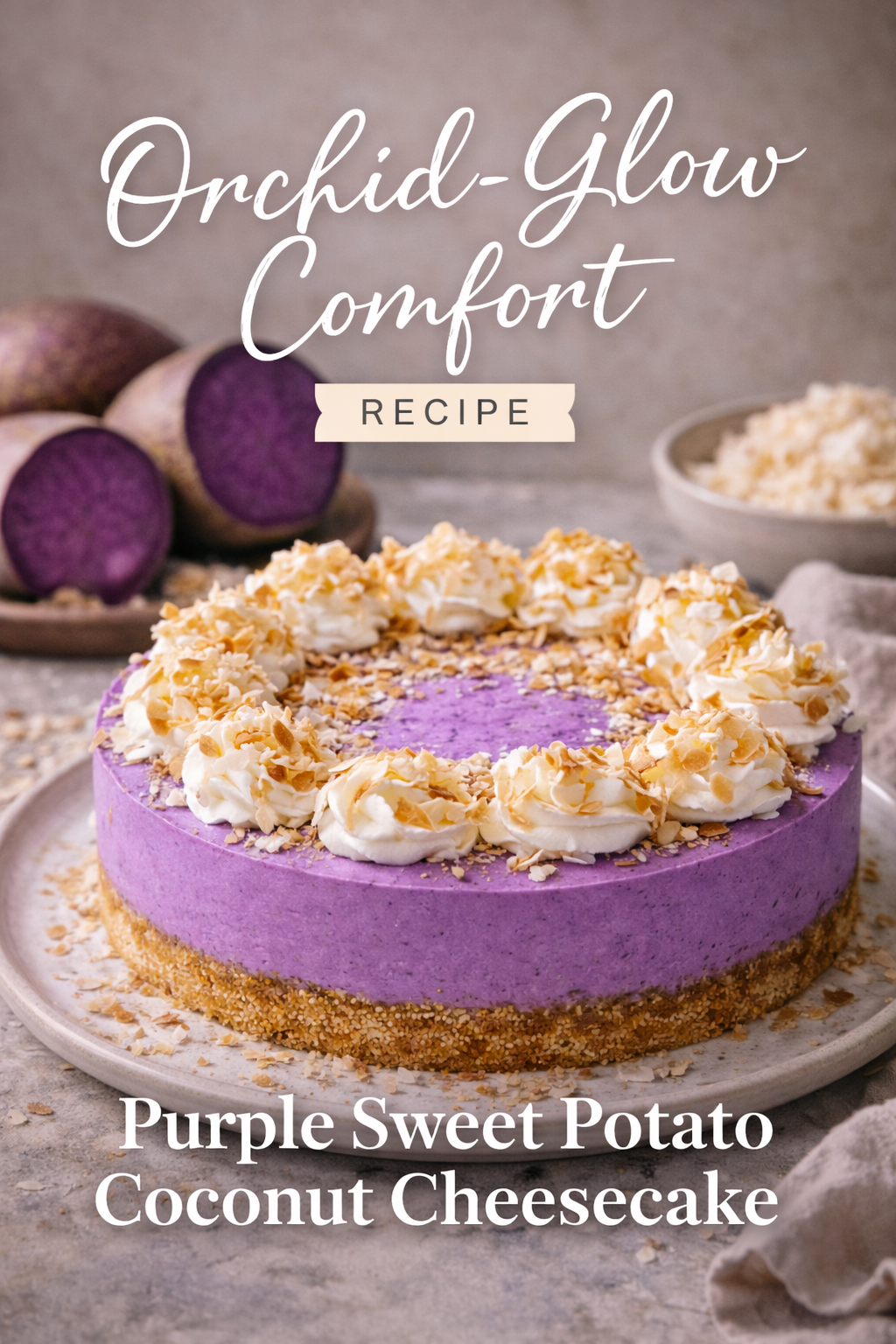
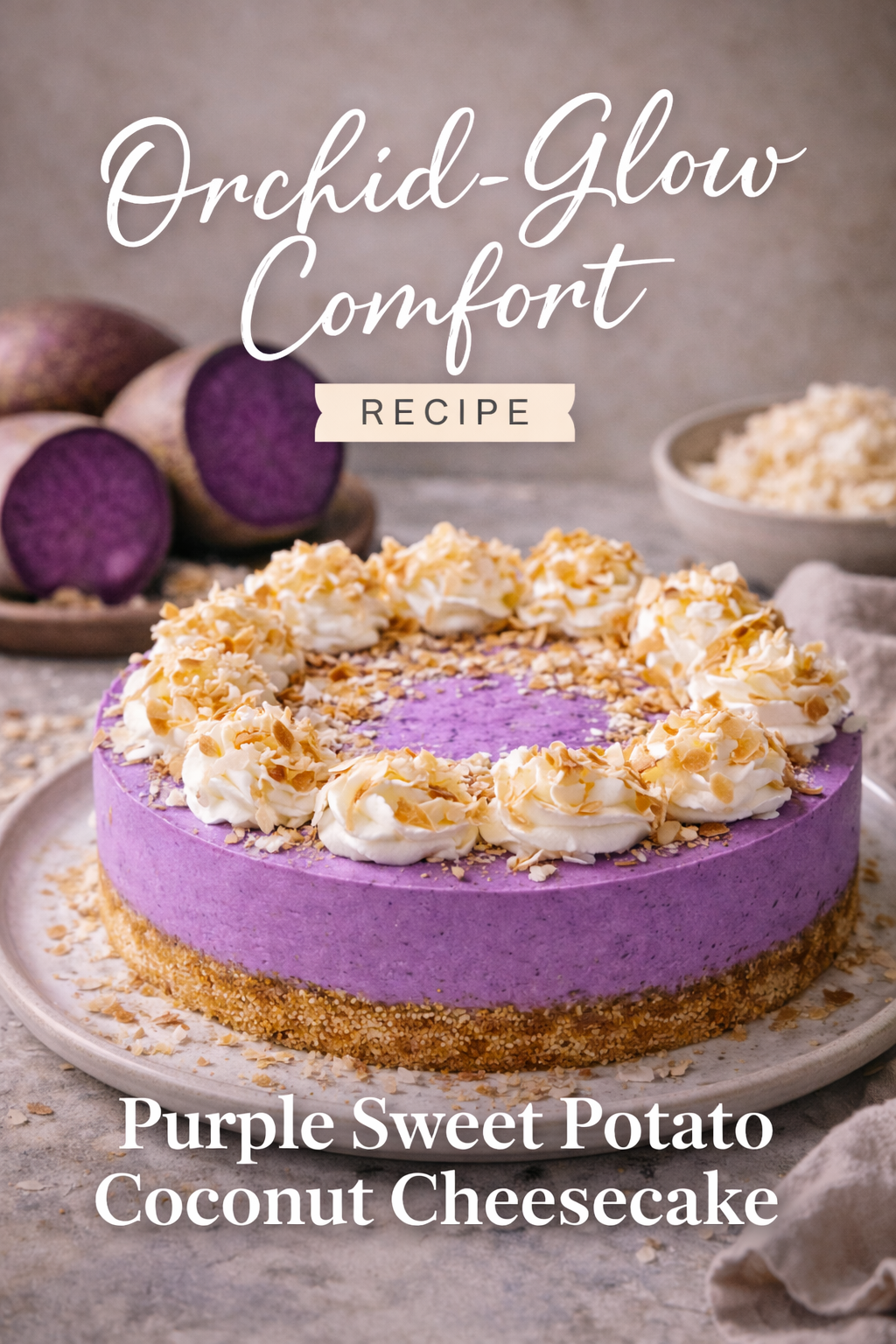
The first thing you notice is the color—an unapologetic, royal violet that looks almost lit from within, like a sunset caught in velvet and chilled into stillness. The cake sits low and confident on a pale ceramic plate, its sides perfectly smooth, the kind of clean edge that signals patience and a careful hand. A ring of whipped cream blooms around the top like soft clouds, each swirl dusted with toasted flakes and golden crumbs that catch the light. It’s minimal, but not spare—more like a studio portrait where every detail earns its place.
Behind it, the scene stays quiet on purpose. A neutral stone backdrop, a soft linen towel slouched in the corner, bowls of pale coconut and buttery nuts scattered like the aftermath of something indulgent and worth repeating. Off to the side, the true tell: a halved purple sweet potato with a saturated, jammy center—proof that this isn’t food coloring or a gimmick. It’s nature doing what it does best, turning something humble into something dramatic.
This is the kind of dessert that changes the mood of a room. It feels cool and calm, but also a little flirtatious—like it knows it’s photogenic and doesn’t care. It belongs on a late-summer table when the air is warm but you want something refreshing, or on a winter night when you need color and sweetness as a form of reassurance. The flavor is gentle and deep at the same time: earthy sweetness from purple sweet potato, a creamy tang that keeps it grown-up, and coconut woven through like a soft perfume. The toasted topping adds the last note—a warm, nutty echo that makes each bite feel finished.
The texture is the real seduction. Dense enough to slice cleanly, but not heavy. Silky rather than sticky. It melts instead of crumbling, with that faint, satisfying resistance you only get when a cheesecake is properly chilled and properly balanced. If you’ve ever chased that “bakery slice” feeling at home, the kind that looks composed on a fork and tastes even better as it warms just slightly at the edges, this is that moment—only in violet.
A dessert this polished doesn’t require a complicated kitchen, but it does reward the right tools. A springform pan that releases cleanly for flawless sides is the quiet hero here, along with a hand mixer or stand mixer for whipped, lump-free filling. For the sweet potato, you can roast until it’s caramel-soft, then smooth it into the batter with a food processor that turns it into satin or a high-powered blender designed for creamy purées. None of it is flashy—just the kind of practical elegance that makes the final slice look effortless.
The coconut note can lean wherever you want it to. Light and clean with coconut extract, lush and tropical with coconut cream, or toasted and nutty with flakes that crisp up like confetti. A bag of unsweetened shredded coconut for controlled sweetness keeps the flavor pure, while toasted coconut chips for a more dramatic finish give you that bakery-style crunch. And if you want the topping to feel extra intentional, a piping set for clean whipped-cream rosettes turns the surface into a crown.
What makes purple sweet potato so special is that it tastes like itself—subtly vanilla-like, faintly chestnut, softly earthy—without trying to imitate anything else. It’s a flavor that feels calm, a little nostalgic, and strangely luxurious. Paired with cream cheese, it becomes rounder, more plush. Paired with coconut, it becomes brighter, like the whole thing exhales. And when you finish it with toasted flakes and a handful of buttery nuts, the slice starts to read like a complete landscape: cool, creamy, warm, crisp, sweet, tangy, and quietly bold.
There’s also something about the look of it—how the purple sits against the golden crust, how the cream tops it like a halo—that makes the act of serving feel ceremonial. This isn’t a dessert you rush. You let it chill properly. You wipe the knife between slices. You place each piece like it matters. A thin, sharp chef’s knife for clean cuts and a cake server that slides under the crust without breaking it suddenly feel like part of the ritual.
And then there’s the after—crumbs of toasted coconut on the plate, a smear of purple on the fork, the faint scent of vanilla and warm nuts lingering in the air. It’s a dessert that photographs like couture but eats like comfort. The kind of sweetness that doesn’t shout—just lingers.
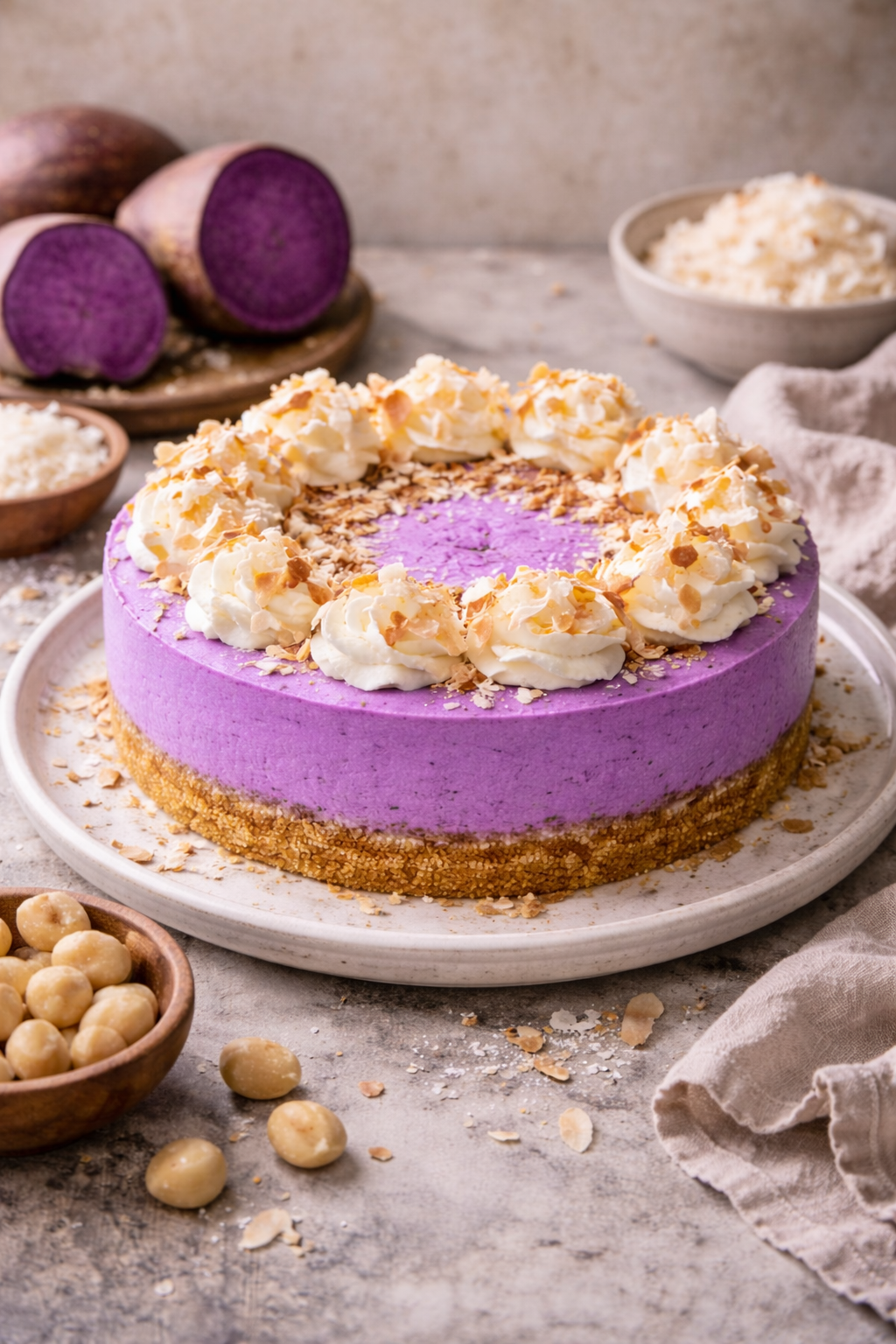
Purple Sweet Potato Coconut Cheesecake
A creamy, naturally violet cheesecake made with roasted purple sweet potato, coconut, and a crisp cookie crust—finished with whipped cream and toasted coconut.
Ingredients (9-inch cheesecake) Crust
- 1 1/2 cups graham cracker crumbs (or crushed cookies)
- 1/4 cup shredded coconut (optional)
- 5 tbsp unsalted butter, melted
- 2 tbsp sugar
- Pinch of salt
Filling
- 16 oz cream cheese, room temperature
- 3/4 cup sugar
- 1 cup purple sweet potato purée (from roasted purple sweet potatoes)
- 2 tsp vanilla extract
- 2 large eggs, room temperature
- 1/2 cup sour cream
- 1/4 cup coconut cream (or heavy cream)
- 1 tbsp cornstarch (optional, for extra stability)
- Pinch of salt
Topping (optional)
- 1 cup heavy whipping cream
- 2–3 tbsp powdered sugar
- 1/2 tsp vanilla
- 1/3 cup toasted coconut flakes
- Chopped macadamias or almonds (optional)
Method / Instructions
- Prep: Heat oven to 325°F. Wrap the outside of a 9-inch springform pan in foil (for water bath protection).
- Make crust: Mix crumbs, coconut, sugar, salt, and melted butter. Press firmly into the base. Bake 10 minutes, then cool.
- Mix filling: Beat cream cheese and sugar until smooth. Blend in purple sweet potato purée and vanilla. Add eggs one at a time just until combined. Fold in sour cream, coconut cream, cornstarch (if using), and salt.
- Bake: Pour filling over crust. Bake in a water bath (pan set inside a larger pan with hot water) for 55–70 minutes, until edges are set and center still gently wobbles.
- Cool: Turn oven off, crack the door, and rest cheesecake 45–60 minutes. Cool to room temp, then chill at least 6 hours (overnight best).
- Finish: Whip cream with powdered sugar and vanilla, pipe or spoon on top, and sprinkle with toasted coconut and nuts.
The goal here is a cheesecake that slices like a dream: vivid color, velvety texture, no cracks, and a flavor that stays balanced—sweet potato depth, cream cheese tang, coconut warmth. The steps are straightforward, but the “why” behind each one is what makes it come out looking as composed as the image.
Choose the right purple sweet potato (and cook it for flavor, not just softness) Look for purple-fleshed sweet potatoes (often Okinawan/Hawaiian style). Their color is naturally intense, and roasting concentrates flavor. Roast whole potatoes at 400°F until completely tender—when a knife slides in with zero resistance. Roasting (instead of boiling) keeps the purée from getting watery, which is critical for cheesecake structure. If you want consistent results every time, a simple oven thermometer for accurate baking temps helps more than people think—cheesecake is sensitive to heat.
Purée until absolutely smooth Once roasted, peel while warm and mash, then purée. Any tiny fiber clumps will show up as graininess in the final slice. A food processor for ultra-smooth sweet potato purée makes this effortless, but a high-powered blender built for silky textures works too. If the purée is very thick, add a spoonful of coconut cream to help it move. Let the purée cool before it goes into the batter—warm purée can soften cream cheese too fast and encourage overmixing.
Room temperature is non-negotiable Cold cream cheese = lumps. Cold eggs = batter that emulsifies poorly. Set your cream cheese out for at least an hour, and bring eggs to room temp. This is how you get that smooth, studio-perfect side wall. If you’re in a hurry, place eggs in warm water for 10 minutes.
Build a crust that stays crisp The crust in the image reads golden and clean, not soggy. Mix crumbs with melted butter until it feels like damp sand. Press firmly—use the bottom of a glass or a flat measuring cup. Pre-baking sets the crust and keeps it from absorbing moisture during the water bath. A 9-inch springform pan for clean release is worth it here; it’s the difference between a tidy edge and a stressful unmold.
Mix gently for a tight, creamy crumb Start by beating cream cheese and sugar until smooth—then stop. After that, the rule is: incorporate, don’t whip. Add purée and vanilla, mix just until uniform. Add eggs one at a time, mixing on low and stopping the moment each disappears. Overmixing eggs pulls in air, and air expands in the oven and collapses into cracks. A hand mixer with multiple low-speed settings makes control easy; a stand mixer is fine too—just stay low and brief.
Add the coconut note with intention Coconut can be background or headline. Coconut cream gives richness without artificial flavor. Unsweetened coconut flakes give texture and a toasted aroma. If you prefer a clean, modern flavor, keep coconut in the batter subtle and let the topping do the talking with unsweetened shredded coconut or coconut chips for a bolder crunch.
Use a water bath to protect the texture Cheesecake hates aggressive heat. A water bath buffers the edges so the center cooks gently and evenly. Wrap the springform in foil (two layers) to prevent leaks, then place it in a roasting pan and add hot water halfway up the sides. If you want a less fussy method, place a pan of hot water on the rack below—less protection, but still helpful.
Know what “done” looks like The edges should be set and slightly puffed, while the center still wobbles like set custard when you gently tap the pan. If it ripples like liquid, it needs more time. If it’s fully firm in the center, it’s likely overbaked. Overbaking turns the texture from velvet to dry and can mute that lush purple.
Cool slowly to prevent cracks Sudden temperature changes cause contraction cracks. When baking time is done, turn off the oven, crack the door, and let the cheesecake sit inside for 45–60 minutes. This gentle cooldown is one of the biggest “professional” differences. After that, cool at room temp before chilling.
Chill long enough for a clean slice Cheesecake becomes its best self after a full chill—6 hours minimum, overnight ideal. The color also deepens and evens out as it sets. For picture-perfect slices, use a hot knife: dip in hot water, wipe dry, cut, wipe, repeat. A long, thin slicing knife for clean cheesecake cuts makes that polished look much easier.
Whipped topping that holds its shape The rosettes in the image are structured, not slouchy. Use cold cream, cold bowl, and whip to medium-stiff peaks. Sweeten lightly so it doesn’t overpower the filling. If you want extra stability (especially in warm kitchens), add a tablespoon of powdered sugar plus a teaspoon of cornstarch, or use a stabilized method. A piping tip set for bakery-style swirls helps you mimic that crown effect without fuss.
Toast the coconut for the “golden” finish Toasted coconut is the aroma that makes the whole dessert feel expensive. Spread flakes on a sheet pan and toast at 325°F, stirring once or twice, until pale gold. Watch closely—coconut goes from perfect to bitter quickly. Sprinkle it right before serving so it stays crisp.
Variations, substitutions, and troubleshooting
- No purple sweet potato available: You can use ube halaya or purple yam products, but the flavor profile changes and sweetness may increase—reduce sugar slightly.
- Want it less sweet: Drop sugar to 2/3 cup and rely on toasted coconut/nuts for perceived sweetness.
- No cracks, ever: Don’t overmix, use a water bath, and cool slowly. Those three solve most issues.
- Filling looks grainy: Purée wasn’t smooth enough or ingredients were too cold. Next time, process longer and ensure room temp dairy.
- Cheesecake too soft: Purée may have been watery (boiled potatoes) or it wasn’t chilled long enough. Roast instead of boil, and chill overnight.
Serve it straight from the fridge for the cleanest slice, then let it sit 10 minutes for the creamiest bite. The end result should feel exactly like the image looks: cool, plush, vivid, and quietly dramatic—an orchid-colored calm with toasted-gold edges.